Northeast Remote Surveillance and Alarm, LLC operates in environments where security systems directly affect life safety, regulatory compliance, operational continuity, evidence integrity, privacy, and critical infrastructure protection.
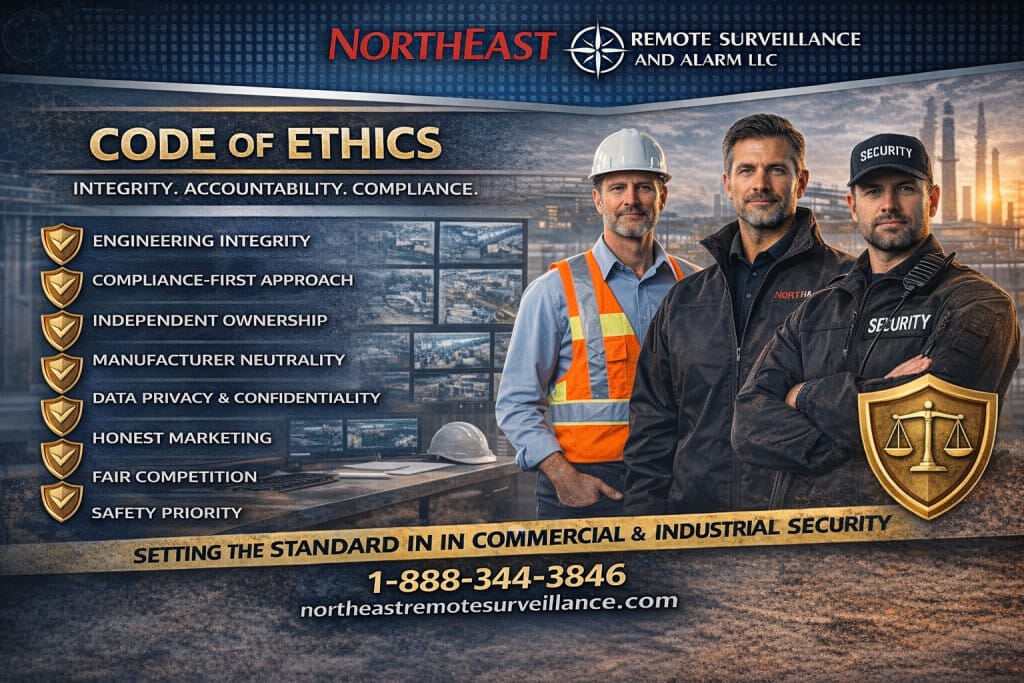
Integrity, Accountability, and Compliance
Policy Purpose
Because of that responsibility, NERSA maintains a formal Code of Ethics governing how we conduct business, engineer systems, publish information, and serve clients throughout Pennsylvania and the Mid-Atlantic. Ethics in security is not optional. It is operationally mandatory.
Integrity in Engineering and Installation
NERSA designs systems based on risk, not sales pressure. We align installations with applicable codes, standards, and manufacturer requirements. We do not knowingly install non-compliant configurations, and we do not take shortcuts that compromise safety, reliability, or long-term usability. System architecture should be documented clearly enough to withstand inspection, audit, and incident review.
Compliance-First Decision Making
NERSA prioritizes building code alignment, fire and life safety considerations, regulatory guidance, manufacturer specifications, and AHJ coordination. When cost savings and compliance integrity conflict, compliance prevails. Our approach is to treat security and life safety systems as regulated infrastructure, not commodity equipment.
Transparency in Ownership and Business Structure
NERSA operates as an independently owned, privately held company. We are not controlled by private equity and are not directed by outside investors. We believe this matters because ownership affects vendor neutrality, long-term stability, and how decisions are made for clients. Transparency builds trust.
Manufacturer Neutrality and Vendor Integrity
We recommend technology based on performance, suitability, lifecycle reliability, and operational fit. We disclose manufacturer relationships when relevant. We do not allow vendor incentives or exclusive bias to override engineering judgment. Security design decisions should serve the client, not the manufacturer.
Data Privacy and Confidentiality
Security systems collect sensitive information, including access credentials, visitor records, surveillance footage, and incident documentation. NERSA protects client data, restricts internal access to sensitive information, follows secure documentation practices, avoids misuse of surveillance data, and does not use client footage in marketing without permission. Confidentiality is foundational to trust.
Honest Marketing and Publishing
NERSA does not misrepresent regulatory requirements, exaggerate product capabilities, disguise paid content as independent guidance, or use deceptive competitive comparisons. Our publishing standards prioritize accuracy, proper citation, and clear separation between opinion, recommendation, and regulation. Authority must be earned, not manufactured.
Fair Competition
We compete through technical expertise, regulatory alignment, system performance, and client service. We do not engage in defamation of competitors, misleading pricing tactics, artificial urgency, or hidden contract structures. Professional competition strengthens the industry and protects buyers.
Conflict of Interest Disclosure
NERSA personnel must disclose any situation that could influence recommendations, create financial bias, compromise objective engineering, or undermine client trust. Any conflict must be reviewed and resolved in the client’s best interest.
Workplace Conduct and Professionalism
NERSA expects respectful client interaction, professional jobsite behavior, compliance with safety standards, clear communication, and ethical representation of the company. Security professionals represent the integrity of the systems they install.
Safety and Life Protection Priority
Security and life safety systems can affect emergency egress, fire alarm coordination, locking hardware compliance, and alarm response procedures. NERSA will never knowingly design or implement a system that compromises life safety.
Continuous Improvement and Accountability
We commit to accepting constructive feedback, issuing corrections when needed, updating regulatory references, and improving processes based on documented lessons learned. Ethical organizations do not stay static. They improve.
Reporting Ethical Concerns
Clients, partners, and stakeholders may report ethical concerns to NERSA. Reports will be reviewed confidentially, investigated objectively, and addressed promptly. Retaliation for good-faith reporting is not tolerated.
Commitment to the Mid-Atlantic Industrial Community
NERSA serves manufacturing facilities, logistics centers, industrial parks, enterprise campuses, and other regulated commercial and industrial environments. Our ethical framework is intended to support operational continuity, compliance alignment, risk mitigation, and long-term partnerships. Security systems are infrastructure. Infrastructure demands integrity.
Policy Review and Updates
This Code of Ethics is reviewed periodically to support alignment with evolving regulations, industry best practices, organizational growth, and governance standards.
Contact
Northeast Remote Surveillance and Alarm, LLC
Phone: 1-888-344-3846
Website: www.northeastremotesurveillance.com
Code of Ethics FAQ
The NERSA Code of Ethics defines how Northeast Remote Surveillance and Alarm, LLC conducts business, designs systems, publishes information, handles client data, and serves commercial and industrial clients. The policy is built around integrity, accountability, and compliance in environments where security systems affect life safety, regulatory compliance, operational continuity, evidence integrity, privacy rights, and critical infrastructure protection.
Why does a Code of Ethics matter for a commercial security company?
A commercial security company affects more than theft deterrence. Security systems can affect emergency egress, fire alarm coordination, locking hardware compliance, alarm response procedures, privacy, and long-term operational continuity. That makes ethics operationally important, not optional.
How does the Code of Ethics apply to NERSA’s services?
The policy applies across NERSA’s commercial and industrial security work, including surveillance, access control, intrusion alarms, fire alarm and life safety coordination, intercoms, monitoring, and broader compliance-aware system planning.
Does the Code of Ethics mean NERSA puts compliance ahead of shortcuts?
Yes. NERSA prioritizes building code alignment, fire and life safety considerations, regulatory guidance, manufacturer specifications, and AHJ coordination, and that when cost savings conflict with compliance integrity, compliance prevails.
Does NERSA claim the Code of Ethics replaces licensing, code requirements, or formal certification?
No. The policy presents ethics as an operating standard for how the company conducts business and engineering decisions. It emphasizes compliance alignment, manufacturer guidance, and regulatory awareness, but it does not present the ethics policy itself as a substitute for licensing, code enforcement, or formal certification.
How does NERSA handle data privacy and confidentiality?
NERSA treats client data as sensitive and commits to protecting access credentials, visitor records, surveillance footage, and incident reports. NERSA also restricts internal access, follows secure documentation practices, avoids misuse of surveillance data, and does not use client footage for marketing without permission.
Does NERSA make honest claims in marketing and publishing?
Yes. NERSA does not misrepresent regulatory requirements, exaggerate product capabilities, publish paid content disguised as independent research, or use deceptive competitive comparisons. Our publishing standards prioritize accuracy and clear differentiation between opinion and regulation.
Does NERSA disclose conflicts of interest?
Yes. NERSA personnel must disclose any situation that could influence system recommendations, create financial bias, compromise objective engineering, or undermine client trust, and that such conflicts must be resolved in the client’s best interest.
How does NERSA approach manufacturer neutrality?
The policy says NERSA recommends technology based on performance and suitability, discloses manufacturer relationships when relevant, avoids exclusive vendor bias that compromises engineering integrity, and evaluates products on security merit and lifecycle reliability.
Does the Code of Ethics apply to life safety and fire alarm-related work?
Yes. NERSA will not knowingly design or implement a system that compromises life safety and specifically references emergency egress, fire alarm coordination, locking hardware compliance, and alarm response procedures.
How are complaints or ethical concerns handled?
Clients, partners, and stakeholders may report ethical concerns; reports will be reviewed confidentially, investigated objectively, and addressed promptly. Retaliation for good-faith reporting is not tolerated.
Does NERSA commit to continuous improvement?
Yes. NERSA commits to accepting constructive feedback, issuing corrections when needed, updating regulatory references, and improving processes based on documented lessons learned.
What does the Code of Ethics say about competition?
NERSA competes through technical expertise, regulatory alignment, system performance, and client service, and does not engage in defamation of competitors, misleading pricing tactics, artificial urgency sales tactics, or hidden contract structures.
Does this Code of Ethics apply only to one type of customer?
No. The policy says NERSA serves manufacturing facilities, logistics centers, industrial parks, enterprise campuses, and other regulated environments throughout Pennsylvania and the Mid-Atlantic, and that its ethical framework supports operational continuity, compliance alignment, risk mitigation, and long-term partnerships.
Why should a commercial or industrial client care about a written ethics policy?
Security systems are infrastructure that affect safety, compliance, privacy, documentation, continuity, and long-term trust. A written ethics policy helps show how a company approaches those responsibilities before a client hires them.