Loading area and shipping zone surveillance helps industrial facilities monitor the areas where freight, materials, employees, vendors, drivers, trailers, forklifts, and exterior doors create daily operational risk. Northeast Remote Surveillance and Alarm, LLC designs surveillance systems for shipping zones, receiving areas, dock approaches, trailer staging lanes, exterior industrial doors, and material transfer points across Pennsylvania and the Mid-Atlantic. For broader industrial camera planning, start with Industrial Video Surveillance Systems.
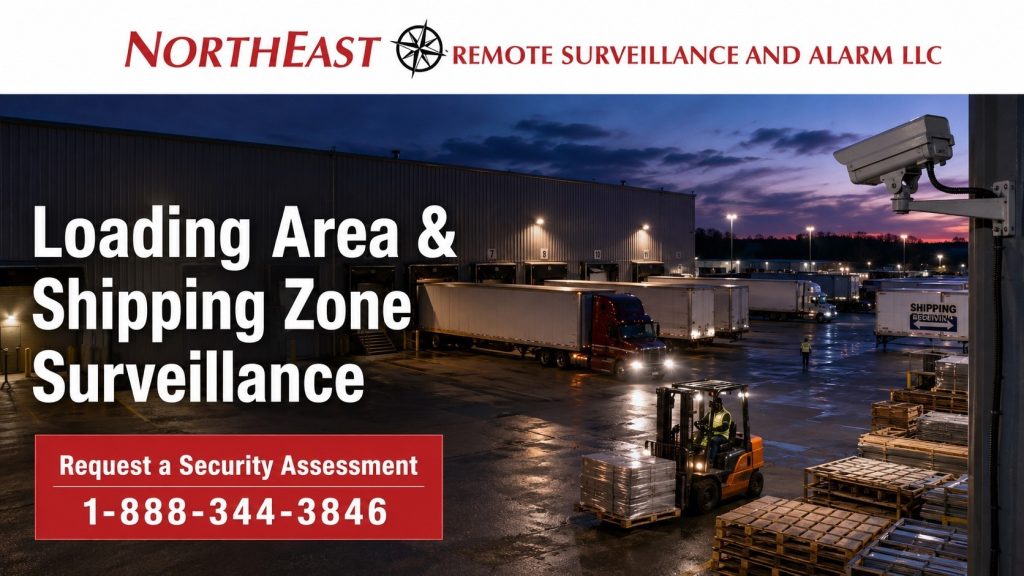
Surveillance for Loading Areas, Shipping Zones, and Receiving Operations
Loading areas are high-activity industrial zones where people, vehicles, freight, and equipment constantly move through the same space. Trucks back into docks, trailers are staged, forklifts move pallets, vendors enter the property, employees handle shipments, and exterior doors may stay active throughout the workday.
A properly designed surveillance system gives facility managers and operations teams better visibility into the areas where many theft, damage, safety, and accountability issues begin. It can help document arrivals, departures, material movement, trailer activity, driver interaction, forklift movement, and after-hours access.
This page focuses specifically on surveillance for loading areas and shipping zones. It should not replace broader warehouse security, industrial yard security, or general video surveillance planning; it supports those pages by covering the operational risk around shipping and receiving.
What Loading Area and Shipping Zone Cameras Should Monitor
A loading area camera system should be designed around the flow of activity, not just the closest wall or easiest mounting point. Cameras need to capture the places where freight is transferred, vehicles stop, employees work, and unauthorized activity could occur.
Common coverage areas include:
- Dock approaches
- Shipping and receiving doors
- Overhead dock doors
- Exterior man doors near docks
- Trailer staging lanes
- Truck maneuvering areas
- Pallet staging zones
- Outdoor material transfer areas
- Forklift travel paths
- Vendor and driver waiting areas
- Dumpster, pallet, scrap, and return areas
- Yard-to-dock transition points
- After-hours dock approaches
- Rear building elevations near loading operations
For facilities where dock activity extends into a larger exterior yard, the supporting resource is Industrial Yard Video Surveillance.
Why Loading Areas Need Dedicated Surveillance Design
Loading areas are not the same as front entrances, parking lots, or interior warehouse aisles. They include changing trailer positions, large vehicles that block camera views, dock shelters, overhead doors, uneven lighting, headlights, moving forklifts, staged freight, and frequent handoffs between employees, drivers, contractors, and vendors.
A single wide-angle camera may show general activity but fail to capture the details needed during a freight dispute, theft investigation, safety review, or after-hours incident. Industrial loading areas often need a combination of wide overview views and tighter camera angles focused on dock doors, trailer lanes, material staging points, and exterior access points.
The goal is useful video, not just visible cameras. A strong system should help answer what happened, when it happened, where it happened, who was involved, and whether the event requires operational or security follow-up.
Operational Risks Around Shipping and Receiving Areas
Shipping and receiving areas create exposure because they are built for movement and access. They often sit at the rear or side of the building, away from the main office entrance, and may include open doors, outdoor materials, parked trailers, temporary freight, driver interaction, and multiple shift schedules.
Loading area surveillance can help document:
- Unauthorized access near dock doors
- Trailer break-ins or tampering
- Material theft from staged freight areas
- Damaged goods and freight claims
- Vendor and driver disputes
- Forklift and vehicle incidents
- After-hours trespassing
- Exterior door misuse
- Pallet, scrap, and equipment theft
- Loading mistakes or shipment disputes
- Truck arrival and departure activity
- Activity around rear building approaches
Strong surveillance in these zones supports both security and operations. It gives managers a clearer record of the areas where freight, liability, employee movement, and property risk overlap.
Camera Placement for Loading Areas and Shipping Zones
Camera placement should be based on how the loading area actually works. Dock door location, trailer height, vehicle paths, bollards, lighting poles, overhead doors, building corners, staging areas, and forklift routes all affect the final camera design.
A complete system may include camera views for:
- Overall dock activity
- Individual dock doors
- Truck approach lanes
- Trailer staging areas
- Exterior shipping doors
- Material transfer zones
- Driver and vendor interaction points
- Rear employee access doors
- High-value freight staging areas
- After-hours approach paths
Where trailers block visibility, cameras may need to be mounted higher, placed on opposing angles, mounted on poles, or supplemented with additional views. The camera view should match the operational question the facility needs answered.
Fixed Cameras, Varifocal Cameras, PTZ Cameras, and AI Analytics
Different loading areas may require different camera types. Fixed cameras are useful for consistent dock door views, defined staging areas, and exterior access points. Varifocal cameras help fine-tune the field of view for trailer lanes, truck approaches, or areas where detail matters.
PTZ cameras may help with large exterior loading yards, but they should not be the only camera covering critical areas because they can be pointed away during an incident. AI-enabled cameras can help detect people, vehicles, loitering, line crossing, restricted-area activity, and after-hours movement when camera placement and detection zones are configured correctly.
For sites that need active alert review instead of recording only, the next planning step is Industrial Remote Video Monitoring.
After-Hours Risk in Loading and Shipping Areas
Loading areas often become higher-risk after employees leave. Trailers, pallets, returns, scrap, freight, exterior doors, and dock equipment may remain exposed while the building is less active.
After-hours surveillance can help detect or document movement near dock doors, staged materials, trailer areas, rear entrances, and fence-to-dock approaches. When paired with AI analytics and remote monitoring, loading area cameras can support faster awareness instead of relying only on recorded video after an incident.
This is especially important for facilities with repeated trespassing, trailer theft risk, outdoor material storage, remote dock areas, or shipping zones that remain active across multiple shifts.
Infrastructure for Reliable Loading Area Surveillance
Industrial loading area cameras depend on reliable infrastructure. Long cable runs, exterior conditions, network closet distance, camera pole locations, weather exposure, surge risk, and bandwidth requirements all affect performance.
A dependable system may require:
- PoE switching
- Fiber connections
- Wireless bridges
- Exterior-rated conduit
- Weather-rated mounting
- Surge protection
- UPS backup
- Secure recording equipment
- Network segmentation
- Proper camera naming and documentation
- Remote access for authorized users
- Retention planning based on operational needs
Poor infrastructure can lead to dropped cameras, unreliable recording, weak remote access, and service problems. The surveillance system should be designed as a long-term industrial security asset, not a quick camera add-on.
Compliance, Safety, and Documentation Considerations
Loading area surveillance should support security, safety, accountability, and documentation without interfering with emergency access, required egress, fire department access, employee safety procedures, or industrial workflows. Cameras should be positioned to improve visibility around risk areas while respecting practical workplace expectations and operational requirements.
For broader code-aware planning in warehouse and industrial environments, use Industrial and Warehouse Security Compliance.
A well-documented system should identify camera locations, coverage intent, recording retention, monitoring workflow, user permissions, network equipment, and maintenance access. This helps facility managers, IT teams, safety leaders, and ownership understand how the system supports the property over time.
Loading Area and Shipping Zone Surveillance for Pennsylvania and the Mid-Atlantic
Northeast Remote Surveillance and Alarm, LLC designs loading area and shipping zone surveillance systems for industrial and commercial facilities across Pennsylvania and the Mid-Atlantic. These systems are built for real operating environments, including warehouses, manufacturing plants, logistics facilities, distribution buildings, contractor yards, industrial parks, and multi-building commercial properties.
The right design depends on the building layout, dock activity, trailer movement, lighting, freight exposure, network infrastructure, recording needs, and whether the site requires active monitoring or recorded evidence only.
Frequently Asked Questions
What is loading area and shipping zone surveillance?
Loading area and shipping zone surveillance is video coverage designed for dock approaches, shipping doors, receiving areas, staged materials, trailer lanes, forklift movement, vendor activity, and exterior industrial doors.
Why do industrial loading areas need dedicated cameras?
Industrial loading areas need dedicated cameras because they involve frequent truck movement, freight handling, employee activity, vendor access, forklift traffic, and exterior door use. These conditions create different risks than offices, front entrances, or interior hallways.
What should loading area cameras show?
A strong loading area camera system should show dock approaches, trailer positions, overhead doors, exterior man doors, forklift paths, pallet staging areas, driver activity, truck movement, and after-hours activity around shipping and receiving zones.
Can loading area cameras help with freight disputes?
Yes. Properly placed cameras can help document truck arrival times, material staging, loading activity, freight movement, visible damage, driver interaction, and who was present during key shipping or receiving events.
Can loading area surveillance reduce theft?
Yes. Loading area surveillance can deter unauthorized activity, document theft attempts, improve response, and support investigations involving staged materials, trailers, pallets, scrap areas, equipment, and exterior doors.
Are AI analytics useful for shipping zones?
AI analytics can be useful when they are configured correctly. They can help detect people, vehicles, loitering, line crossing, after-hours activity, and restricted-area movement around dock doors, trailer lanes, and material staging areas.
Should loading area cameras be monitored live?
Live monitoring is useful when a facility has after-hours risk, valuable freight, trailer storage, repeated trespassing, outdoor materials, or loading areas that remain exposed when employees are gone.
Can one camera cover an entire loading area?
One camera may provide a general overview, but most industrial loading areas need multiple views. Wide views help show overall activity, while tighter views help document dock doors, trailers, material staging, driver interaction, and exterior doors.
What infrastructure is needed for loading area surveillance?
Loading area surveillance may require PoE switching, fiber, conduit, wireless bridges, exterior-rated mounts, surge protection, UPS backup, secure recording, remote access, and retention planning based on the facility layout.
Who installs loading area and shipping zone surveillance systems in Pennsylvania and the Mid-Atlantic?
Northeast Remote Surveillance and Alarm, LLC designs and installs loading area and shipping zone surveillance systems for industrial and commercial facilities across Pennsylvania and the Mid-Atlantic, including warehouses, manufacturing plants, logistics properties, distribution facilities, and multi-building industrial sites.
Request a Loading Area Security Assessment
Loading area and shipping zone surveillance should be designed around the actual movement of trucks, trailers, employees, vendors, forklifts, freight, exterior doors, and after-hours activity. Northeast Remote Surveillance and Alarm, LLC helps commercial and industrial facilities plan camera systems that improve visibility, documentation, monitoring, accountability, and long-term security performance. To evaluate your loading area camera coverage, blind spots, infrastructure, and monitoring options, request a Security Assessment.