Industrial yard video surveillance helps commercial and industrial facilities monitor exterior operating areas where vehicles, materials, equipment, employees, vendors, trailers, and after-hours activity create real security exposure. Northeast Remote Surveillance and Alarm, LLC designs industrial yard camera systems for manufacturing properties, equipment yards, contractor yards, utility areas, truck courts, trailer storage areas, outdoor material storage zones, and multi-building industrial sites across Pennsylvania and the Mid-Atlantic. For broader industrial camera system planning, start with Industrial Video Surveillance Systems.
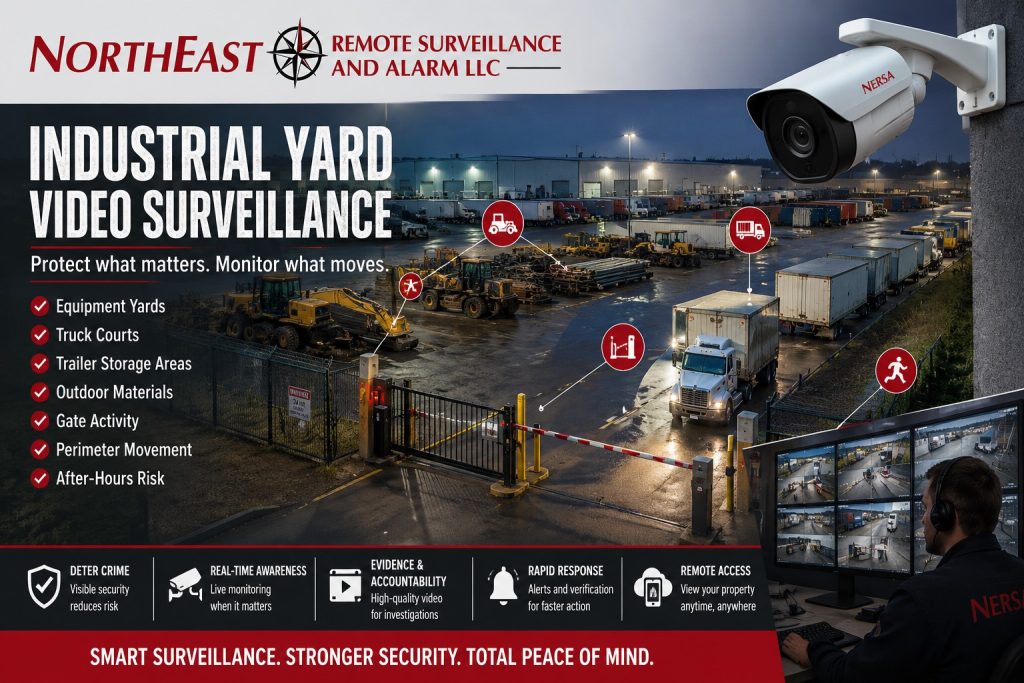
Industrial Yard Video Surveillance for Industrial Yards and Exterior Work Areas
Industrial yards are active, exposed, and difficult to control with indoor security methods alone. These areas often include open storage, heavy equipment, trailers, service vehicles, contractor parking, utility access, loading activity, employee movement, and multiple points of entry.
A strong industrial yard surveillance system helps document activity before, during, and after incidents. It also gives facility managers, operations teams, and security personnel better visibility into areas that are often under-monitored after business hours.
NERSA designs industrial yard camera systems around real operating conditions, not generic camera placement. Camera selection, mounting locations, lighting, network infrastructure, recording retention, remote access, analytics, and monitoring strategy all matter when the yard is exposed to weather, low light, distance, vehicle movement, and after-hours activity.
Industrial Yard Areas That Need Camera Coverage
Industrial yard surveillance should be planned around how the property actually operates. Blind spots often appear around gates, fence lines, exterior storage areas, parked trailers, employee parking, rear building elevations, outdoor machinery, utility areas, fuel areas, and service lanes.
Common industrial yard camera coverage areas include:
- Equipment yards
- Contractor yards
- Trailer storage areas
- Truck courts
- Exterior material storage zones
- Outdoor inventory areas
- Gate entrances and exits
- Employee and vendor parking areas
- Rear approaches and service roads
- Utility and mechanical areas
- Loading and staging areas
- Fence lines and perimeter corners
- Scrap, pallet, container, and storage zones
- After-hours access points
For facilities where the yard connects directly to the property perimeter, the supporting resource is [Industrial Perimeter Security Cameras].
Why Industrial Yard Surveillance Is Different
Industrial yards create different surveillance challenges than office buildings, retail properties, or interior warehouse spaces. Cameras may need to identify vehicles, document activity across long distances, withstand weather exposure, capture low-light movement, and cover large open areas without creating unusable video.
The system must also account for lighting changes, rain, snow, dust, vibration, equipment movement, blocked views, tall trailers, shifting inventory, and seasonal changes in yard layout.
Poorly planned yard camera systems often fail because they rely on cameras that look good during the day but cannot provide useful evidence at night. A 10/10 industrial yard system must be designed for real visibility, not just camera count.
Security Risks in Industrial Yards
Industrial yards are often targeted because they contain valuable assets and are easier to approach than interior work areas. A facility may have strong building security while still leaving trailers, materials, copper, tools, vehicles, fuel, or machinery exposed outside.
Industrial yard surveillance helps reduce exposure from:
- Equipment theft
- Trailer break-ins
- Fuel theft
- Copper and material theft
- Unauthorized vehicle entry
- Vendor and contractor disputes
- After-hours trespassing
- Illegal dumping
- Damage to gates, fences, and vehicles
- Employee parking incidents
- Yard accidents and liability claims
- Unauthorized access to exterior doors or utility areas
The goal is not only to record what happened. The goal is to create better visibility, faster awareness, stronger evidence, and a more controlled industrial property.
Camera Design for Industrial Yard Surveillance
Industrial yard camera design should begin with the site layout. Camera locations should be selected based on yard entrances, vehicle movement, asset locations, distance, lighting, mounting height, power availability, network pathways, recording needs, and the level of identification required.
Some areas may need wide overview cameras to show movement across the yard. Other areas may need tighter views for gates, license plates, loading zones, equipment storage, or high-value material locations.
A strong design may include:
- Fixed exterior IP cameras for defined coverage areas
- Varifocal cameras for adjustable field of view
- PTZ cameras for large open yards where active review is needed
- Thermal or low-light cameras for dark perimeter areas
- License plate recognition cameras at controlled entry points
- AI-enabled cameras for human and vehicle detection
- Pole-mounted cameras for long-range yard visibility
- Building-mounted cameras for entrances, docks, and storage zones
- Networked video recording with appropriate retention
- Secure remote access for authorized users
When vehicle identification is important at gates or yard entrances, the next planning step is Industrial License Plate Recognition Camera Systems.
AI Video Analytics for Industrial Yard Activity
AI video analytics can help industrial yards reduce false alerts and improve event awareness. Instead of relying only on motion detection, analytics can help identify people, vehicles, line crossing, loitering, after-hours movement, and activity in restricted areas.
This is especially useful in yards where wind, shadows, rain, animals, headlights, and moving equipment can create too many false alarms with basic motion detection.
AI analytics can support:
- Person detection in restricted yard areas
- Vehicle detection near gates or storage zones
- After-hours movement alerts
- Line-crossing alerts at fence lines or drive lanes
- Loitering alerts near equipment or trailers
- Activity alerts near utility areas or exterior doors
- Event filtering for remote monitoring teams
AI does not replace proper camera placement. It works best when cameras are positioned with clear sightlines, proper lighting, correct angles, and realistic detection zones.
Remote Monitoring for Industrial Yards
Industrial yards are often most vulnerable when staff are gone. Remote video monitoring can help turn cameras into an active security layer by allowing trained operators to review alerts, verify activity, issue live audio warnings where appropriate, and escalate events based on the site’s response plan.
This is especially valuable for equipment yards, trailer yards, material storage areas, and properties with repeated trespassing or after-hours activity.
For facilities that need active operator review instead of passive recording only, use Industrial Remote Video Monitoring.
Lighting, Infrastructure, and Network Planning
Outdoor industrial surveillance depends heavily on infrastructure. Cameras need reliable power, stable network connectivity, weather-rated mounting, surge protection, adequate bandwidth, and secure recording.
Large yards may require fiber, wireless bridges, PoE switches, exterior enclosures, camera poles, trenching, conduit, UPS backup, or solar/cellular options depending on site conditions.
Lighting also matters. Some yards have enough pole lighting for color video at night, while others require low-light cameras, infrared support, thermal detection, or added lighting near key areas. Camera placement should be coordinated with actual nighttime conditions, not only daytime walkthroughs.
Compliance and Operational Documentation
Industrial yard camera systems should be planned with workplace safety, privacy awareness, documentation, and inspection readiness in mind. Surveillance should support operational visibility without interfering with emergency access, egress paths, fire department access, required signage practices, or facility safety workflows.
For industrial and warehouse environments, the supporting compliance resource is Industrial and Warehouse Security Compliance.
A well-documented industrial yard surveillance system should identify camera locations, coverage intent, network equipment, recording retention, monitoring workflow, user permissions, and service access. This helps facility managers maintain the system and gives ownership a clearer security record over time.
Industrial Yard Video Surveillance for Pennsylvania and the Mid-Atlantic
NERSA designs industrial yard video surveillance systems for commercial and industrial properties throughout Pennsylvania and the Mid-Atlantic. These systems are built for real operating environments, including manufacturing yards, equipment storage areas, logistics-connected sites, contractor yards, utility areas, commercial vehicle lots, and multi-building industrial facilities.
The right system depends on the property layout, risk level, lighting, assets, vehicle activity, perimeter exposure, network infrastructure, and whether the site needs recording only or active remote monitoring.
Frequently Asked Questions
What is industrial yard video surveillance?
Industrial yard video surveillance is an exterior camera system designed to monitor outdoor industrial areas such as equipment yards, truck courts, trailer storage areas, material storage zones, utility areas, gates, parking areas, and perimeter approaches.
How is industrial yard surveillance different from standard commercial security cameras?
Industrial yard surveillance usually requires longer-range coverage, weather-rated equipment, better night visibility, vehicle documentation, stronger mounting, network planning, and camera placement designed around open outdoor operating areas.
What areas of an industrial yard should be covered by cameras?
Important areas include gates, fence lines, equipment storage zones, trailer areas, truck courts, employee parking, vendor access points, loading areas, utility areas, material storage areas, and rear building approaches.
Can cameras help reduce theft in industrial yards?
Yes. Properly designed cameras can deter activity, document incidents, support investigations, improve response, and help operators identify after-hours movement, unauthorized vehicles, theft attempts, and suspicious activity.
Are AI analytics useful for industrial yards?
AI analytics can be very useful when they are properly configured. They can help detect people, vehicles, line crossing, loitering, after-hours movement, and activity in restricted areas while reducing false alarms compared to basic motion detection.
Should industrial yard cameras be monitored live?
Live monitoring is valuable for yards with repeated trespassing, theft risk, valuable outdoor assets, trailer storage, equipment storage, or after-hours exposure. Monitoring allows alerts to be reviewed and escalated instead of relying only on recorded footage after an incident.
Do industrial yard cameras need license plate recognition?
License plate recognition may be useful when the facility needs to document vehicles entering or leaving the property. It is most effective at controlled gates, narrow drive lanes, and defined entry or exit points.
What infrastructure is needed for industrial yard surveillance?
Industrial yard surveillance may require PoE networking, fiber, wireless bridges, exterior enclosures, camera poles, conduit, surge protection, UPS backup, secure recording, and remote access depending on the size and layout of the yard.
Can industrial yard cameras work at night?
Yes, but night performance depends on camera selection, placement, lighting, distance, lens selection, infrared capability, and the level of detail needed. A system should be designed around actual nighttime conditions.
Who installs industrial yard video surveillance systems in Pennsylvania and the Mid-Atlantic?
Northeast Remote Surveillance and Alarm, LLC designs and installs industrial yard video surveillance systems for commercial and industrial properties across Pennsylvania and the Mid-Atlantic, including equipment yards, contractor yards, manufacturing sites, logistics properties, and multi-building industrial facilities.
Request an Industrial Yard Security Assessment
Industrial yard video surveillance should be designed around the actual yard layout, vehicle movement, asset exposure, lighting conditions, infrastructure, and after-hours risk. Northeast Remote Surveillance and Alarm, LLC helps commercial and industrial facilities plan camera systems that improve visibility, documentation, monitoring, and long-term security performance. To evaluate your yard coverage, camera placement, monitoring options, and infrastructure needs, request a Security Assessment.