Contractor yard video surveillance systems in Allentown, PA help construction companies, trade contractors, service businesses, fleet operators, equipment owners, and industrial property managers monitor outdoor storage areas, document vehicle and equipment activity, investigate theft or damage, and improve visibility across gates, fence lines, shop buildings, parking areas, material-storage zones, and after-hours operations.
Northeast Remote Surveillance and Alarm, LLC designs, installs, expands, upgrades, and supports commercial video surveillance systems for contractor yards, equipment compounds, construction-company facilities, trade shops, fleet yards, outdoor material-storage properties, service businesses, and mixed shop-and-yard locations throughout Allentown and the surrounding Lehigh Valley.
This page focuses specifically on video surveillance for contractor yards and outdoor commercial storage properties. For broader camera planning across warehouses, offices, manufacturing facilities, retail properties, parking areas, and other commercial environments, begin with Commercial Security Camera Systems in Allentown, PA.
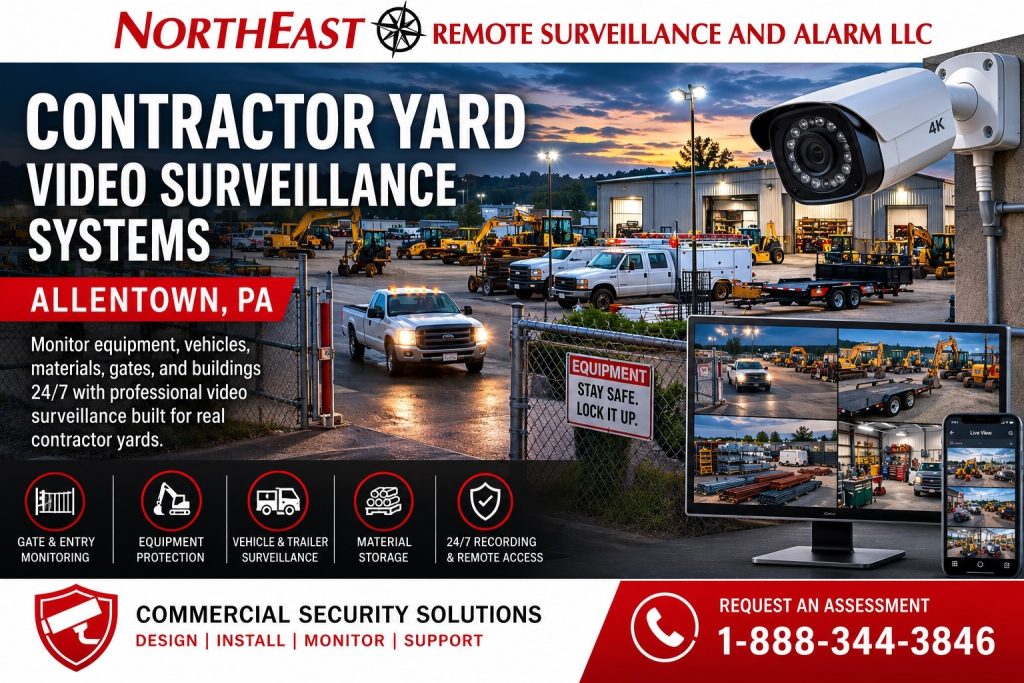
Video Surveillance Designed Around Contractor Yard Operations
Contractor yards present different surveillance challenges than indoor offices, retail businesses, warehouses, and manufacturing facilities.
A contractor yard may contain:
- Work trucks
- Service vans
- Trailers
- Heavy equipment
- Tools
- Building materials
- Fuel
- Scrap
- Jobsite supplies
- Storage containers
- Outdoor inventory
- Shop buildings
- Maintenance areas
- Employee vehicles
- Customer equipment
Activity may occur early in the morning, late at night, during weekends, and outside normal office hours. Employees, subcontractors, delivery drivers, vendors, customers, and service technicians may all move through the property.
A properly designed surveillance system should consider:
- Yard size and shape
- Fence lines and perimeter exposure
- Gate locations
- Vehicle and pedestrian movement
- Equipment-storage areas
- Lighting conditions
- Building placement
- Outdoor network pathways
- Available power
- Camera mounting height
- Weather exposure
- Recording retention
- Remote access
- Future yard expansion
The objective is not simply to place cameras around the property. Each camera should be selected and positioned around a defined security or documentation purpose.
Common Contractor Yard Security Concerns
Contractor and equipment yards may experience:
- Tool theft
- Equipment theft
- Vehicle theft
- Fuel theft
- Copper and material theft
- Trailer theft
- Vandalism
- Fence cutting
- Gate damage
- Unauthorized dumping
- After-hours trespassing
- Vehicle damage
- Disputes involving deliveries
- Missing materials
- Unexplained equipment use
- Employee or subcontractor disputes
- Unauthorized access to shops or containers
- Damage caused during loading or unloading
Video surveillance can help establish when an incident occurred, how someone entered the property, which areas were accessed, what vehicle was involved, and how equipment or materials moved through the yard.
Contractor Yard Entrance and Gate Cameras
Vehicle gates and pedestrian entrances are among the most important surveillance locations at a contractor yard.
Gate cameras may help document:
- Vehicles entering and leaving
- Employee arrivals
- Vendor access
- Deliveries
- Trailer movement
- After-hours activity
- Unauthorized entry attempts
- Gate damage
- Tailgating
- Material removal
- Equipment entering or leaving the property
A gate often requires more than one camera.
One camera may provide an overview of the entrance, while another may be positioned to capture vehicle detail, driver activity, trailer movement, or the direction of travel.
Camera placement should account for:
- Vehicle speed
- Headlights
- Gate width
- Sunlight
- Nighttime lighting
- Mounting height
- Distance
- Traffic direction
- Fence obstructions
- Seasonal vegetation
- Available network connectivity
A general overview camera should not be expected to provide every type of detail. Camera selection should match the actual identification and documentation requirements.
Equipment and Machinery Surveillance
Contractor yards may contain excavators, skid steers, lifts, loaders, trenchers, compactors, generators, compressors, specialty tools, and other valuable equipment.
Camera coverage may be designed around:
- Heavy-equipment parking
- Attachment storage
- Maintenance areas
- Key-storage locations
- Equipment loading zones
- Trailer staging
- Fueling areas
- Battery and charger locations
- Equipment entrances
- Overnight storage areas
The system may help document:
- Who accessed the equipment
- When equipment was moved
- Whether a machine left the yard
- How damage occurred
- Whether an attachment was removed
- Whether unauthorized use occurred
- Which vehicle transported the equipment
Camera placement should consider changing equipment positions, tall machinery, parked trailers, seasonal inventory, and other obstructions that can block fixed views.
Tool and Material Storage Coverage
Tools and construction materials may be stored in:
- Outdoor racks
- Shipping containers
- Storage sheds
- Locked cages
- Tool cribs
- Shop buildings
- Covered storage areas
- Trailers
- Open yard sections
- Palletized storage areas
Video surveillance may help monitor movement around these areas and document the removal or delivery of materials.
Coverage may be useful around:
- Container doors
- Storage-building entrances
- Material aisles
- Tool-room approaches
- Loading areas
- High-value inventory
- Copper and wire storage
- Fuel and chemical-storage approaches
- Scrap-storage sections
- Controlled supply areas
Cameras should generally focus on access points, movement, and handling activity rather than relying on a distant yard overview to capture usable detail.
Fleet and Commercial Vehicle Surveillance
Contractor yards frequently contain service vans, pickup trucks, box trucks, dump trucks, utility vehicles, trailers, and employee vehicles.
Fleet surveillance may help document:
- Vehicle arrivals and departures
- Driver activity
- Loading and unloading
- Vehicle damage
- Unauthorized vehicle use
- Fueling activity
- Trailer connections
- Equipment transfer
- After-hours movement
- Incidents involving parked vehicles
Camera coverage should be positioned around the way vehicles are actually parked and moved.
Rows of large vehicles can create blind spots. A system may require cameras at multiple angles, elevated mounting locations, or separate views for entrances, parking rows, and loading areas.
Fence-Line and Perimeter Coverage
A contractor yard’s perimeter may include chain-link fencing, walls, vegetation, neighboring properties, rail lines, alleys, industrial roads, vacant land, or drainage areas.
Perimeter cameras may help document:
- Fence climbing
- Fence cutting
- Trespassing
- Unauthorized dumping
- Activity along remote property lines
- Vehicle approaches
- Movement behind buildings
- Access from neighboring properties
- After-hours pedestrian activity
Perimeter surveillance should account for:
- Camera distance
- Lighting
- Weather
- Vegetation
- Fence movement
- Insects
- Shadows
- Headlights
- Animals
- Changes in stored materials
The system should be configured to provide useful activity review without generating excessive alerts from normal outdoor movement.
Shop Building and Office Entrance Cameras
Many contractor yards include a shop, office, warehouse, maintenance building, or mixed-use structure.
Camera coverage may include:
- Main office entrances
- Employee entrances
- Shop doors
- Overhead doors
- Parts rooms
- Tool-room entrances
- Service counters
- Shipping and receiving areas
- Interior vehicle bays
- Rear building approaches
Interior and exterior cameras should be planned together so activity can be followed from the yard into the building.
For example, a gate camera may document a vehicle entering, a yard camera may show where it traveled, and a shop-door camera may show who entered the building.
Loading, Unloading and Trailer Activity
Contractor yards frequently receive equipment, building materials, rental items, jobsite returns, scrap, and supplier deliveries.
Video coverage may be appropriate around:
- Loading zones
- Trailer staging areas
- Forklift routes
- Material-drop locations
- Delivery entrances
- Container areas
- Equipment ramps
- Temporary storage areas
- Returned-material sections
Recorded video can help investigate:
- Delivery disputes
- Damaged materials
- Missing equipment
- Incorrect quantities
- Trailer damage
- Loading incidents
- Unauthorized removal
- Activity outside normal hours
Camera positions should account for parked trucks, trailers, equipment, and materials that may block views during active loading operations.
Parking and Employee Vehicle Areas
Employee parking may be located inside or adjacent to the contractor yard.
Camera coverage may help document:
- Vehicle damage
- Theft from vehicles
- Employee arrivals and departures
- After-hours parking activity
- Unauthorized vehicles
- Disputes
- Pedestrian movement
- Activity near building entrances
Parking coverage should remain secondary to the contractor-yard intent of this page. Broader parking-lot surveillance planning belongs within the applicable Allentown commercial camera structure.
Exterior Lighting and Nighttime Image Quality
Contractor yards often have uneven lighting, dark fence lines, bright building-mounted lights, vehicle headlights, reflective surfaces, and large open areas.
A camera that performs well during the day may provide limited detail at night when lighting is poor.
Nighttime planning may include:
- Existing-light evaluation
- Infrared-capable cameras
- Supplemental white light
- Improved pole or building lighting
- Wider dynamic range
- Low-light camera technology
- Adjustable lenses
- Camera repositioning
- Separate entrance and overview cameras
Lighting should be evaluated at the times when security incidents are most likely to occur.
Camera Types for Contractor Yards
Bullet Cameras
Bullet cameras are commonly used for gates, fence lines, long-distance views, equipment areas, building exteriors, and yard approaches.
They can support adjustable lenses and focused coverage of defined outdoor areas.
Turret Cameras
Turret cameras may be used around shop entrances, covered areas, building corners, loading locations, and interior workspaces where flexible positioning and dependable nighttime performance are important.
Multi-Sensor Cameras
Multi-sensor cameras can provide several fixed views from one mounting point.
They may be useful for:
- Building corners
- Large equipment yards
- Wide parking areas
- Open storage compounds
- Gate intersections
- Shop-and-yard approaches
Panoramic Cameras
Panoramic cameras may provide broad situational awareness across open yard areas, but they should not automatically replace focused cameras needed for entrances, vehicle detail, or high-value equipment.
Pan-Tilt-Zoom Cameras
PTZ cameras may support active observation of large yards, perimeter areas, and moving activity.
A PTZ camera should not be relied upon as the only coverage for a critical location because it can view only one direction at a time.
License-Plate-Focused Cameras
Where vehicle identification is required, a dedicated camera may be positioned around the entrance or exit.
A general yard camera should not be assumed to capture usable license plates under all lighting, speed, distance, and weather conditions.
Recording, Storage and Video Retention
Contractor-yard surveillance systems should be designed around how long recorded video must remain available.
Retention depends on:
- Camera count
- Camera resolution
- Frame rate
- Compression
- Continuous or motion-based recording
- Nighttime activity
- Amount of movement
- Available storage
- Incident-reporting timelines
- Business requirements
Equipment damage, missing tools, material shortages, or trailer problems may not be discovered immediately.
Storage should be planned around how long it normally takes the business to identify, report, and investigate a problem.
NERSA can evaluate:
- Required retention
- Recorder capacity
- Existing storage use
- Camera resolution
- Recording schedules
- Motion settings
- Hard-drive requirements
- Expansion capacity
Important video should not be lost because additional cameras were installed without recalculating storage requirements.
Secure Remote Video Access
Authorized owners, managers, dispatch personnel, and supervisors may need secure access to live and recorded video from:
- Office workstations
- Remote computers
- Mobile devices
- Other company locations
- Dispatch centers
- Management offices
Remote access may help users:
- Check yard conditions
- Verify deliveries
- Review gate activity
- Confirm equipment presence
- Investigate incidents
- Review after-hours movement
- Assist responding personnel
User permissions should be limited according to responsibility. General employees should not automatically receive administrative control or unrestricted export access.
Camera Naming and System Organization
Contractor-yard camera systems should be organized so users can quickly identify the correct view.
Clear camera names may include:
- Main Vehicle Gate
- Rear Fence Line
- North Equipment Row
- Shop Overhead Doors
- Fueling Area
- Trailer Staging
- Material Storage East
- Office Employee Entrance
- South Yard Overview
Generic names such as “Camera 12” or “Channel 18” slow incident review and create confusion.
System organization may include:
- Yard maps
- Camera groups
- Gate views
- Equipment-area groups
- Building views
- Mobile layouts
- User permissions
- Export restrictions
- Documented network information
- Recorder-channel assignments
Network and Low-Voltage Infrastructure
Outdoor surveillance systems depend on properly designed infrastructure.
Contractor-yard projects may require:
- Exterior-rated Category cabling
- Fiber connections
- Managed PoE switches
- Outdoor network enclosures
- Equipment racks
- Surge protection
- UPS backup power
- Wireless building bridges
- Pole-mounted equipment
- Underground pathways
- Conduit
- Weather-resistant junction boxes
- Network segmentation
- Additional uplinks
Long distances, detached buildings, gate locations, equipment yards, and remote fence lines may require fiber or wireless connectivity rather than conventional copper cabling.
Camera reliability can be affected by poor cable pathways, insufficient PoE power, overloaded switches, electrical surges, moisture, unstable wireless links, or unsupported network equipment.
Expanding an Existing Contractor Yard Camera System
A contractor yard may need additional cameras after:
- Property expansion
- New equipment purchases
- Added storage containers
- Fence-line changes
- Gate relocation
- Additional parking
- New shop buildings
- Increased deliveries
- Theft or vandalism
- Newly identified blind spots
- Changes in vehicle flow
- Added material-storage areas
Expansion work may involve:
- Additional yard cameras
- New gate views
- Additional recorder channels
- Storage expansion
- Network-switch expansion
- Added PoE capacity
- New fiber or wireless links
- Additional cabling pathways
- Updated viewing layouts
- Camera naming and documentation
For projects focused specifically on extending a functioning surveillance platform, visit Video Surveillance System Expansions and Additional Cameras in Allentown, PA.
Video Surveillance Versus Broader Contractor Yard Security
Video surveillance helps provide visibility and recorded documentation, but cameras do not replace:
- Access control
- Intrusion detection
- Gate-control systems
- Perimeter detection
- Lighting
- Physical fencing
- Locks
- Equipment immobilization
- Inventory procedures
- Employee accountability
- Emergency-response planning
Where appropriate, cameras may be coordinated with alarms, controlled gates, intercoms, or monitored security workflows.
This page remains focused on contractor-yard video surveillance. Broader planning across cameras, access control, intrusion detection, monitoring, intercoms, and supporting infrastructure belongs under Commercial Security Systems in Allentown, PA.
Contractor and Service Businesses We Support
NERSA provides video surveillance systems for:
- General contractors
- Electrical contractors
- Plumbing contractors
- HVAC companies
- Roofing companies
- Excavation contractors
- Paving companies
- Landscaping businesses
- Utility contractors
- Mechanical contractors
- Fire-protection contractors
- Low-voltage contractors
- Equipment-rental businesses
- Construction suppliers
- Building-material companies
- Fleet-service businesses
- Property-maintenance companies
- Industrial service contractors
Systems can support smaller trade shops with a few vehicles as well as large contractor compounds with multiple gates, detached buildings, extensive outdoor storage, large fleets, fiber-connected camera locations, and centralized remote access.
Why Allentown Contractors Choose NERSA
Northeast Remote Surveillance and Alarm, LLC focuses on commercial and industrial security systems.
Our contractor-yard video surveillance planning considers:
- Property layout
- Gates and fence lines
- Equipment and material storage
- Vehicle movement
- Shop buildings
- Nighttime lighting
- Outdoor distances
- Weather exposure
- Network and PoE capacity
- Recording retention
- Remote access
- Future expansion
- Long-term serviceability
The objective is to provide useful recorded evidence and dependable yard visibility without creating unnecessary cameras, unsupported infrastructure, excessive blind spots, confusing system layouts, or unrealistic expectations from distant overview views.
Frequently Asked Questions
Where should cameras be installed in a contractor yard?
Common locations include vehicle gates, pedestrian entrances, fence lines, equipment rows, trailer-storage areas, material-storage areas, shop doors, office entrances, loading zones, fueling areas, employee parking, and remote perimeter sections.
Can one camera cover an entire contractor yard?
A single camera may provide a general overview, but it usually cannot provide useful detail across entrances, equipment areas, fence lines, and distant storage locations. Multiple cameras with defined purposes are generally required.
Can contractor-yard cameras identify vehicles entering the property?
Yes, when cameras are selected and positioned around the entrance conditions. Vehicle speed, lighting, distance, headlights, camera angle, and required image detail must be evaluated.
Can cameras monitor equipment stored outdoors?
Yes. Cameras can cover equipment rows, machinery parking, trailer areas, attachment storage, fueling locations, and loading zones. Placement should account for changing equipment positions and visual obstructions.
Can cameras be installed where cabling is not available?
In some locations, fiber connections, wireless bridges, outdoor network enclosures, or other infrastructure may be used. Site distance, power, line of sight, interference, and environmental exposure must be evaluated.
How long should contractor-yard video be retained?
Retention depends on camera count, resolution, recording settings, available storage, business requirements, and how long it normally takes to discover theft, damage, or missing equipment. Storage should be calculated before installation.
Can NERSA add cameras to an existing contractor-yard system?
In many cases, yes. The recorder, software, available licenses, storage, network capacity, PoE power, camera compatibility, and infrastructure should be reviewed before cameras are added.
Does NERSA support both small contractor shops and large equipment yards?
Yes. NERSA supports smaller contractor facilities with several cameras as well as large commercial yards requiring multiple gates, extensive outdoor coverage, fiber or wireless connections, additional recorders, centralized remote access, and phased expansion.
Request a Contractor Yard Video Surveillance Assessment
If your Allentown contractor yard needs improved gate visibility, equipment coverage, fence-line surveillance, vehicle documentation, material-storage monitoring, shop-building cameras, remote viewing, or additional outdoor camera coverage, Northeast Remote Surveillance and Alarm, LLC can evaluate the property and develop a commercial surveillance plan.
Call 1-888-344-3846 to request a contractor-yard video surveillance assessment.
Commercial and industrial systems only • Contractor yards • Equipment storage • Fleet coverage • Gates and perimeters • Recording and remote access