
Need a commercial security installer in Allentown, PA? Northeast Remote Surveillance and Alarm, LLC (NERSA) designs, installs, upgrades and supports business security systems for Allentown offices, warehouses, manufacturing plants, healthcare facilities and professionally managed buildings. NERSA can handle the installation from start to finish: conduit and surface raceways, copper and fiber-optic cabling, cellular and wireless bridges, cameras, access control, intrusion alarms, network coordination, testing, commissioning and handover. Customers can plan the infrastructure and security equipment as one coordinated project.
Start with your building and the problem to solve: an unsecured entrance, unreliable door access, missing camera coverage, a difficult-to-manage alarm, or an outdated system. NERSA reviews what can be retained, explains the proposed installation, and plans the changeover around your operating hours. This page is for commercial security installation at Allentown properties, from a focused upgrade to a coordinated building-wide project.
ALLENTOWN, PENNSYLVANIACommercial & industrial
security installation
Local photography & credits
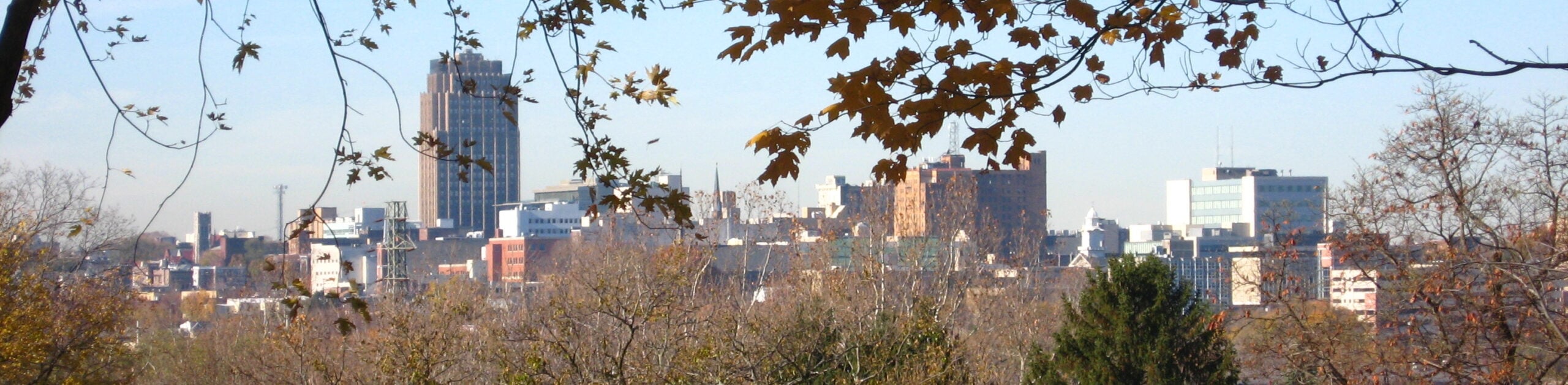
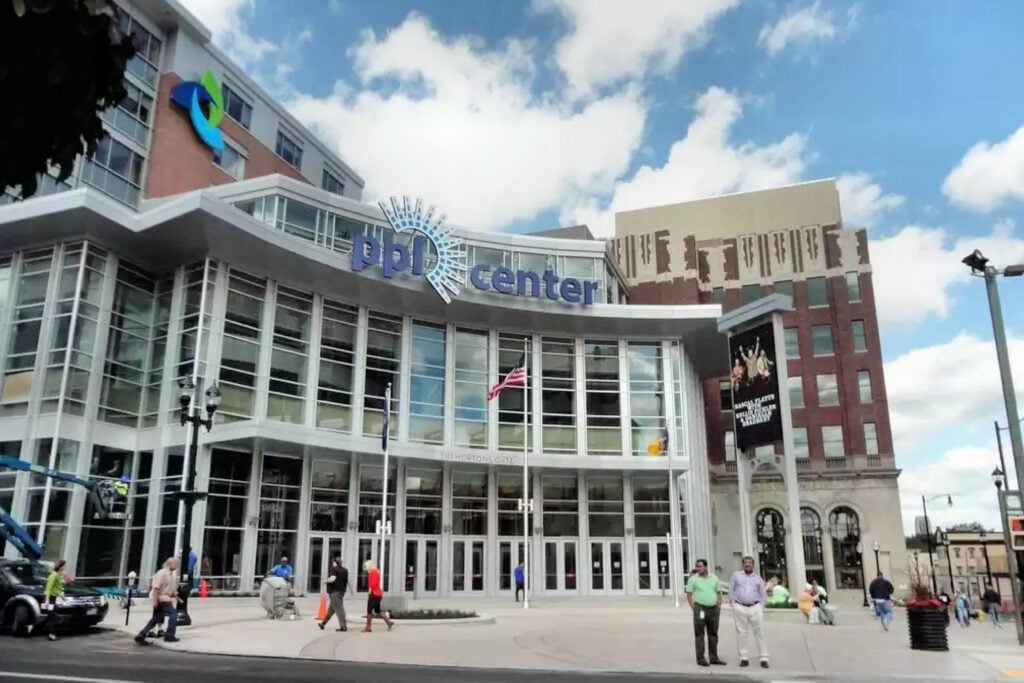
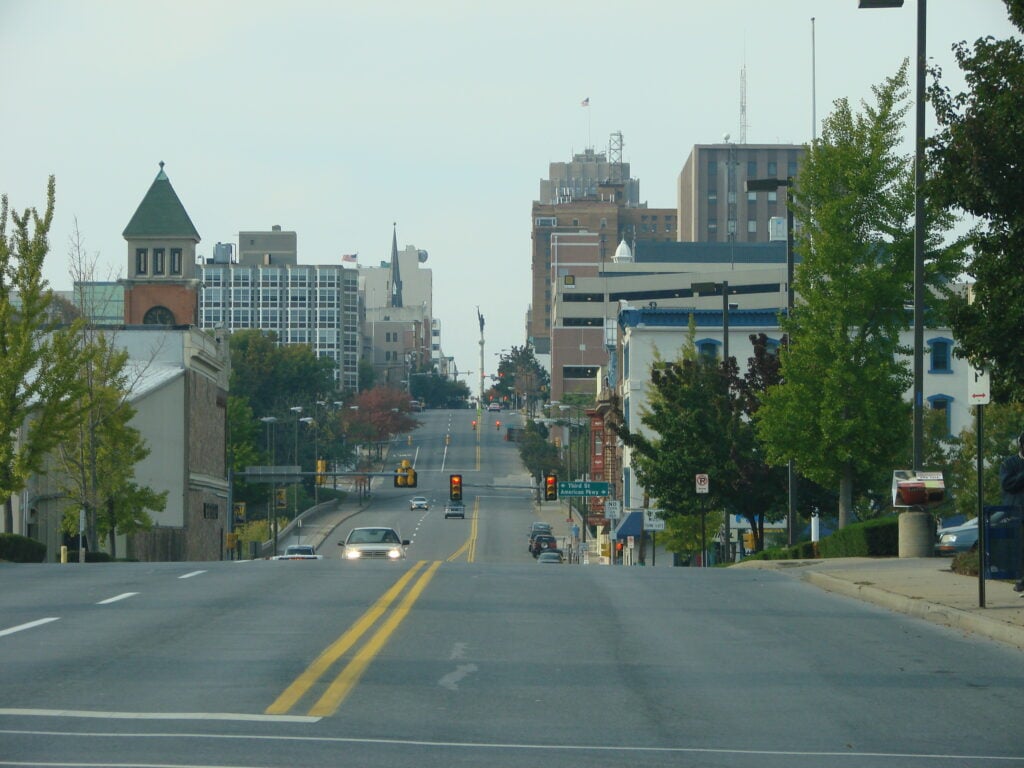
Allentown skyline by ShootingforStars (2010, public domain); PPL Center by Atwngirl (2018, CC BY-SA 4.0; displayed crop under the same license); Hamilton Street by Allie_Caulfield (2007, CC BY 2.0; cropped for display). Landmark photographs illustrate our service area.


We also upgrade, monitor, and support these systems for small businesses, growing companies, enterprise operations, and industrial facilities. Plan a new installation or improve an existing system with cameras, access control, alarms, and coordinated support.
For commercial security installation in Allentown, PA, choose the local service guide matching the actual work: new cameras, controlled doors, intrusion alarms, or an existing-system upgrade, retrofit or takeover. For an occupied building, identify the affected entrances and work areas, current equipment and periods when installation or testing can take place. This city guide is part of our Lehigh Valley commercial and industrial security services.
Have a system that is unreliable or difficult to use? NERSA checks the equipment, cabling, account access, and compatibility before recommending repairs, a takeover, or upgrades in stages. The plan explains what can stay, what needs attention, and how the work supports daily operations.
Documented Allentown experience: NERSA has served Arbor View Towers since 2008, with surveillance across all 19 floors, elevators, shared facilities, and parking areas. See the local project details.
NERSA serves commercial, industrial, institutional, and professionally managed properties, including apartment-community shared entrances, common areas, and grounds. We do not provide security installations for individual homes or single-family residences.
Find what you need: Local case study · Security services · Property guides · Costs and proposals · Common questions
Request an Allentown security assessment or call 888-344-3846.
End-to-End Commercial Security Services: Planning Through Monitoring
One coordinated security partner from the first planning meeting through ongoing operation. NERSA helps Allentown commercial and industrial customers assess their risks, plan the system, coordinate engineering and design, install the infrastructure and equipment, commission the completed system, and arrange ongoing alarm and remote video monitoring when included in the service agreement. Our work covers new construction, occupied facilities, phased expansions, upgrades and retrofits, and takeovers of eligible existing systems.
Engineering and system design: NERSA develops and coordinates security-system requirements, coverage plans, equipment schedules, access-controlled openings, intrusion zones, network and communication paths, power needs and installation sequencing. When professional engineering, code review or sealed plans are required, NERSA engages qualified third-party engineering and design professionals as paid project contractors and coordinates their work with the installation.
Build, integrate and verify: NERSA can deliver specified conduit and raceways, copper and fiber optics, cellular links, wireless point-to-point and multipoint bridges, cameras, access-control hardware, intrusion detection, fire alarm integration and related communications, followed by configuration, testing, training and system handover. The agreed scope identifies regulated trades and required approvals.
Monitor and support: Available ongoing services include intrusion alarm monitoring, video verification, remote video monitoring and live talk-down under defined coverage hours, response procedures and monitoring agreements. Audio monitoring belongs within our two-way communication and IP speaker services, using appropriately configured microphones, intercoms and speakers where lawful, authorized and agreed—not as an assumed continuous listening or recording service. NERSA also supports maintenance, modernization and future expansion so the system remains useful beyond installation.
Allentown Project Experience: Arbor View Towers
NERSA has provided video surveillance at Arbor View Towers in Allentown since 2008. The project includes coverage across all 19 floors, elevators, community rooms, public areas, laundry rooms, boiler rooms, mechanical spaces, and outdoor parking lots.
The property’s current surveillance technology includes elevator cameras, 360-degree and 270-degree cameras, color-at-night cameras, and AI search capabilities. These describe the current system, while NERSA’s service history at the property dates to 2008.
For property owners and facility managers evaluating an Allentown security installer, Arbor View Towers provides a specific example of NERSA’s experience across a large building with varied indoor and outdoor surveillance needs.
Explore the Arbor View Towers commercial security case study.
Commercial Security Installation Services in Allentown
For a new building, renovation, system takeover or targeted upgrade, NERSA helps Allentown businesses connect the right equipment to the right operating need. Each service below has its own installation details; begin with the area you need to secure, then plan how the systems will work together.
An Allentown warehouse, production area or managed building may need multisensor or multi-imager cameras, panoramic coverage, PTZ views, people-counting analytics or thermal monitoring for abnormal heat and fire-risk warnings. NERSA selects these capabilities around the actual scene and response process. Thermal warnings do not replace required approved fire-alarm protection. Review the Allentown camera installation guide for the detailed surveillance options.
Where employee or visitor flow needs physical control, NERSA supplies and installs turnstiles as an authorized Hayward Turnstiles dealer. The Allentown access-control guide covers credentials, controlled doors and entry coordination; our Hayward turnstile service addresses pedestrian lanes and accessible passage. These choices are coordinated with the property’s broader installation plan.
- Commercial video surveillance and security camera installation in Allentown, PA for entrances, interiors, parking, docks, yards, gates, and incident review.
- Commercial access control installation in Allentown, PA for credentials, schedules, employee changes, visitors, and restricted rooms.
- Commercial alarm installation in Allentown, PA for burglar and commercial intrusion alarm installation, protected doors, overhead openings, interior zones, panic devices and monitored response.
- Commercial fire alarm installation in Allentown, PA for detection, notification, communication, monitoring, upgrades, and inspection coordination.
- Remote video monitoring for selected exterior events that need operator review and defined escalation.
- Intercom and paging for visitor entry and facility announcements, with two-way audio communication, authorized audio monitoring and live talk-down where included in the project.
- Gate access control for employees, vendors, visitors, and delivery lanes.
- Security system upgrades and retrofits for existing cameras, readers, alarms, networks, and inherited systems.
- Unified security systems for coordinated event review and administration across compatible systems.
For projects that connect installed systems, explore Allentown security systems integration upgrades. Confirm equipment compatibility and the operating tasks each integration must support.
Commercial and Industrial Properties We Secure in Allentown
An Allentown warehouse handles different security risks than a medical office, manufacturing plant or multi-tenant building. Select the facility guide that matches your doors, employees, visitors, loading areas and operating hours:
- Warehouses and distribution facilities with docks, truck courts, trailers, freight, and multiple shifts.
- Manufacturing and industrial facilities with production areas, contractors, tools, materials, and restricted spaces.
- Offices and multi-tenant buildings with staff entry, visitors, shared areas, and after-hours access.
- Healthcare properties with public entrances, staff-only areas, patient flow, and duress concerns.
- Retail and customer-facing businesses with sales floors, storage, cash handling, parking, and deliveries.
- Municipal and government properties with public entry, staff areas, records, and scheduled access.
- Schools and educational facilities for supervised visitor entry, staff access, and daily arrival and dismissal routines.
- Contractor yards and fleet lots with gates, vehicles, trailers, tools, equipment, and exterior risk.
- Industrial parks with multiple buildings, tenants, shared roads, and exterior operating areas.
- Loading dock security — Explore camera coverage, controlled entry, and after-hours protection for shipping and receiving areas.
For organizations with several locations, explore Allentown multi-site business security systems.
Start With an On-Site Allentown Security Assessment
Hiring a commercial security installation company should begin with a clear scope, not a shopping list of cameras. Tell NERSA what happens at your Allentown building: where employees enter, how visitors and contractors are admitted, when loading docks operate, and which doors, yards or interior areas cause problems after hours.
During planning, identify the views needed for investigations, doors that require managed access, alarm events that warrant a response, and the staff responsible for each system. We can then discuss installation options, cable and network requirements, monitoring choices, and how to keep the business operating during a changeover.
Upgrade or Take Over Existing Commercial Security Equipment
You do not automatically need an entirely new system. Existing cameras, readers, door hardware, panels, wiring and recording equipment should be evaluated for condition, compatibility, support and administrative access. Some components may be retained, some need service, and others may limit the performance of a new installation.
For an Allentown property changing tenants or security providers, confirm who controls credentials, recording access, alarm contacts, subscriptions and configuration files. NERSA can scope a phased improvement or a takeover after reviewing the actual installation; replacement decisions should be tied to a documented reason. For additional doors, cameras, alarm zones or buildings on an existing platform, review our Allentown security system expansions and additions guide.
Start-to-Finish Commercial Security Installation & Infrastructure in Allentown
From first pathway to final commissioning: NERSA can deliver complete commercial and industrial security installation in Allentown, including conduit and raceways, copper and fiber cabling, wireless or cellular communications, device installation, programming, system testing and customer handover. The scope can cover an individual occupied building, an industrial production area, a warehouse loading dock, or connected buildings across a larger property. We coordinate pathway details, material choices and any required engineering or qualified trades before field work begins.
- Conduit and raceways: Stainless-steel conduit, EMT, rigid metal conduit, PVC conduit and surface-mounted Wiremold-style raceways, with suitable boxes, supports and pathways. See commercial conduit and raceway installation.
- Copper cabling: Cat6/Cat6A, terminations, equipment racks, patch panels and labeled pathways as needed for the project. See commercial structured cabling and network cabling.
- Fiber optics: Building backbones, interbuilding links, termination, testing and certification where specified. See commercial fiber-optic infrastructure.
- Wireless connectivity: Site-surveyed point-to-point and point-to-multipoint wireless bridges for cameras, gates and remote structures when practical. See wireless bridges for remote security systems.
- Cellular communications: Appropriate primary or backup links for specified security systems, with carrier, signal, data-use and recurring-cost requirements established in advance. See cellular alarm communication and backup.
Our role does not stop after the cables are pulled. Within the agreed scope, NERSA can connect and configure cameras, access-control hardware, intrusion alarms and communications equipment, perform link and functional testing, document the installed system and demonstrate it to the customer’s authorized operators. This start-to-finish capability is a key advantage when a project crosses multiple trades or buildings.
Commercial security installation has to work beyond the device itself. For Allentown warehouses, manufacturing plants, offices, loading docks and multi-building facilities, NERSA evaluates and installs the supporting pathways and connections: Cat6/Cat6A structured cabling, fiber-optic links, PoE switching, equipment cabinets, network segmentation coordination, and tested communications between the security equipment and the facility network. Where cabling between buildings is impractical, we can evaluate point-to-point wireless bridges, suitable cellular communication paths and appropriately designed backup or solar power for remote equipment. Each approach depends on a site survey, power requirements, connectivity and operating conditions.
For controlled entrances, the installation scope can include readers, locks, controllers, door hardware, power transfer and required life-safety interfaces. When needed as part of the specified access-control installation, NERSA includes hinge, latch and door-closer adjustments without a separate adjustment charge. We coordinate work with facility and IT personnel, test the agreed functions, label and document installed connections, and review handover and support responsibilities. The result is a working commercial security system that can be maintained, expanded and understood by the people operating the building.
Prove the installation works before handover. An Allentown commercial security proposal should distinguish equipment supply from the field work needed to make an integrated system dependable. NERSA can document the agreed openings, zones, communications paths, administrator responsibilities and acceptance checks. Testing should cover representative authorized and denied entries, after-hours alerts, loss of a communications path, power recovery and correct event identification when those functions are included in the project. A multi-building facility should also receive an understandable record of cable and fiber routes, equipment locations, configured permissions, service contacts and unresolved exceptions. These details support a maintainable installation and make future expansion or a contractor takeover more predictable.
Why Allentown Businesses Work With NERSA
Local project history matters. NERSA’s work at Arbor View Towers in Allentown dates to 2008, with surveillance across a complex professionally managed property. Businesses evaluating an installer can also review our Lehigh Valley Chamber membership and documented professional and trade memberships.
Installation is more than equipment. A useful proposal names the camera views, secured openings, alarm functions, necessary cabling, programming, testing, staff training and handover. It also distinguishes included work from optional phases and recurring charges so the buyer can compare projects on an equal basis.
For commercial security installation in Allentown, NERSA maps camera views, controlled doors, alarm zones, monitoring connections, and cable pathways to the work happening at the property. The installation plan should identify equipment that can remain, areas requiring after-hours access, responsibilities for IT and facilities staff, and the testing and training required before acceptance. This helps owners and property managers compare complete project scopes rather than camera or reader counts alone.
Discuss these items before work begins:
- Coverage and operation: The views, doors, events, and daily tasks included.
- Infrastructure: Cabling, power, network connections, and equipment locations.
- Responsibilities: Owner, facilities, IT, installer, and other contractor roles.
- Installation sequence: Work access, occupied areas, and planned phases.
- Testing and training: Demonstrations of the agreed functions with authorized users.
- Handover and support: Equipment records, account responsibilities, operating instructions, and service contacts.
Review NERSA’s project delivery standards, service and support standards, and platform and manufacturer experience when preparing your questions.
Allentown Security System Costs: Compare the Complete Scope
Equipment quantities tell only part of the story. Compare the camera views, controlled openings, installation work, testing, training, and documentation included in each proposal.
Ask for installation costs and recurring monitoring, software, communication, and support charges separately. Confirm what existing equipment will remain, what work is excluded, and which conditions could change the price or schedule.
For connected systems, ask which functions depend on internet access, where recordings are stored, who manages administrative accounts, and how supported integrations will be tested.
What can change your project cost?
- Camera coverage: A parking overview and a detailed entrance view serve different purposes. Lighting, mounting access, recording duration, and usable existing cabling affect the design.
- Controlled doors: Readers are only part of the work. Door condition, locking hardware, power, wiring, visitor entry, and user administration also belong in the scope.
- Alarms and monitoring: Identify the protected areas, communication path, monitored events, contact procedure, and recurring charges. Camera recording alone is not an operator response service.
- Occupied-site work: Access restrictions, production schedules, lift access, and phased cutovers can affect labor and sequencing. Agree on these conditions before comparing proposals.
A useful quote separates the initial installation, optional phases, and recurring services. Ask what remains usable if a subscription ends and who controls the accounts and recordings. Share your budget priorities during the assessment so essential work and future improvements can be discussed separately.
Coordinate Building and Project Requirements
Identify coordination needs early, including building access, other contractors, property requirements, and any applicable review or inspection responsibilities.
Assign the owner and relevant professionals clear roles before installation begins. See compliance-aware security planning in Allentown for more about this process.
The City of Allentown Building Standards and Safety office provides local permit and inspection information.
Make Each Allentown Camera View Useful
Start with a question for every important location. At a public entrance, do staff need to understand who arrived and which direction they went? At receiving, is the priority documenting a delivery handoff? In a parking area, do managers need an overview of movement or a closer view of a particular entrance? These are different jobs. A wide image that looks impressive on a monitor may not provide the detail required when an incident needs review.
For an Allentown office, shop, or mixed-use building, walk through the opening and closing routine with the people who actually perform it. Identify glare from glass, changing light at entrances, areas blocked by shelving, and places where a person can leave the camera view. Review the proposed views under representative operating conditions. Ask what will be visible after dark and what limitations remain when a doorway, vehicle, or display blocks the scene.
Discuss recording needs alongside camera locations. Authorized staff should know how to find the correct time, select the relevant cameras, and export a usable clip. Agree who may view footage, who approves sharing, and where incident records belong. Keep the project focused on agreed business and shared-property areas; avoid unnecessary views into private spaces.
Plan Shared-Building Security Without Confusing Responsibilities
The Arbor View Towers project illustrates why a managed building needs more than an entrance camera. Different floors, elevators, community facilities, equipment rooms, and parking areas create different review needs. Its documented scope offers a useful starting point for a discussion, but it is not a standard package for every Allentown property. Your building’s layout, staff responsibilities, existing systems, and resident or tenant routines should determine the actual design.
For professionally managed apartment communities, NERSA’s work concerns shared entrances, common areas, grounds, and building operations. NERSA does not provide security installations for individual homes or single-family residences. Before common-area work starts, identify the property representative who approves the scope and the staff members who will use the system. Separate their permissions from access granted to a service provider or another organization.
Document ordinary exceptions as well as normal routines. A contractor working after hours, a temporary visitor arrangement, and a change in property-management staff each need a clear process. Assign someone to approve changes, remove outdated permissions, and keep support contacts current. Equipment can support these decisions, but it cannot decide who is accountable for them.
Choose a Practical First Phase
Small businesses, growing companies, and enterprise operations can all benefit from a staged plan. For a single Allentown storefront, the first priority may be reliable entrance coverage and a simple way to retrieve recordings. A growing company may need consistent user administration across several locations. An industrial operation may need coordinated work around production shifts, loading areas, IT changes, and a wider group of decision-makers.
A useful first phase resolves a defined problem and leaves the property with a usable result. For example, an assessment might identify a recording fault that should be resolved before additional cameras are connected. It might also find that a door’s mechanical condition needs attention before changing its electronic access equipment. These are planning examples, not assumptions about your site. The assessment should establish which dependencies actually apply.
Write down what each phase includes, what stays in operation, and how staff will work between phases. Identify any temporary arrangements and the person responsible for ending them. Keep later additions visible in the plan, including likely needs for network connections, power, recording capacity, software, and training. This helps avoid purchasing a first phase that cannot support the next agreed step.
When several sites must share administration, use the Allentown multi-site guide to define local and central responsibilities. For a larger connected environment, review enterprise security systems integration with the teams that will maintain it.
Prepare for an Existing-System Takeover
If a building changes ownership, tenants, or service providers, start with an inventory rather than a replacement order. Record device locations, visible model information, available drawings, known faults, and the functions people still rely on. Identify who controls the existing accounts and which services require coordination with the current provider. Never assume that equipment ownership also provides access to every associated account or subscription.
Ask for a clear reuse decision for the major components. Suitable cabling or supported equipment may be retained when it meets the new scope. Other items may need repair, further testing, or replacement. The proposal should explain that distinction in plain language and identify any uncertainty that can only be resolved during site work. Keep confidential access information separate from the general inventory.
Keep the Installation Useful After Handover
For continued device supervision and service follow-up, review Allentown security system maintenance and health monitoring.
Set a short review after staff have used the completed system in normal operations. Check whether camera and door names make sense, whether authorized users can perform their tasks, and whether notifications reach the responsible people. Record recurring problems with the location, time, and observed behavior so a service request contains useful evidence.
Review affected settings when employees leave, tenants change, delivery routes move, or a room changes purpose. A camera can still be working while a new rack blocks the view that mattered. A door schedule can remain technically correct while no longer matching the business’s hours. Assign these reviews to a named person and keep the results with the system records.
When requesting service, explain the operational impact as well as the symptom. Missing recordings at one critical entrance, an intermittent reader, and an outdated contact list need different responses. Clear reporting helps NERSA and your staff agree on the next step, prepare access to the affected area, and check that the original problem has been resolved.
Allentown Commercial Security FAQs
Do you work with small businesses as well as industrial facilities?
Yes. NERSA serves small businesses, growing companies, enterprise operations, and industrial facilities. A shop or office can begin with a focused camera, door, or alarm need; a larger property may require coordinated work across several systems. The scope follows your property and operating priorities.
What is the difference between recording, alerts, and remote video monitoring?
Recording keeps footage for later review. An alert notifies a designated person about an event. Remote video monitoring adds operator review for the agreed events and coverage periods. Define the response instructions, contact list, communications requirements, and exclusions in the service scope. These functions should not be treated as interchangeable.
Can you take over a system installed by another company?
NERSA can assess an inherited installation for a possible takeover. Compatibility, equipment condition, administrative access, software licensing, and existing service arrangements determine what is feasible. Bring model information and known problems to the assessment; share passwords only through an agreed secure process.
Can I see an example of NERSA’s work in Allentown?
Yes. The Arbor View Towers case study describes NERSA’s surveillance work at the property, including all 19 floors, elevators, shared facilities, mechanical spaces, and outdoor parking lots. NERSA has served the property since 2008.
Does NERSA install individual home security systems?
No. NERSA focuses on commercial, industrial, institutional, and professionally managed properties. The Arbor View Towers case study concerns building-wide surveillance for the managed property.
Can NERSA upgrade our existing system?
An assessment can determine what equipment is usable and what needs attention. Condition, compatibility, account access, manufacturer support, and your operating requirements guide the next steps.
Can the installation be completed in phases?
A phased scope can address priority areas first and schedule additional work around operations. Each phase should have an agreed scope, completion checks, and handover requirements.
What affects the cost?
Scope, camera views, controlled doors, cabling routes, door hardware, recording needs, network work, monitoring, software, and training can all affect the proposal.
What should we prepare for an assessment?
Bring a description of the property, current problems, operating hours, existing equipment, and planned changes. Include available drawings and identify contacts for facilities, operations, IT, and project decisions.
Find your industrial park or business center
Browse the Lehigh County parks and business centers park directory for property information, then contact NERSA about security for your building, tenant space or shared campus.
Request a Commercial Security Installation Assessment in Allentown
Tell NERSA your Allentown property address, business or facility type, the problem you want to solve, and whether you have an existing system. Include your preferred timing and any operating hours that affect access. You do not need a finished equipment list to start the conversation.
Use the assessment request to discuss camera coverage, controlled doors, alarm and monitoring needs, or a phased upgrade. For an urgent service concern, call and describe the affected system and operational impact so the next step can be confirmed.
Request an Allentown security assessment or call 888-344-3846.
Compliance, Codes & Project Standards
NERSA plans commercial and industrial security work with applicable code, documentation, inspection and authority-having-jurisdiction requirements in mind. Requirements vary by system, property and jurisdiction. These resources support project planning; they do not establish legal compliance, certification or AHJ approval.
Related guidance: Regulatory compliance & inspection readiness · NERSA project standards · Documentation, testing & inspection readiness