
For the broader system plan, see Easton commercial intrusion alarm systems.

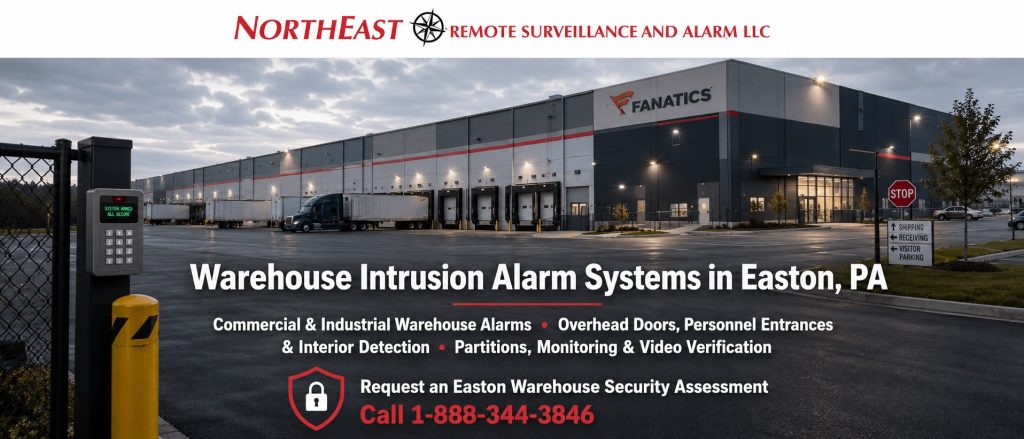
Warehouse intrusion alarm systems in Easton, PA should protect overhead doors, employee entrances, fenced or enclosed inventory areas, offices and restricted rooms while accommodating deliveries and multi-shift work.
NERSA plans commercial alarm zones, door contacts, suitable motion detection, keypad locations, communicator paths and user permissions around the warehouse’s real opening and closing procedures.
Before handover, test armed and disarmed areas, door and motion events, trouble and communication signals, authorized late access, zone names and monitoring contact instructions when service is included.
Design alarm zones around how the warehouse closes and reopens
First, follow the closing routine from the last shipment through final lockup. The review should identify every perimeter opening, interior path, high-value area, and place where a late worker may remain. The alarm design matches real operating conditions.
Next, separate doors, overhead doors, roof access, offices, cages, and open floor areas into useful zones. Define entry delays, user codes, schedules, and response steps. As a result, staff can identify an event without guessing which part of the building caused it.
What the assessment covers
- Personnel doors, overhead doors, windows, roof hatches, and other openings
- Motion detection for offices, aisles, cages, utility rooms, and defined interior paths
- Zone names, schedules, entry delays, user codes, partitions, and closing checks
- False-alarm controls for drafts, pests, vibration, forklifts, and authorized late work
- Monitoring contacts, response instructions, video verification, and event records
- Power and communication backup, device tests, maintenance, and staff training
A reliable system also needs simple procedures.
For example, managers should know how to add a user, handle a late arrival, review an alarm, and report a trouble signal.
The monitoring plan should list contacts in the correct order and keep site notes current.
For supported alarm verification, contact escalation and response coordination, refer to our Easton commercial alarm monitoring guidance.
Any local-authority notification follows the actual monitoring agreement and applicable procedures.
Test the Warehouse Closing Routine
For the wider installation sequence and handover requirements, review Easton commercial alarm installation planning.
Begin with a marked floor plan and a closing walk. Then define each alarm zone and test it under normal warehouse conditions. Finally, confirm the monitoring response, backup communication, and written instructions with the people who open and close the building.
See the Easton intrusion alarm services for related alarm installation, monitoring, maintenance, and takeover services.
Review the Easton warehouse security services for other warehouse needs, or return to the Easton commercial security services for other local property needs.
Project Planning Questions
Can part of a warehouse stay armed while another shift works?
A suitable panel and zone arrangement may support separately managed areas. Map the occupied space, delivery route and protected inventory first, then demonstrate the proposed arming and entry sequence with supervisors before acceptance.
What should the alarm proposal say about overhead doors?
Identify each protected opening, how its position is detected, cable protection, zone naming and expected operation during deliveries. Include testing with the actual door movement and clarify which signals are sent to the monitoring provider.
Request an Easton assessment
NERSA can review your Easton warehouse and recommend intrusion alarm coverage for its doors, interior zones, and after-hours activity.
Request a security assessment.
Compliance, Codes & Project Standards
NERSA plans commercial and industrial security work with applicable code, documentation, inspection and authority-having-jurisdiction requirements in mind. Requirements vary by system, property and jurisdiction. These resources support project planning; they do not establish legal compliance, certification or AHJ approval.
Related guidance: Regulatory compliance & inspection readiness · Warehouse & logistics compliance · NERSA project standards