
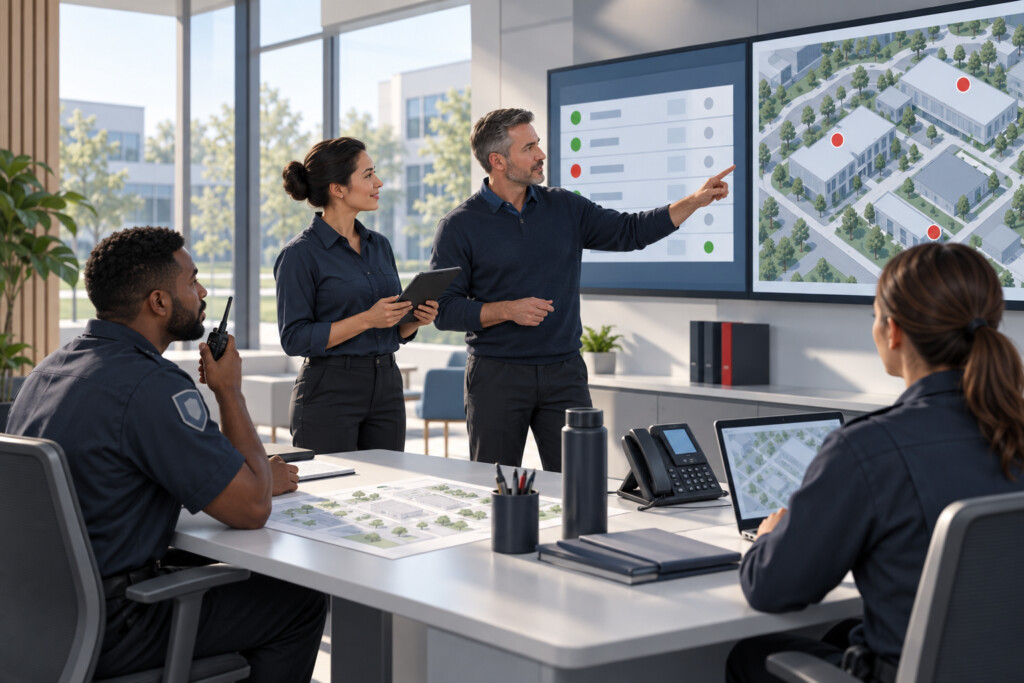


A multi-site escalation workflow defines who receives an event, how it is reviewed, and when responsibility moves to another person or team. It must remain usable when the first contact is unavailable.
Part of Security Operations Center and Centralized Operations.
Assign review and escalation responsibilities
Classify events by the action required and identify the receiving role, site contact, verification step, escalation threshold, and closure responsibility. State coverage hours and contracted service boundaries. Keep site-specific instructions current and available only to authorized personnel.
Plan for unavailable contacts and concurrent events
Plan simultaneous events, incomplete information, communication loss, unavailable contacts, and shift changes. Distinguish a delayed acknowledgment from a completed response. Emergency response arrangements should follow the organization’s approved procedures and any relevant service agreement rather than an assumption created by the dashboard.
Exercise the full response workflow
Run agreed exercises that follow an event through receipt, verification, escalation, communication, and closure. Record who acted and what information was missing. Update the contact chain and instructions after staffing or site changes, and review recurrent issues through the enterprise operating process.
Related planning resources
Frequently Asked Questions
What should happen when the first incident contact is unavailable?
The escalation workflow should identify the next responsible contact or team and how the handoff occurs. Define review authority and test the full response process. An unanswered notification should not leave ownership uncertain.
How should multi-site incident escalation be tested?
Exercise the complete review and handoff with the responsible teams. Include unavailable contacts and concurrent events. Verify that the workflow remains usable across locations rather than checking notification delivery alone.
Let’s talk about your next step
Tell us what you want to improve and which locations are involved. We can help you work through the questions, check what your systems support, and define a practical project scope.