
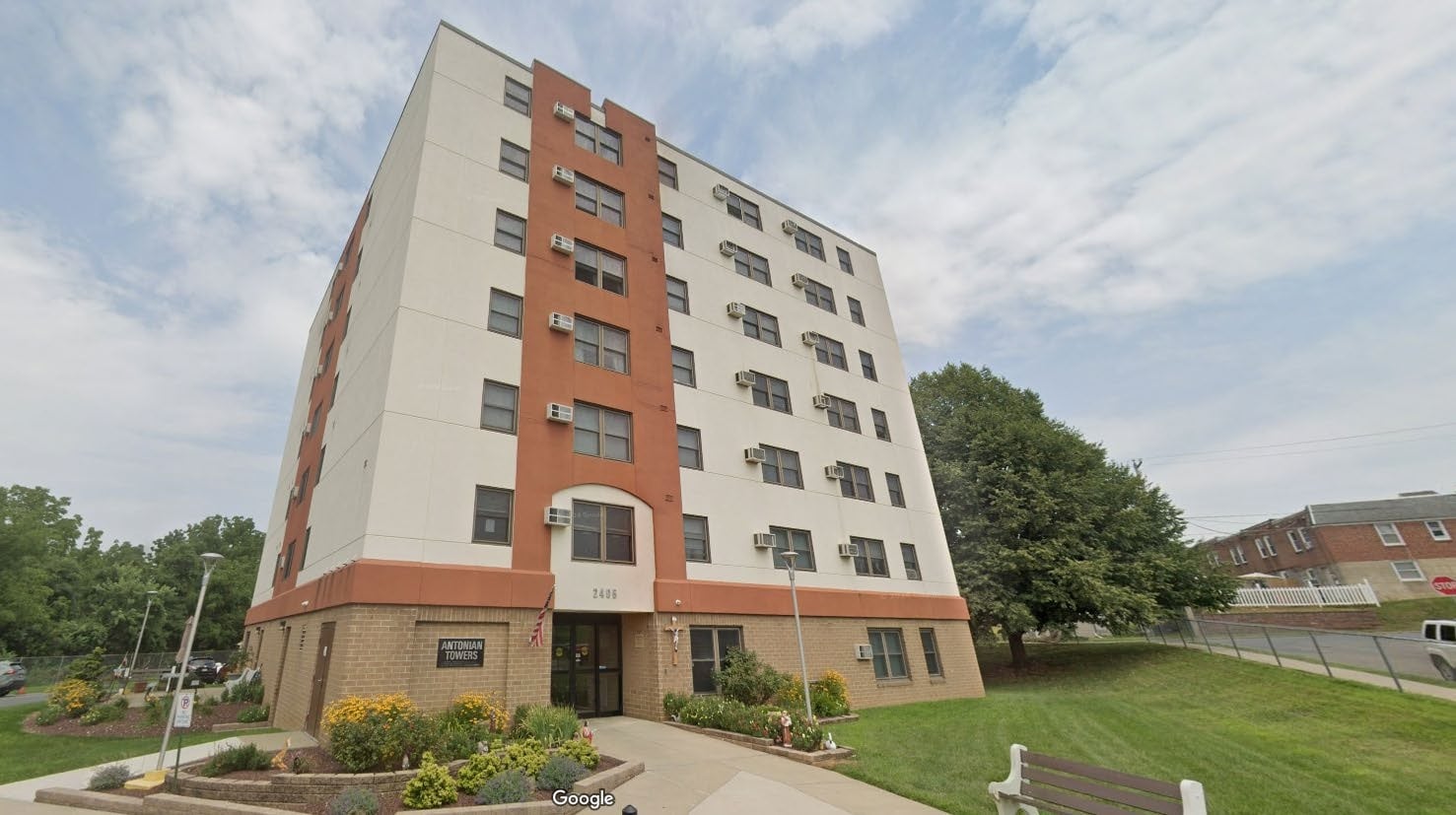
Antonian Towers in the Easton, Pennsylvania area brings the everyday demands of apartment living into one building: residents coming home, visitors arriving, deliveries being made, and staff keeping the property running.

Security for an Active Apartment Community
Building security needs to support those routines while giving management practical ways to control entry and review activity.
Northeast Remote Surveillance and Alarm, LLC (NERSA) provided building access control, visitor entry systems, building-wide cameras, and exterior cameras with color-at-night capability for Antonian Towers. These four elements address different parts of the same operating environment, from deciding who may enter to documenting activity inside and outside the building.
The property is listed by Holy Family Senior Living at 2405 Hillside Avenue, Easton, in Northampton County.
Its published housing materials identify 50 apartments.
That setting makes clear, manageable building systems especially relevant: technology must serve a residential community while remaining practical for the people responsible for daily administration.
The Project: Entry Management and Video Coverage
The Antonian Towers project combines entry management with video surveillance across the building and around its exterior. Access control addresses authorized entry. Visitor entry systems provide a process for people arriving without regular access. Cameras supply visual information, while exterior color-at-night cameras extend the project’s attention to nighttime conditions.
These functions are complementary, but each needs a defined role. A camera does not decide whether a visitor should be admitted, and an entry credential does not explain every event near a doorway. Together, the project components give management several ways to address building activity without expecting one device to perform every task.
Building Access Control
Building access control was a core part of NERSA’s work at Antonian Towers.
At its simplest, access control establishes a managed process for authorized entry at the doors included in the installation.
For an apartment property, that process needs to remain understandable for residents and manageable for staff.
Administration is as important as the equipment at the entrance. Property teams need clear responsibility for granting access, making changes, and addressing lost or no longer authorized credentials where credentials are used. Consistent procedures help keep entry permissions aligned with the people who currently need them.
The doorway itself also matters. Locks, closers, door alignment, and everyday use influence whether an entrance functions as intended. The Antonian Towers scope places access control within the broader building security project, recognizing that entry management involves both electronic systems and the physical opening.
Visitor Entry Systems
Visitors create a different set of requirements from regular building users. Family members, guests, deliveries, and service providers may arrive for legitimate reasons without having ongoing access. A visitor entry system provides a defined starting point for handling those arrivals instead of leaving admission entirely to informal arrangements.
At Antonian Towers, visitor entry systems were included alongside building access control.
The distinction is useful: access control manages established authorization, while visitor entry supports the process of requesting and approving entry.
Clear instructions at the entrance and understandable procedures are important to making that process usable.
For property managers evaluating similar work, the key questions are operational. Who receives an entry request? Who is permitted to approve it? What should a visitor do if the intended contact is unavailable? Answering those questions helps match the system to the building’s actual routines.
Building-Wide Camera Surveillance
NERSA’s Antonian Towers project also includes building-wide cameras.
Video surveillance adds a visual record to the property’s security tools, supporting review of activity within the areas covered by the installed cameras.
Its value depends on useful views, reliable recording, and staff knowing how to find relevant footage.
Building-wide coverage is a project scope description, not a promise that every location is visible. Camera placement should reflect the property’s priorities and the purpose of each view. Shared circulation, entry activity, and other management-designated areas require different perspectives, and unnecessary views into private residential spaces should be avoided.
For example, an overview can help establish the sequence of an event, while a more focused view may provide additional detail. When reviewing footage, staff benefit from clear camera names and accurate timestamps. These practical details make video easier to use when management needs to understand what occurred.
Exterior Cameras with Color at Night
Outside Antonian Towers, the project includes cameras with color-at-night capability. Exterior conditions change substantially after sunset, and a view that appears useful during daylight may behave differently under building lights, street lighting, shadows, or passing vehicle headlights. Nighttime performance deserves its own attention.
Color imagery can preserve descriptive information that may be less apparent in a monochrome view, such as clothing or vehicle color. That information can assist review when it is clearly captured. Results still depend on the camera, available illumination, distance, motion, and the conditions within the scene.
The exterior portion of the Antonian Towers project brings that nighttime consideration into the overall surveillance scope. For comparable buildings, reviewing actual nighttime footage is a practical way to assess whether the selected views remain useful. Color capability should support clear documentation rather than substitute for appropriate placement and lighting.
Using the Systems Together
An apartment building benefits when staff understand how each system contributes to their work. Access control supports entry permissions, visitor entry supports admission requests, and cameras support visual review. Exterior color-at-night cameras add another consideration: whether useful information remains available when surrounding light levels change.
Consider a question about activity near a building entrance. Management may need to understand the reported time, the relevant camera view, and the entry procedures in effect. Reviewing those sources according to established responsibilities can provide context. It does not require assuming that every system is technically integrated or that every event is automatically linked.
The Antonian Towers project demonstrates the importance of addressing entry and observation within the same property plan. This approach helps managers consider the complete operating process, including what happens before someone enters, what staff can review afterward, and how responsibilities are assigned.
Keeping Building Security Practical
Ongoing use depends on clear administration. Staff need to know who maintains access permissions, who can review recordings, and whom to contact when equipment requires attention. Documentation and consistent naming help preserve continuity when personnel or responsibilities change. Periodic checks can identify issues before staff need a particular view or entry function.
Resident experience should remain part of that planning. Entry instructions need to be easy to follow, and changes to established routines should be explained clearly. Management can also identify how residents should report a door that does not close properly, a visitor entry problem, or a concern about activity in shared areas. Those reports give staff useful starting points for investigation and maintenance. A clear reporting process helps connect the installed systems to the people who use the building every day, while keeping responsibility for technical adjustments with the appropriate staff or service provider. This makes ongoing support more clearly organized and easier for everyone involved to understand and use consistently.
For apartment owners and managers in Easton and the surrounding Lehigh Valley, Antonian Towers provides a relevant example of a coordinated security scope.
NERSA’s work brings together building access control, visitor entry systems, building-wide cameras, and exterior color-at-night cameras.
Each component serves a specific purpose within everyday property operations.
Planning a similar project begins with the building’s entrances, visitor routines, surveillance priorities, and nighttime conditions.
Request a security assessment from NERSA to discuss those needs and develop a practical scope for your apartment property.