
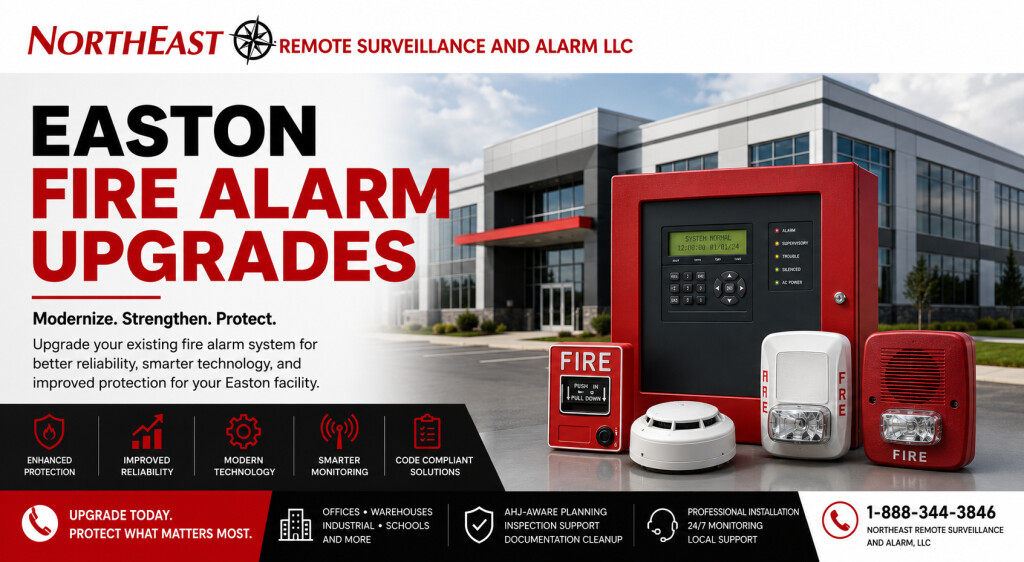
Easton Fire Alarm Upgrades modernize aging detection, notification, supervision, communication, and control equipment for Easton commercial properties.

For the full service overview and new systems, visit commercial fire alarm installation in Easton, PA.
This page is specifically about existing-system upgrades, panel modernization and staged replacement.
When a fire alarm system needs an upgrade
Fire alarm changes require careful planning. First, document the existing control unit, devices, circuits, power, and communication path. Next, review active troubles, inspection findings, building changes, and unsupported equipment.
An upgrade should correct defined system needs. For an Easton panel replacement, expansion or tenant change that requires professional design or engineering, NERSA can coordinate qualified paid third-party fire-alarm design contractors under its project management. The responsible qualified professional and AHJ determine any required drawings, seals and approvals, while NERSA coordinates installation, programming, system-interface testing and handover within its contracted scope. For example, it may replace unreliable devices or improve notification coverage. In addition, it may support a required monitoring path or a planned tenant renovation.
What the assessment covers
- Control equipment, software support, and available capacity.
- Initiating devices, notification appliances, and circuit condition.
- Power supplies, batteries, and communication paths.
- Building use, floor plans, renovation scope, and inspection records.
- Permits, testing, turnover, and monitoring steps.
Existing equipment can remain only when the final design permits it. However, compatibility must follow the listed system requirements. The project team should also coordinate the work with the authority having jurisdiction and other required professionals.
Plan the Upgrade and Handoff
A controlled plan reduces disruption. Therefore, the scope should explain temporary measures, device replacement, programming, acceptance testing, and monitoring changes. Building staff should also receive clear instructions before turnover.
Review commercial fire alarm systems in Easton for system planning.
Also review fire alarm maintenance and repair for active faults or service needs.
For related existing-system work, return to Easton Commercial Security System Upgrades, Retrofits, and Takeovers.
Keep Clear Upgrade and Service Records
Before work begins, identify who approves the scope, coordinates access, and receives system notices. Record which equipment will remain and which items will change. At handover, request the updated equipment list, completed test records, operating instructions, and service contacts. Keep unresolved items visible with an assigned person and follow-up date so building staff understand the final condition.
Decide What Is Reusable Before Replacing a Fire Alarm Panel
An Easton fire alarm upgrade starts with a site survey and a deficiency list, not an assumption that all existing devices need replacement. Owners should also identify upcoming tenant changes and occupancy needs so the proposed modernization can address known expansion plans without adding unnecessary equipment. Record the current panel manufacturer and model, device types, notification circuits, power and batteries, communicator, inspection results, available drawings and programming access. Identify parts that are unsupported, additions that exceed panel capacity and layout changes that affect the approved protection.
When reuse is proposed, check manufacturer compatibility, listing and approval conditions, condition of cabling and devices, available spare capacity and the equipment’s expected service life. Distinguish a communicator-only modernization from a complete control-unit replacement and from a building renovation that changes detection or occupant notification requirements.
Stage Modernization and Prove the Final Operation
Occupied buildings need an agreed work sequence. Document planned interruption periods, interim precautions, responsibility for affected building interfaces and coordination with the authority having jurisdiction as required. Where elevator recall, sprinkler supervision, HVAC control or access-door release is involved, establish the approved sequence and responsible contractors before changing wiring or programming.
At completion, verify the changed system functions, monitoring signals, device descriptions, required notifications and restoration to the expected normal state. Deliver updated drawings or records, instructions, test documentation, unresolved limitations and the new account or programming ownership information. A long-term upgrade is successful when the customer understands what remains and what was replaced.
Fire alarm upgrade questions
Can the existing devices stay when the panel is upgraded?
Only where the proposed combination is compatible, supportable and acceptable under the approved project requirements.
Should communicator upgrades be included automatically?
Evaluate the reporting path and supervision requirements separately; a suitable communicator may remain, while an unsupported one may justify modernization.
Request an Easton assessment
NERSA can document the property, explain the options, and recommend Easton fire alarm upgrades that fit your operating needs.
Request a security assessment.
Compliance, Codes & Project Standards
NERSA plans commercial and industrial security work with applicable code, documentation, inspection and authority-having-jurisdiction requirements in mind. Requirements vary by system, property and jurisdiction. These resources support project planning; they do not establish legal compliance, certification or AHJ approval.
Related guidance: Regulatory compliance & inspection readiness · Fire alarm inspection readiness · NFPA 72 fire-alarm planning