
Hazleton manufacturing plant security systems should protect controlled production areas while allowing employees, maintenance teams and approved contractors to do their work without unnecessary disruption.

For security across the rest of the property, see Hazleton commercial security systems.
Separate production access from general building access
A manufacturing site may include offices, production rooms, maintenance spaces, stores and dispatch areas with very different access needs. Begin by identifying which employees need each area to perform their duties. A person authorized to enter the building should not automatically receive access to every production or support space.
Use the plant’s actual operating responsibilities to define permissions. Production supervisors, technicians and visiting service personnel may need different access windows. The purpose is not to make movement difficult; it is to make authorization clear and manageable when people change roles or a temporary job ends.
Review transitions between areas
Look at the points where people or materials move from one responsibility to another. These can include a receiving entrance, a controlled production boundary, a tool store or the route from finished goods to dispatch. Ask what managers need to understand if a question arises at each transition.
Camera views should support those questions without being treated as a substitute for process records. An overview may show when material entered an area, but it may not establish quantity, condition or the reason for a production decision. Define the intended evidence and its limits before deciding where cameras belong.
Give maintenance access a clear owner
Maintenance often happens outside ordinary office hours or during a planned shutdown. Identify who authorizes access to equipment rooms, stores and production spaces during those periods. If an outside technician needs temporary entry, associate that permission with a responsible plant contact and an expected completion time.
Security permissions do not authorize work on machinery or replace the site’s safety procedures. Qualified plant personnel must control those requirements. Keep admission, work authorization and supervision distinct so a credential is not misunderstood as permission to begin a hazardous task.
Handle contractors without permanent exceptions
Define where contractors report, how their sponsor is contacted and whether they need an escort. Contractors working across several days may require a practical check-in arrangement, but convenience should not leave credentials active indefinitely. Plan how access is issued, reviewed and removed when the work is complete.
A useful example is a service visit that extends beyond its expected end date. The sponsoring manager should renew the permission deliberately and confirm the areas still required. Avoid simply converting a temporary credential into unrestricted access because the technician might return later.
Check shift changes and shared entrances
Observe how employees enter and leave when shifts overlap. Several people arriving together can make individual entry records difficult to interpret if everyone follows through one opening. Review the physical arrangement and staff procedures with the site’s operational needs in mind. Do not assume a credential event proves that only one person passed through a door.
Consider how overtime, temporary staffing and supervisors covering another shift affect access schedules. Changes should be documented and easy for an authorized administrator to reverse. Required emergency exit arrangements and door hardware should receive appropriate professional review; operational convenience must not lead to improvised locking or blocked exits.
Keep tools, parts and finished goods distinguishable
A parts store presents a different review question from an outbound loading area. For tools or components, management may need to understand entry to a controlled room. For finished goods, the concern may be movement into staging and release to dispatch. A single broad production view rarely answers both questions well.
Coordinate camera names with the plant’s names for rooms and material areas. Where a stock or production record will be used to locate an event, confirm that its time reference can be compared with the recording. Preserve the distinction between a security observation and a verified inventory transaction.
Specify equipment for the actual environment
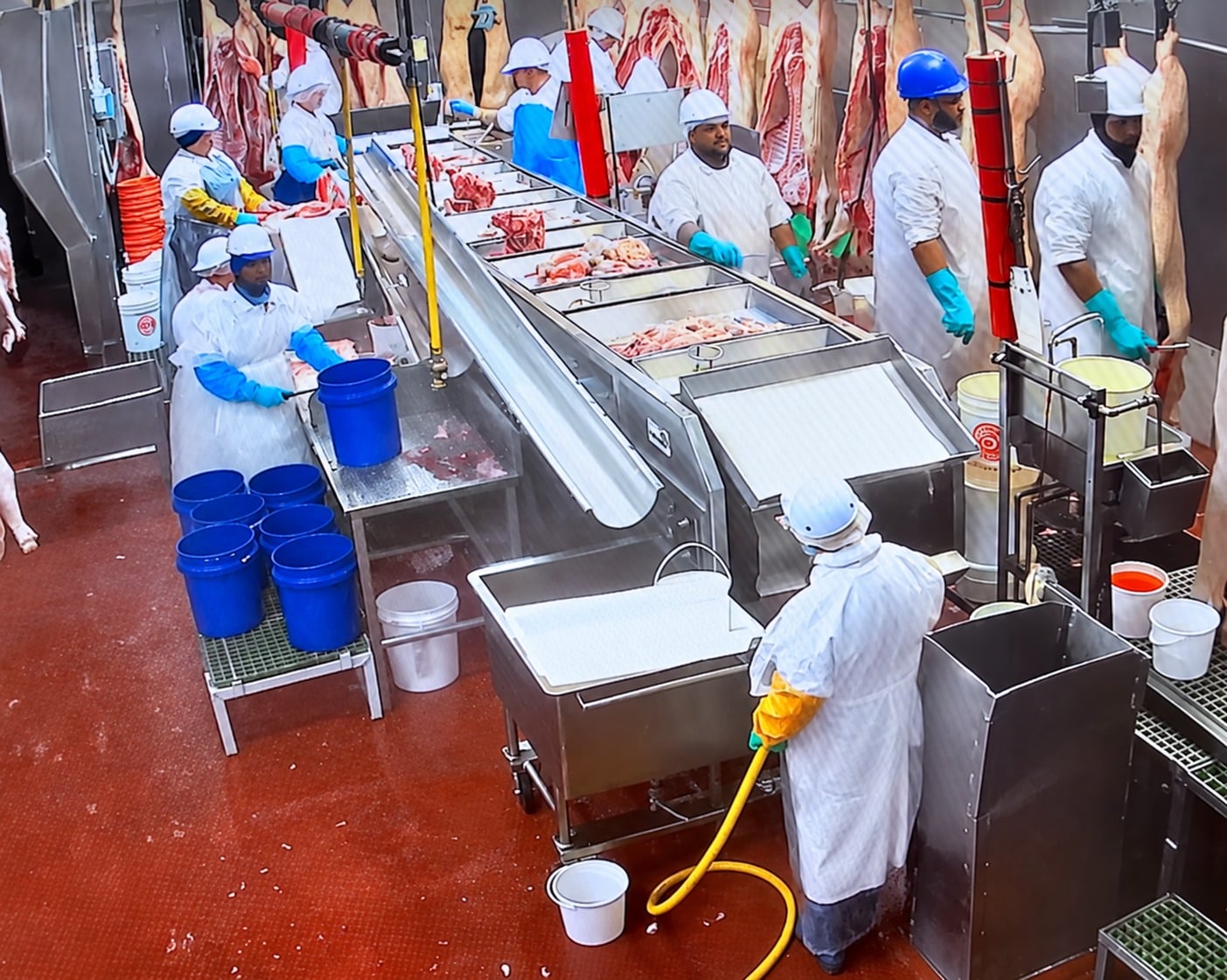
Discuss the conditions at proposed camera, reader and equipment locations with the installer. Temperature, dust, moisture, vibration, cleaning practices and potential impact can affect equipment selection or placement. Do not assume that equipment suitable for an office corridor is appropriate beside a production process.
Include the people responsible for facilities, IT and production in decisions about cable routes, equipment cabinets and maintenance access. Installation and future servicing should be coordinated with plant operations. Any special environmental or safety requirements need evaluation by appropriately qualified professionals rather than assumptions based on a product description.
Set useful recording and response expectations
Choose recording retention and authorized reviewers based on the plant’s investigation needs. Establish who can preserve an incident and how an export is documented. Restrict administrative privileges to designated personnel and remove access when staff responsibilities change.
If an alarm or unusual after-hours event requires action, define the responsible contact and escalation path. Video recording alone does not mean someone will respond. Verify any monitoring service separately, including its operating hours and the information staff must keep current.
Accept the system with real plant scenarios
Test an ordinary shift arrival, an expired contractor permission, a maintenance visit and retrieval of a known material movement. Ask actual supervisors and administrators to carry out the tasks they will own. Confirm that the arrangement works without relying on the installer to interpret every event.
For planning, bring a floor plan, area responsibilities, shift schedule and contractor check-in procedure. Request documented permissions, camera names, support contacts and training responsibilities. Review the arrangement when a production line changes, a room changes use or staffing patterns are revised.
Discuss your property
To discuss the conditions at your property, Request a security assessment.
Camera placement and recording options are explained in Hazleton video surveillance.
For employee credentials and controlled doors, see Hazleton access control.
Cable routes, network connections and equipment support are covered in Hazleton low-voltage infrastructure.
To discuss the conditions at your property, Request a security assessment.