
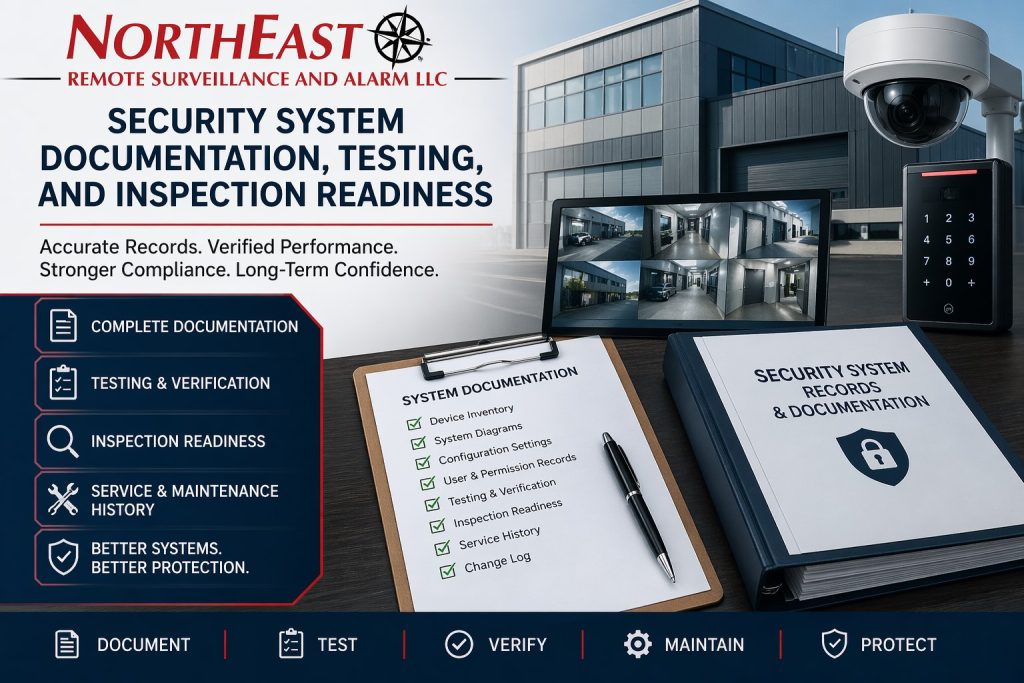
Security-system documentation should give owners and service teams a clear record of installed equipment, tested functions, configuration decisions, and unresolved issues.

Record What Was Installed
Keep a system summary, device inventory, location references, and relevant equipment information. Depending on the project, this may include camera schedules, controlled-door schedules, alarm-zone descriptions, network relationships, power sources, and major wiring paths.
Use labels that match the physical equipment and the records. A device name should help an authorized technician find the correct camera, door, controller, or alarm input without relying on the original installer’s memory.
Document Configuration and Responsibilities
Record the settings that affect daily operation, including user roles, credential administration, recording retention, monitoring contacts, event routing, and important integrations. Identify who may approve changes and who maintains the current records.
Keep sensitive configuration and access information in an appropriately controlled location. The record should support authorized service without exposing passwords or unnecessary security details in general circulation.
Keep Evidence of Testing
A useful test record identifies the device or function checked, the date, the person performing the work, the expected result, and the observed result. Record deficiencies, corrective work, retesting, and any remaining follow-up.
The required procedures and documentation depend on the system, project scope, applicable standards, and reviewing authority. A demonstration that a device responds is not a substitute for the project’s required verification.
Prepare for Inspection and Service
Organize the current drawings, device lists, equipment instructions, test records, and open issues before a review. Make clear which records describe the installed condition and which describe proposed work.
After service or expansion, update the affected records when equipment is moved, replaced, reprogrammed, renamed, or reassigned. Keep a change history so later technicians can understand what changed and why.
Resolve Documentation Gaps
Start with missing device identities, unclear administrative responsibility, incomplete test records, and undocumented changes. Assign each unresolved item an owner and a next step instead of allowing it to disappear into a general service note.
Related Guides
- Commercial Security, Fire Alarm & Life-Safety Compliance — Return to commercial security compliance guidance.
- NFPA 70 NEC and Low-Voltage Security System Wiring — Review wiring and installation documentation considerations.
- NFPA Standards for Commercial Security, Fire Alarm, Access Control, Wiring & Life Safety — Explore standards relevant to commercial security systems.
- Security System Documentation Handoff Standards — Review documentation handoff at project closeout.
- Commercial Security System Documentation Cleanup — Plan cleanup of incomplete or outdated system records.
Frequently Asked Questions
What should a security-system handover record include?
Record installed equipment, locations, configuration decisions, tested functions, support responsibilities, and unresolved issues. Include the relevant camera, door, alarm, network, power, and wiring information for the scope. Authorized service teams should be able to understand what was delivered.
Where should sensitive security configuration records be kept?
Keep them in an appropriately controlled location with access for authorized people. Records should support service without exposing passwords or unnecessary security details in general circulation. Assign responsibility for keeping the documentation current.
Request a Documentation and Readiness Review
Request an assessment to review system records, testing evidence, and outstanding documentation needs.