ADA compliant door access systems should be designed so controlled openings remain usable for all occupants without creating barriers. Electronic access control, automatic operators, and door hardware must work together so people can enter, exit, and move through a building safely and consistently.
Northeast Remote Surveillance and Alarm, LLC designs commercial door access systems with attention to accessibility, usability, and real-world building operation across offices, schools, healthcare facilities, municipal buildings, warehouses, and multi-tenant properties.
This is a locked ADA compliance spoke. For broader ADA planning, visit ADA compliance for electronic access control system. For full system design, visit commercial access control system. Where Door Access Systems Create Accessibility Issues
Accessibility problems often occur at controlled doors where hardware, automation, and access control overlap. Main entrances, employee doors, shared entries, interior transition doors, and public-facing openings are common locations where usability can break down.
A system may function technically but still create difficulty if the door is hard to open, poorly timed, or difficult to operate.
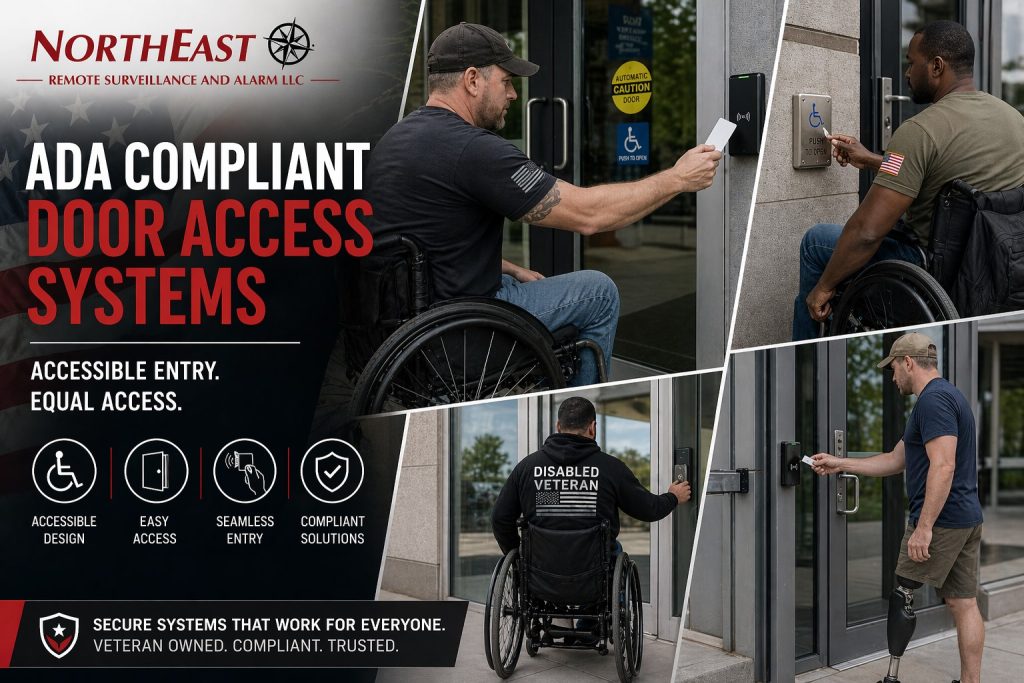
Automatic Door Operators and Assisted Entry
Some commercial doors require automatic operators or assisted entry to remain accessible. Push plates, actuators, and credential-based triggers must be placed where users can easily reach and activate them.
The system should allow enough time for entry and should not require excessive force, awkward positioning, or repeated actions to gain access.
ADA Compliant Door Access Systems in Commercial Buildings – Door Hardware and Controlled Openings
Electrified hardware such as strikes, maglocks, and controlled latching systems must be selected and installed so the door remains usable. Door closers, latch resistance, and hardware positioning all affect how accessible the opening is.
Access control should support the door, not make it harder to use.
Entry Workflow and User Interaction
An accessible door should work as a complete system. Readers, push plates, intercoms, credentials, and door operators should align so the user does not have to search for controls or perform multiple difficult actions.
The goal is a clean, predictable entry experience that works for all users.
When Door Access Systems Connect to Other Systems
Door access systems may connect to intercoms, credentials, alarms, and fire alarm release, but this page should stay focused on door usability and accessibility.
If the main issue is entry communication, visit commercial intercom and paging systems If the concern is system-wide access control design, visit commercial access control systems. If the opening involves fire alarm coordination or emergency release, visit commercial fire alarm systems.
Compliance and Coordination
ADA considerations should be reviewed alongside building codes, life safety requirements, and door function. Controlled openings should be planned so access control, automation, and safety requirements work together without conflict.
For broader compliance planning, visit code and compliance for commercial security systems.
Request ADA-Compliant Door Access System Planning
If your building needs controlled doors that remain accessible, usable, and coordinated with your access control system, Northeast Remote Surveillance and Alarm, LLC can help.
To review ADA Compliant Door Access Systems in Commercial Buildings – door operation, hardware, and accessibility for your property, contact us to schedule an assessment.