Shipping and receiving area security in Easton, PA should be planned around receiving counters, shipping desks, pallet staging, transfer lanes, check-in points, employee movement, driver activity, and short-duration inventory exposure. Northeast Remote Surveillance and Alarm, LLC designs security systems for Easton warehouses, distribution centers, manufacturing facilities, and commercial properties that need stronger visibility and control in high-traffic handoff zones. For broader citywide planning across cameras, alarms, access control, monitoring, and integrated commercial security, start with Easton Commercial and Industrial Security Systems.
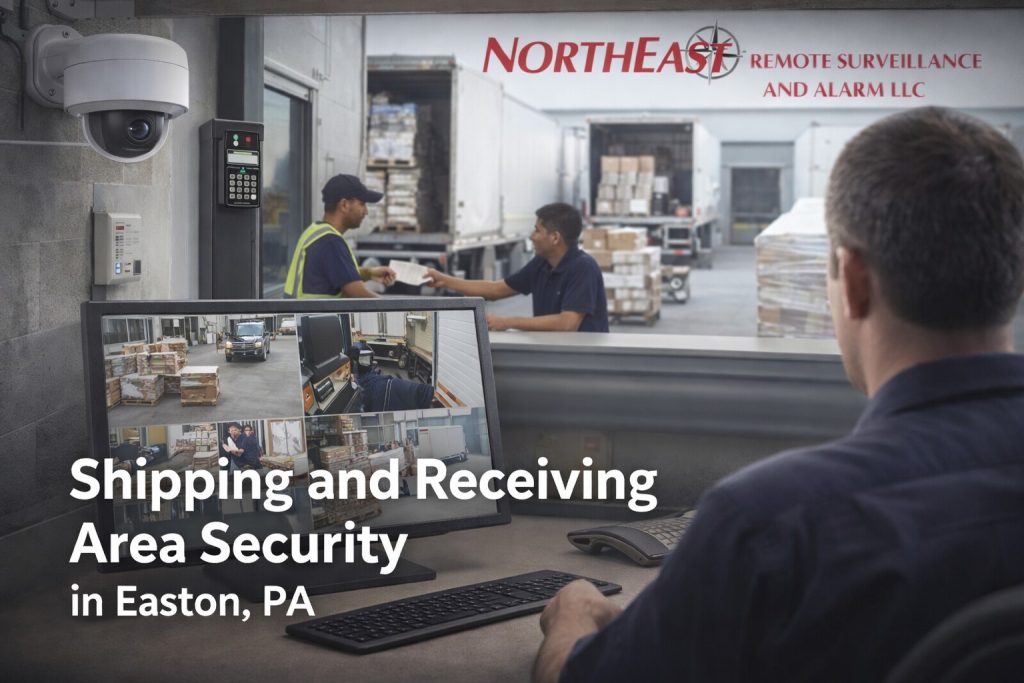
Security Built Around Handoffs and Short-Term Exposure
Shipping and receiving areas create a different type of risk than the rest of a warehouse or industrial property. Product may only be exposed for a short period, but that window is often busy, crowded, and easy to overlook.
Drivers arrive, employees move between tasks, paperwork changes hands, pallets are staged, shipments are verified, and goods move between outside traffic and internal storage.
A good security plan should help document who entered the area, what goods moved through it, where items were staged, and whether activity matched authorized procedures.
Where Shipping and Receiving Security Matters Most
Receiving Counters and Shipping Desks
Receiving counters, shipping desks, and dispatch windows are key handoff points. These areas often involve paperwork, driver interaction, shipment verification, and product movement.
Security coverage should help management review who was present, when shipments were processed, and whether activity around the counter or desk matched expected workflow.
Pallet Staging and Temporary Hold Areas
Pallet staging areas and temporary hold zones can create exposure because goods may sit briefly before being moved, released, inspected, or stored. These areas should be visible enough to review movement, handling, and access during active periods.
Transfer Lanes and Processing Zones
Interior transfer lanes, check-in points, and processing zones are where goods, employees, drivers, and paperwork often overlap. Security planning should reduce blind spots and improve accountability without slowing down normal workflow.
Adjacent Doors and Restricted Areas
Shipping and receiving areas often sit near inventory rooms, dispatch offices, returns areas, secure storage, employee corridors, or warehouse-to-office transitions. These adjacent openings may need tighter control if they connect to sensitive areas.
Cameras for Shipping and Receiving Review
Shipping and receiving cameras should be positioned for real review, not just general observation. A useful layout can help show when goods entered the area, where they were staged, who handled them, and whether unusual activity occurred near temporary holding points or processing counters.
Camera coverage may include receiving counters, shipping desks, staging zones, transfer lanes, dispatch windows, check-in areas, and adjacent access points.
For broader camera system planning, use Commercial Security Camera Installation in Easton, PA.
Access Control for Sensitive Processing Areas
Not every employee, driver, vendor, or visitor should be able to move freely through the full shipping and receiving area. Access control can help limit entry into shipping offices, receiving rooms, paperwork stations, inventory-adjacent spaces, and restricted processing areas.
Credentialed entry, schedules, audit trails, and controlled doors can help create a cleaner record of who entered sensitive areas and when.
For door credentials, schedules, permissions, and audit trail planning, use Commercial Access Control Systems in Easton, PA.
After-Hours Shipping and Receiving Oversight
Some shipping and receiving risks increase outside normal business hours. Early deliveries, late pickups, weekend activity, reduced staffing, and temporarily staged goods can all create exposure when fewer people are present.
After-hours planning should focus on visibility, door activity, staged product, adjacent rooms, and recurring movement patterns in the handoff zone.
For limited-staff and overnight warehouse exposure, use After-Hours Warehouse Security and Monitoring in Easton, PA.
Built for Easton Warehouse and Industrial Operations
Easton facilities do not all use shipping and receiving areas the same way. Some process inbound pallets all day, some handle outbound orders in waves, and others manage raw materials, finished goods, returns, or smaller but critical dispatch areas.
A properly planned system should account for traffic patterns, staffing levels, staging methods, adjacent doors, operating hours, and the level of risk tied to missing items, damaged goods, paperwork disputes, or unauthorized access.
The goal is stronger visibility, better documentation, and tighter control over one of the busiest operational zones in the building.
Request Shipping and Receiving Area Security in Easton, PA
If your Easton facility has receiving counters, shipping desks, staging zones, transfer lanes, temporary hold areas, or high-traffic product handoff points, Northeast Remote Surveillance and Alarm, LLC can help design a system around the way your operation actually works.
Call 1-888-344-3846 or use Request a Security Assessment to schedule a shipping and receiving security review.
Frequently Asked Questions
What is shipping and receiving area security?
Shipping and receiving area security focuses on the operational handoff zone where goods, paperwork, employees, drivers, and staged materials move through the property.
How is this different from loading dock security?
Shipping and receiving security focuses on receiving counters, shipping desks, staging areas, check-in points, transfer lanes, and processing zones. Loading dock security focuses more narrowly on dock doors, trailers, dock aprons, and bay activity.
What should cameras cover in a shipping and receiving area?
Cameras should cover receiving counters, shipping desks, pallet staging zones, transfer lanes, check-in points, temporary hold areas, dispatch windows, and adjacent controlled access points.
Why is access control important in shipping and receiving areas?
Access control helps limit who can enter sensitive processing areas, shipping offices, receiving rooms, inventory-adjacent spaces, and restricted doors connected to the handoff zone.
Can shipping and receiving security help after hours?
Yes. Better visibility, access control, and monitoring can help review early deliveries, late pickups, weekend activity, temporarily staged goods, and movement during reduced-staff periods.
Does this page cover full warehouse security?
No. This page stays focused on the shipping and receiving processing zone. Full-building warehouse security, trailer yard security, and dock-door security should remain on their own dedicated pages.