
Make unusual arrivals and trailer movements easier to review at your Scranton truck yard.

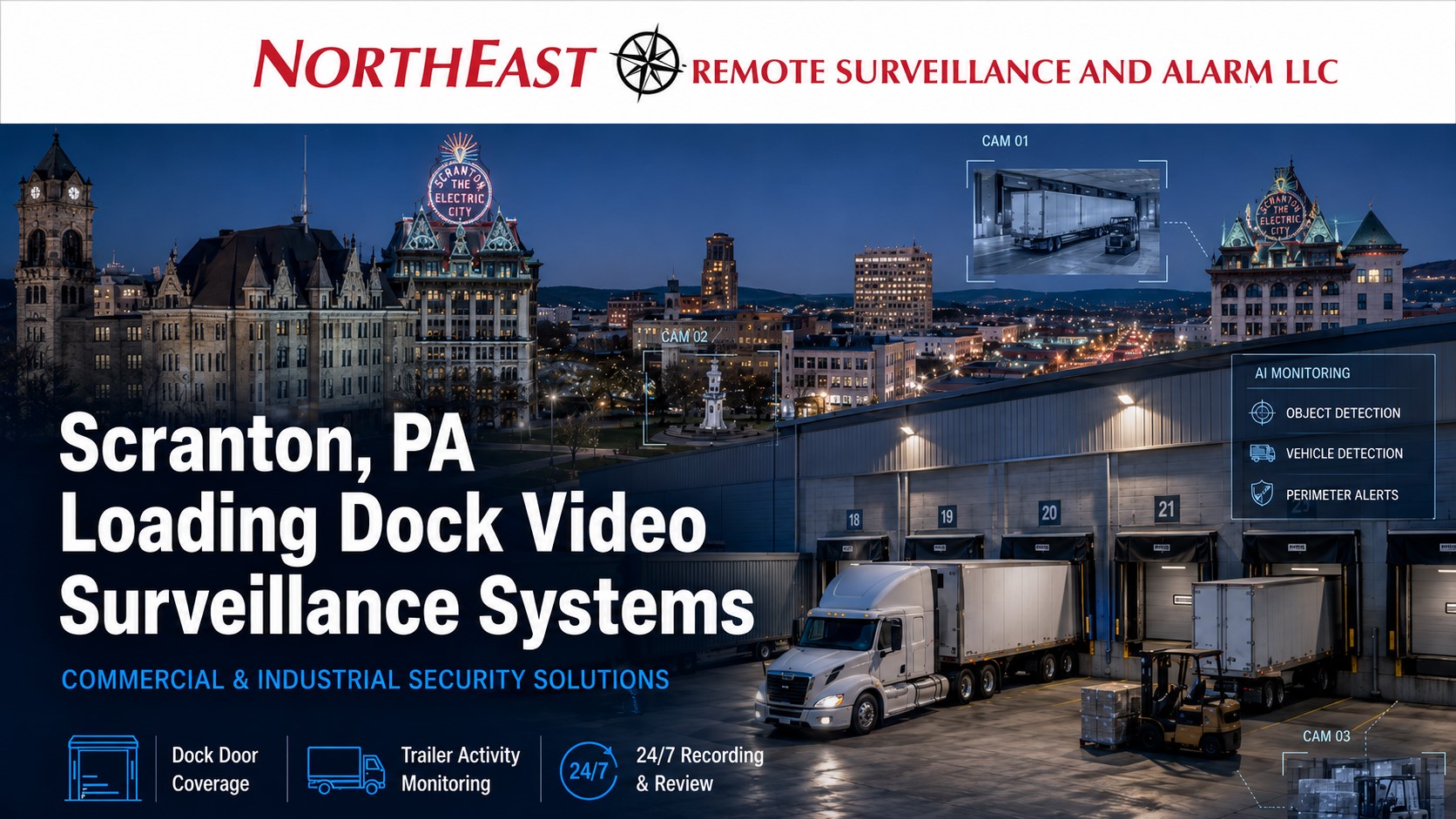
Plan camera views and records around the loading exceptions staff need to resolve, while keeping normal freight work moving.
For the other systems supporting the property, review Scranton commercial security systems.
Start with the exceptions that consume staff time
A yard may function well on an ordinary day yet become difficult to review when a carrier arrives early, a trailer changes position or a collection is disputed. List the situations that regularly require phone calls and reconstruction. Those examples reveal where clearer records, useful camera views or better communication would help.
Keep the security questions separate from dispatch instructions. Staff determine which load belongs to which carrier; recordings can help explain what physically happened. A camera image is not an appointment, a release authorization or a complete inventory record. The arrangement should support those business records without pretending to replace them.
Handle arrivals outside the expected schedule
Identify where an early, late or unannounced driver should stop and who can decide the next step. A driver should not need to walk among active loading positions to find assistance. Clear directions and an appropriate contact reduce confusion before it spreads into the yard.
Consider an arrival after the receiving team has left. The designated contact needs access to the relevant schedule and authority to approve a waiting location or decline entry. A remote camera view may support that decision, but it does not establish whether a delivery is expected. Agree on the procedure before selecting equipment.
Keep trailer relocations understandable
Where trailers move between staging positions, use location names that staff can record and recognize. A useful recording should show the relevant movement and enough surrounding context to distinguish the area. If trailer identification is important, evaluate the required image detail rather than assuming a distant overview will provide it.
Document which operational record tracks the move. An authorized yard move can look unusual to someone reviewing footage without that context. When a question arises, combine the movement record, available images and staff instructions before deciding what occurred. Avoid assigning responsibility from one isolated view.
Review changing dock assignments
A carrier may be directed to another door after arrival because the original position is unavailable. The receiving or shipping record should reflect that change so a later reviewer does not search only the first assigned door. Align camera names with the door numbers used by operations.
Check how goods wait between preparation and loading. A view of the exterior vehicle does not necessarily show which outbound group was taken to the dock. If that handoff is the concern, review the relevant interior staging and loading areas as well. Explain limitations when packaging, vehicles or equipment obscure detail.
Separate vehicle presence from freight release
A vehicle arriving and leaving does not prove that an authorized collection occurred. Staff still need a clear release procedure and a record of the decision. Identify who can approve substitutions or unusual collections and how another shift can understand that approval.
For a disputed collection, a practical review might compare the approved carrier information, staging record, dock activity and departure period. The system should make those observations easier to find. It should not invite conclusions about sealed contents or instructions that were never visible to a camera.
Check views with the yard in use
Parked trailers, containers and handling equipment can obstruct views differently throughout the day. Review representative operating conditions, including busy periods and after-dark lighting. A clear empty-yard image is not enough to demonstrate useful coverage when the property is full.
Assign someone to report blocked views or changed staging arrangements. If a camera is moved, record the date and previous location so older recordings remain understandable. Where vehicle detail or readable plate information is required, discuss angle, lighting and movement with the installer as a separate requirement.
Keep drivers’ destinations clear
Permission to enter a yard should not automatically grant access to offices, stores or warehouse areas. Define where drivers may wait, how they contact staff and which entrance serves approved facilities. Coordinate those instructions with intercom routing and controlled doors.
Traffic management, pedestrian routes and workplace safety remain separate responsibilities requiring appropriate site procedures. Cameras do not replace signs, supervision or a suitable physical arrangement. Security equipment should be positioned and serviced with those responsibilities in mind.
Preserve the relevant sequence
Choose retention around the delay between freight movement and discovery of a discrepancy. A question raised several days later needs the relevant recordings to remain available. Establish who can request preservation and which authorized person coordinates an export across several views.
Check time settings and test playback on an approved device. Include camera labels and the relevant date range in the business’s incident record. Limit access to people who need it, rather than distributing unrestricted system access to everyone involved in a transport dispute.
Define the response during closed hours
If active observation or alert handling is needed, confirm the service separately from recording. Document operating hours, expected overnight activity, contact order and permitted actions. A parked trailer or authorized maintenance visit may be normal activity, so whoever responds needs current information.
Acceptance testing should follow one ordinary arrival and one exception through the available records. Have actual yard or shipping staff locate the event using their usual references. Bring a yard drawing, dock names, arrival instructions and examples of difficult exceptions to NERSA so the proposal addresses the questions your team actually needs to answer.
Discuss your property
To discuss the conditions at your property, Request a security assessment.
Camera placement and recording options are explained in Scranton video surveillance.
For employee credentials and controlled doors, see Scranton access control.
Cable routes, network connections and equipment support are covered in Scranton infrastructure and cabling.
To discuss the conditions at your property, Request a security assessment.
Compliance, Codes & Project Standards
NERSA plans commercial and industrial security work with applicable code, documentation, inspection and authority-having-jurisdiction requirements in mind. Requirements vary by system, property and jurisdiction. These resources support project planning; they do not establish legal compliance, certification or AHJ approval.
Related guidance: Regulatory compliance & inspection readiness · Warehouse & logistics compliance · Loading-dock compliance planning