
License plate recognition systems in Allentown, PA capture searchable plate data at defined vehicle lanes for gates, truck entrances, service drives, fleet yards, and parking areas.

Request a license plate recognition assessment in Allentown
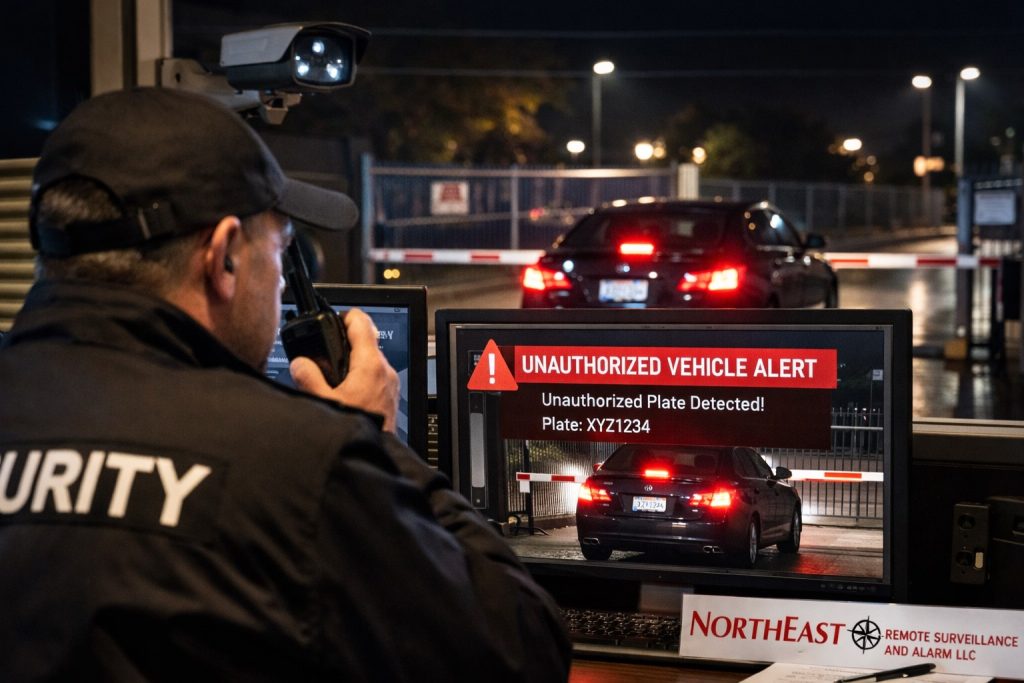
Coordinate camera coverage, recording and incident review through Allentown video surveillance planning.
Plan Plate Capture Around the Vehicle Lane
Northeast Remote Surveillance and Alarm, LLC designs LPR and ALPR systems for commercial and industrial properties that need better vehicle records. First, we study the lane, approach, speed, distance, angle, lighting, and plate position. Then we plan the capture zone, overview view, recording, search, retention, and authorized access.
An LPR system can support one entrance at a small business or a standard across many enterprise locations.
For all local security services, visit Commercial Security Systems in Allentown, PA.
What License Plate Recognition Does
LPR captures plate information from vehicles moving through a defined entry or exit point. As a result, approved users can search vehicle arrivals, departures, repeat visits, after-hours activity, or events around a selected time.
A plate record provides one part of the incident. Many sites also use an overview camera to show the vehicle type, color, direction, lane activity, and surrounding scene.
Why a Standard Camera May Miss the Plate
A general exterior camera may show a vehicle without producing a readable plate. For example, headlights can overwhelm the image at night. Distance, angle, speed, motion blur, lane width, weather, and vehicle height can also reduce detail.
By comparison, an LPR camera uses a controlled view of a specific lane. The camera, lens, shutter, exposure, mounting, and lighting must match the real approach.
Where LPR Works Best
Predictable vehicle movement creates the best capture opportunity. Useful locations often include a main driveway, truck gate, employee parking entrance, visitor lane, service drive, fleet yard, contractor yard, or trailer area.
- A lane with a defined vehicle path.
- A suitable capture distance and horizontal angle.
- A mounting height that keeps the plate in view.
- Controlled speed and limited lane width.
- Lighting and exposure planned for day and night.
- Network, power, storage, and service access.
A wide open lot with vehicles moving in many directions may need lane changes or more than one capture point. In practice, site design matters as much as the camera model.
LPR and Gate Access Control
License plate recognition documents a plate, while gate access control manages vehicle entry. Compatible systems may coordinate a plate event with an authorized entry decision, but permission to enter and safe gate movement require separate checks of authorization, operator controls, safety devices, and the release process.
For keypads, card readers, intercoms, vehicle credentials, and gate operation, visit Commercial Gate Access Control Systems in Allentown, PA.
LPR for Truck Yards and Fleet Properties
Truck yards and trailer areas often need records across long operating hours. For instance, LPR can help staff review which tractor, service vehicle, or vendor arrived near a selected event. However, the system should not assume that a plate alone proves who drove the vehicle or what happened on the property.
For the wider yard environment, visit Truck Yard Security Systems in Allentown, PA.
Search, Alerts, and Vehicle Lists
Supported platforms may allow authorized users to search a full or partial plate, date, time, lane, direction, or camera. Some systems can compare plate reads with approved or watch lists and create an alert.
List quality affects the result. The business needs a process for adding, reviewing, and removing plate records. Staff should also know that dirt, glare, damage, temporary plates, and similar characters can affect automated reads. Review the captured image and surrounding event before treating a list match as a confirmed identification.
Retention, Privacy, and Authorized Use
Most importantly, plate data should have a defined business purpose, retention period, and access policy. Individual user accounts and activity records help protect the system from casual or unauthorized use. The owner should confirm applicable legal, contractual, customer, and privacy requirements.
Design and Verification
- Survey: measure the lane, distance, angle, height, speed, lighting, network, and power.
- Define the record: state the plate detail, overview context, search, alert, and retention needs.
- Select equipment: match cameras, lenses, mounts, lighting, storage, and licenses to the lane.
- Install: create a stable capture zone and protected infrastructure.
- Test: verify day, night, wet weather, different vehicle types, and expected speeds.
- Document: record camera names, settings, lists, accounts, retention, and user roles.
For the broader recording platform, visit Commercial Video Surveillance Systems in Allentown, PA.
LPR FAQs
Can one camera show the plate and the full vehicle scene?
Sometimes. However, many sites get more reliable results from a focused plate camera and a separate overview camera.
Will LPR read every plate?
No. Angle, speed, lighting, weather, plate condition, mounting, settings, and vehicle position affect performance.
Can an LPR system scale to more lanes?
Often, yes. First, NERSA checks platform, license, network, power, storage, and search capacity.
Request an LPR Assessment
Bring a lane layout, typical vehicle types, operating hours, and examples of the records your team needs to find.
Identify who may search or export plate records, how long records are needed, and who maintains vehicle lists.
Request a license plate recognition assessment in Allentown.