
NERSA provides commercial fire alarm installation in Easton, PA for business, warehouse, manufacturing and managed commercial properties.

Request an Easton fire alarm assessment
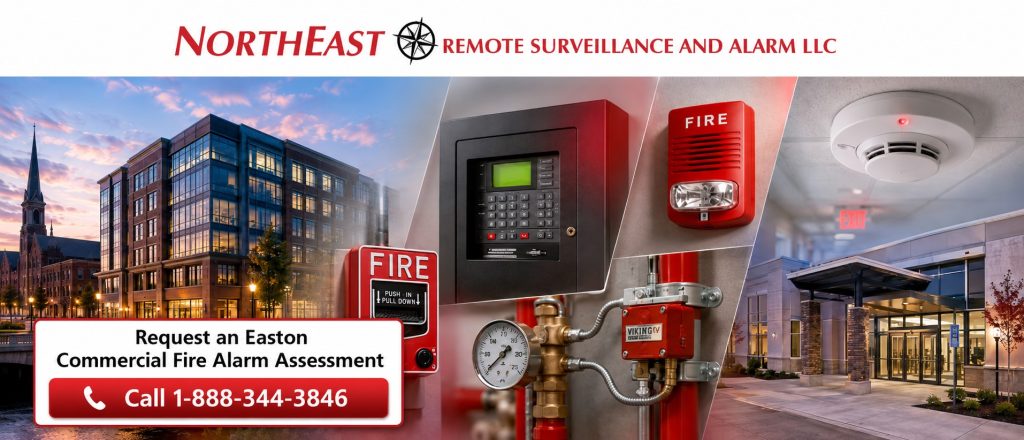
We coordinate fire detection, occupant notification, monitoring, approved system interfaces, testing and customer handover.
For existing fire alarm equipment, we evaluate supportable additions and upgrades before recommending replacement.
For an existing fault, start with Easton fire alarm maintenance and repair; for a monitoring change or upcoming inspection, review fire alarm inspection, testing and monitoring in Easton, PA.
For coordinated building planning, explore our Easton commercial and industrial security guide.
This page focuses on fire alarm installation, required system functions and existing-system improvements.
When comparing proposals for an Easton commercial fire alarm project, confirm the permit and approval responsibilities, required system interfaces, monitoring and testing scope, owner documentation, and who will service the system after handover.
Commercial Fire Alarm Installation in Easton, PA
A new installation begins with a review of the occupancy, floor plan, building use, existing equipment, and proposed work. Offices, warehouses, manufacturing spaces, and multi-tenant buildings can have different detection, notification, and interface needs. The scope should establish the required functions before selecting a panel or device package.
The installation plan should identify equipment locations, cable pathways, primary and backup power, point descriptions, monitoring arrangements, and responsibilities for work by other trades. In an occupied building, coordinate work areas, testing times, and any required impairment procedures with the building team. Completion includes the required testing, current system records, and instruction for authorized staff.
For properties within the City of Easton, City alarm requirements include approved plans and a fire alarm permit before installation, plus required notice before activation.
Confirm the applicable approvals, inspection arrangements, and responsible parties for the specific property; an Easton mailing address may fall under a different municipality.
Fire Detection and Notification for Easton Commercial Buildings
A commercial fire alarm system needs to detect the required condition, identify the affected area, notify building occupants, transmit supported signals, and remain understandable to the people responsible for the property. Depending on the approved design, the system may include smoke detection, heat detection, manual pull stations, horn-strobes, control modules, duct detection, sprinkler waterflow and supervisory inputs, and monitored communication.
The right mix depends on the occupancy, building layout, renovation scope, fire-protection systems already present, and the requirements that apply to the project. Equipment should follow the approved design and sequence of operation rather than being selected from a generic device package.
Fire Alarm Circuit Planning, Communicators and Acceptance Testing in Easton
Begin with the approved design and building use. Commercial fire alarm installation in an Easton office, warehouse, industrial building or tenant renovation requires the correct detection, notification, supervision and emergency-interface sequence for that property—not a universal device count. The responsible design professionals and authority having jurisdiction determine the applicable requirements. Installation planning should identify panel and annunciator locations, point descriptions, accessible testing locations, approved cable and pathways, circuit supervision, power supplies and battery calculations, permitted impairments and coordination with occupied areas.
Keep fire alarm communications distinct from ordinary security alerts. A required monitoring communicator and any primary or alternate signaling paths must be compatible with the listed equipment, the receiving service and the approved installation. Confirm responsibility for network or cellular connections, communication supervision, trouble signals, monitoring account setup and testing. If a building uses thermal video for supplemental equipment-temperature awareness, that camera alert is not a substitute for an approved fire alarm initiating device or required life-safety system.
Commission each required operating sequence with the relevant trades. Develop a point-by-point and interface test schedule covering the approved initiating and notification functions, sprinkler waterflow and valve supervisory signals where required, elevator recall coordination, access-controlled door release, trouble conditions and monitoring communication. Coordinate witnessed testing or inspection with the responsible parties and authority. At handover, the owner should receive current as-built records, device descriptions, operating and testing instructions, approved interface details, known deficiencies and service contacts. A panel that powers on is not, by itself, proof of a completed and accepted commercial fire alarm installation.
Testing, Inspection Readiness, and System Records
After installation or modification, the building team should know what was changed, which devices and interfaces were tested, who receives monitoring signals, and where the current system records are kept. Clear point descriptions, current contact information, and documented testing make future service and inspection work easier to manage.
For an existing system approaching an inspection, repeated trouble condition, or monitoring transition, use the Easton fire alarm monitoring, testing, and inspection-readiness guide or the Easton fire alarm maintenance and repair guide.
Sprinkler Monitoring, Elevator Recall, and Access-Control Door Release
Sprinkler Waterflow and Supervisory Monitoring
Where included in the approved design, the fire alarm system receives sprinkler waterflow alarm signals and separate valve supervisory signals. These signals serve different purposes and should be clearly identified for building staff and the monitoring provider. Coordinate the fire alarm connections and testing with the sprinkler contractor. The sprinkler-monitoring guide below covers this work in more detail.
Elevator Recall Coordination
Where the approved design requires elevator recall, coordinate the fire alarm interface with the elevator contractor and responsible design professional. Establish the required sequence of operation, each contractor’s scope, and coordinated testing before installation. Fire alarm interface work and modifications to elevator equipment are separate responsibilities.
Access-Control Door Release
Fire alarm connections to access-controlled doors must be coordinated around the lock hardware, door function, required egress, and approved life-safety sequence. The design should identify which locks or door-holding devices must release and how the required operation will be tested. Avoid assuming every controlled door uses the same release arrangement.
Explore Easton Commercial Fire Alarms
Choose the service matching the building’s reported condition, planned alteration, monitoring change, or inspection preparation.
Fire Alarm Service and Modernization
Choose fault repair, equipment upgrades, inspection preparation, or a monitoring transition according to the work proposed.
- Commercial Fire Alarm Maintenance and Repair in Easton, PA — Maintain and repair commercial fire-alarm devices, panels, circuits, and communication paths.
- Easton Fire Alarm Upgrades — Modernize aging fire-alarm equipment and improve system reliability.
- Fire Alarm Monitoring, Testing, and Inspection Readiness in Easton, PA — Prepare commercial systems for monitoring, testing, and inspection activity.
- Fire Alarm System Takeovers and Monitoring Transitions in Easton, PA — Transition an existing fire-alarm system to a new service or monitoring provider.
Dedicated Fire Alarm Applications
Use the application guide matching the sprinkler, renovation, emergency-communication, or warehouse work under review.
- Sprinkler Monitoring and Fire Alarm Supervision in Easton, PA — Supervise sprinkler-system conditions through commercial fire-alarm monitoring.
- Tenant Fit-Out and Renovation Fire Alarm Systems in Easton, PA — Plan fire-alarm changes for commercial tenant improvements and renovations.
- Voice Evacuation and Emergency Communication Systems in Easton, PA — Deliver clear emergency instructions through voice evacuation and communication systems.
- Warehouse Fire Alarm Systems in Easton, PA — Address warehouse fire-alarm detection, notification, and monitoring requirements.
Existing Fire Alarm Systems and Modernization
An older Easton fire alarm system may not need complete replacement simply because it is aging. Start by documenting panel condition, device faults, communication problems, unavailable parts, programming access, monitoring arrangements, and any building changes that have occurred since the system was installed.
The assessment can separate immediate repairs from planned modernization. If the system is no longer supportable or cannot meet the building’s required functions, the upgrade plan should explain what will change and what can remain. It should also describe transition testing and how the property will be protected during the work.
Compare Fire Alarm Installation and Service Proposals
Ask the proposal to identify the building areas and functions included, equipment to retain or replace, cable and power work, programming, monitoring arrangements, testing and handover records. Separate initial installation or repair charges from recurring monitoring and support costs. State which approvals, inspections and work by other contractors are included, excluded or still awaiting confirmation.
For an existing system, bring the panel model, current drawings and test records where available, reported faults, monitoring-provider details and planned building changes. Confirm who can authorize work and coordinate testing. An assessment should distinguish a repair, an equipment upgrade, a monitoring transition and a new installation so the proposal addresses the actual need.
What a Commercial Fire Alarm Installation Proposal Should Include in Easton
For a new Easton commercial fire alarm installation, the proposal should describe the building use, approved scope and responsibility for design and permits before naming equipment. It should show what will be installed and what existing equipment may remain: the control unit, initiating devices, notification appliances, annunciation, wiring, power, communicator and required connections to sprinklers or other building functions. Clearly separate required functions from optional upgrades so a property owner can compare contractor proposals fairly.
A complete project scope should identify who is responsible for reviewing drawings, obtaining approvals, installing devices, coordinating with other trades, configuring signals and conducting the required acceptance tests. The proposal also needs to state whether monitoring-account setup, communicator programming, signal verification, inspection coordination, customer training, documentation and continuing service are included. Installed hardware alone is not a completed fire alarm project.
Plan the Installation Around the Building, Not a Generic Package
For offices and multi-tenant properties, focus on occupied areas, shared entrances, notification coverage, device access and owner-versus-tenant responsibilities. In a warehouse or manufacturing facility, review ceiling height, storage changes, work areas, equipment noise, dust, high-temperature spaces and sprinkler interfaces. In an occupied building, agree on working hours, areas that must stay in service and the parties responsible for authorized impairment procedures before existing protection is interrupted.
The Easton site review should produce a practical scope, not an unsupported promise that every existing control panel or device can be reused. Determine the condition, compatibility and supportability of current equipment. Clarify whether the customer needs a new installation, a compliant addition to an existing design, a communicator upgrade, or deficiency correction. Our individual Easton fire-alarm guides cover repair, testing, takeovers and specialized building applications without substituting for the installation plan.
Fire Alarm and Intrusion Alarm Systems Are Different
A commercial fire alarm system serves the building’s approved fire detection, occupant notification, supervisory, emergency-interface and life-safety functions. A commercial intrusion alarm system addresses unauthorized entry, burglary and related property-security events. Different devices, monitoring procedures, installation considerations and applicable requirements may apply. NERSA can coordinate both on a site, but one should not be described as a replacement for the other. This page addresses the fire alarm installation and its required coordination.
Easton Fire Alarm Installation Questions
What should be ready before requesting an installation quote?
Provide the property address and use, building plans when available, existing panel information, a description of any renovation or change of occupancy, required interfaces and the intended project schedule. A qualified project review can then establish applicable approvals, installation responsibilities and testing.
What happens after the devices and panel are installed?
The responsible parties verify the approved operating sequence, relevant alarm and supervisory points, notifications, monitoring communication and system interfaces as required. The building owner receives usable operating instructions, current contact information and project documentation, with outstanding deficiencies clearly identified.
Plan Your Easton Fire Alarm Installation
Share the property address, building use, floor plans if available, and whether the project involves a new system or an existing installation.
Include known elevator, sprinkler, or access-control interfaces and your target schedule.
Request an Easton fire alarm assessment or call 1-888-344-3846 to discuss the scope.
Compliance, Codes & Project Standards
NERSA plans commercial and industrial security work with applicable code, documentation, inspection and authority-having-jurisdiction requirements in mind. Requirements vary by system, property and jurisdiction. These resources support project planning; they do not establish legal compliance, certification or AHJ approval.
Related guidance: Regulatory compliance & inspection readiness · Fire alarm inspection readiness · NFPA 72 fire-alarm planning