
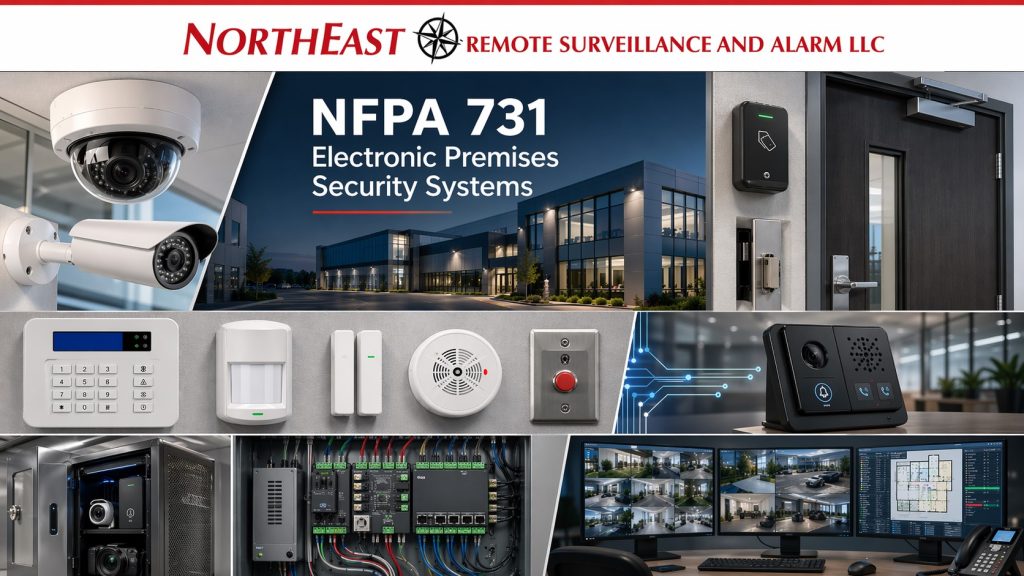
NFPA 731 provides a framework for the application, installation, performance, testing, and maintenance of electronic premises security systems.

Establish the System Requirements
Identify the security functions the facility needs, the areas involved, and the people responsible for operation and response. Document the intended results before selecting devices or defining integrations.
Consult the NFPA 731 standard and the edition applicable to the project.
Confirm how its requirements relate to the project specifications, local requirements, and other standards governing the installation.
Coordinate Equipment and Installation
Review device locations, environmental conditions, power, communications, and supporting infrastructure together. Equipment selection should account for how each part will operate within the installed system and how it will be serviced.
Record system boundaries and interfaces so the installer, owner, and service providers understand which components and functions are included. Identify dependencies on networks, monitoring services, or other building systems.
Define Performance and Verification
Translate the intended security functions into a documented verification plan. Identify the functions to test, the expected outcomes, the responsible parties, and the records needed at handoff.
Include relevant abnormal conditions and recovery behavior in the project review. Track deficiencies through correction and retesting so an incomplete function does not become an undocumented assumption.
Coordinate Related Compliance Reviews
Electronic security installation also intersects with door egress, electrical wiring, fire alarm interfaces, and information handling. Assign those reviews to the appropriate project specialists and record the resulting requirements.
The related guides below address those distinct subjects. Their requirements should be coordinated with the premises-security installation wherever the systems interact.
Maintain the Installed System
Keep device inventories, configuration records, test results, and service history current. Identify who approves changes, manages access, and follows up on faults or other unresolved issues.
Revisit the documented requirements when devices are added, areas are repurposed, or integrations change. The updated records should describe the actual installed condition and the verification performed after the work.
Related Guides
Review these guides to coordinate premises-security installation with assessed risks, safe exits, wiring, video use, and handover records.
- NFPA Standards for Commercial Security, Fire Alarm, Access Control, Wiring & Life Safety — Return to the NFPA standards directory.
- NFPA 730 Premises Security Risk Assessments and Security Planning — Review broader premises-security planning.
- NFPA 101, Door Hardware, and Access Control Egress Compliance — Review access-control egress requirements.
- NFPA 70 NEC and Low-Voltage Security System Wiring — Review low-voltage wiring coordination.
- Commercial Video Surveillance Compliance in Pennsylvania & the Mid-Atlantic — Review video-surveillance deployment considerations.
- Security System Documentation, Testing, and Inspection Readiness — Organize testing and handoff documentation.
Frequently Asked Questions
What should be defined before selecting electronic premises-security devices?
Define the required security functions, affected areas, operating responsibilities, and response expectations. Document intended results, then coordinate equipment, environmental conditions, power, communications, and infrastructure. Device selection should follow the installed system’s requirements.
How should an installed premises-security system remain supportable?
Define performance checks, service responsibilities, and maintenance for the installed functions. Coordinate the applicable standards and project requirements, and retain current records. Installation is not the end of operating responsibility.
Request a Premises-Security Review
Request an assessment to review electronic security requirements, installation conditions, and long-term support needs.