
NFPA 730, Guide for Premises Security, supports assessment and planning to reduce security vulnerabilities affecting people and property.

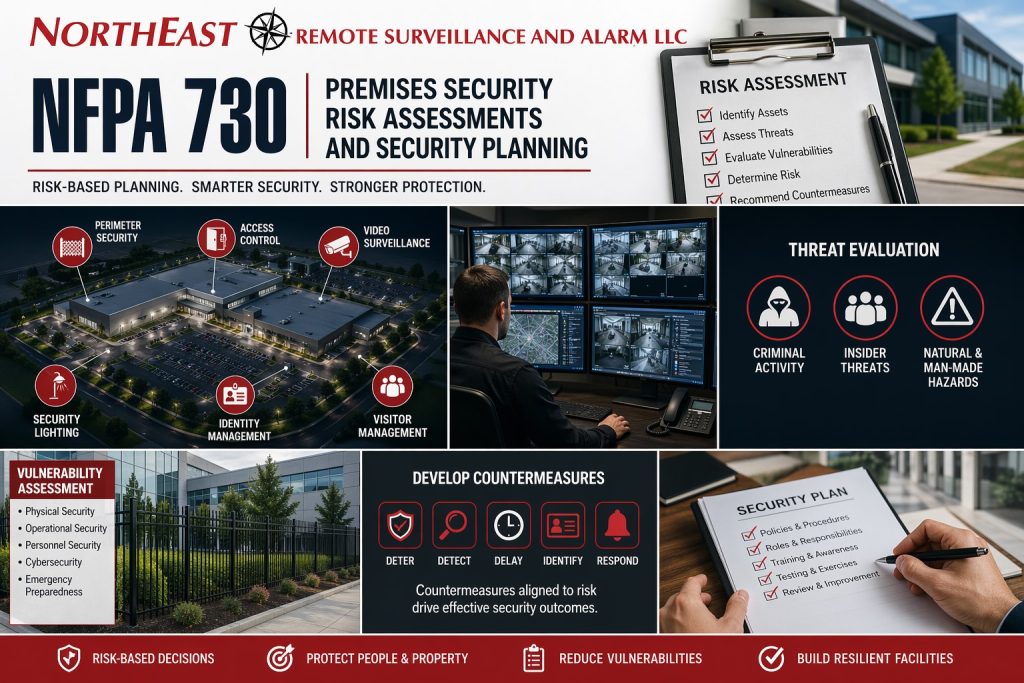
Define What the Security Plan Must Protect
Begin with the facility’s people, assets, operations, and critical dependencies. Identify the areas included in the assessment, normal operating patterns, and the consequences of an interruption or security incident.
Use the NFPA 730 guide as a planning reference alongside the facility’s own information and applicable project requirements.
Document the assessment’s boundaries and assumptions so later decisions remain traceable.
Assess Threats and Vulnerabilities
Review credible threats and the conditions that could expose the site to them. Consider entrances, perimeter conditions, employee and visitor movement, delivery activity, sensitive areas, and existing response arrangements.
Separate observed conditions from unverified assumptions. Record the evidence available, the information still needed, and the operational constraints that affect potential improvements.
Choose Measures That Address the Findings
Connect each proposed measure to an identified need. Physical changes, operating procedures, staffing, electronic security, and monitoring may contribute different parts of the response.
Describe the intended outcome before selecting equipment. For example, an entry-control measure should have a clear purpose, an operating process, and a defined response when someone cannot be authorized.
Prioritize a Practical Implementation Plan
Rank proposed improvements by the risks they address, their dependencies, and the facility’s ability to operate and maintain them. Identify the person responsible for each action and the information needed before design begins.
Coordinate changes with normal business activity and other building requirements. Where a measure affects egress, fire protection, privacy, or electrical work, include the appropriate review in the project plan.
Review Results and Update the Plan
Define how the facility will determine whether an improvement achieved its intended result. Keep unresolved risks and deferred actions visible so equipment installation is not mistaken for completion of the whole security plan.
Revisit the assessment when the property, occupancy, operating procedures, or threat information changes. Current records help the next review build on established decisions instead of starting over.
Related Guides
Use these guides to carry assessment findings into electronic-system design, door safety, video planning, and verification records.
- NFPA Standards for Commercial Security, Fire Alarm, Access Control, Wiring & Life Safety — Return to the NFPA standards directory.
- NFPA 731 and Electronic Premises Security Systems — Review electronic premises-security installation and maintenance.
- NFPA 101, Door Hardware, and Access Control Egress Compliance — Review door egress coordination.
- Commercial Video Surveillance Compliance in Pennsylvania & the Mid-Atlantic — Review video-surveillance deployment considerations.
- Security System Documentation, Testing, and Inspection Readiness — Organize system documentation and verification records.
Frequently Asked Questions
What should a premises-security assessment distinguish from assumptions?
Separate observed conditions and available evidence from information that remains unverified. Review the people, assets, operations, threats, and dependencies within the assessment scope. Keep operational constraints visible when considering improvements.
How should findings become a security implementation plan?
Choose measures that address the identified vulnerabilities and prioritize a practical sequence of work. Review the results and update the plan as operations change. Recommendations should remain connected to the evidence and the facility’s operating needs.
Request a Security Planning Review
Request an assessment to review facility vulnerabilities, security priorities, and practical next steps.