NERSA · Commercial & Industrial Security
Plan Poconos business cameras around usable recordings, entrances, docks, parking, lighting, permissions, storage and documented acceptance tests.
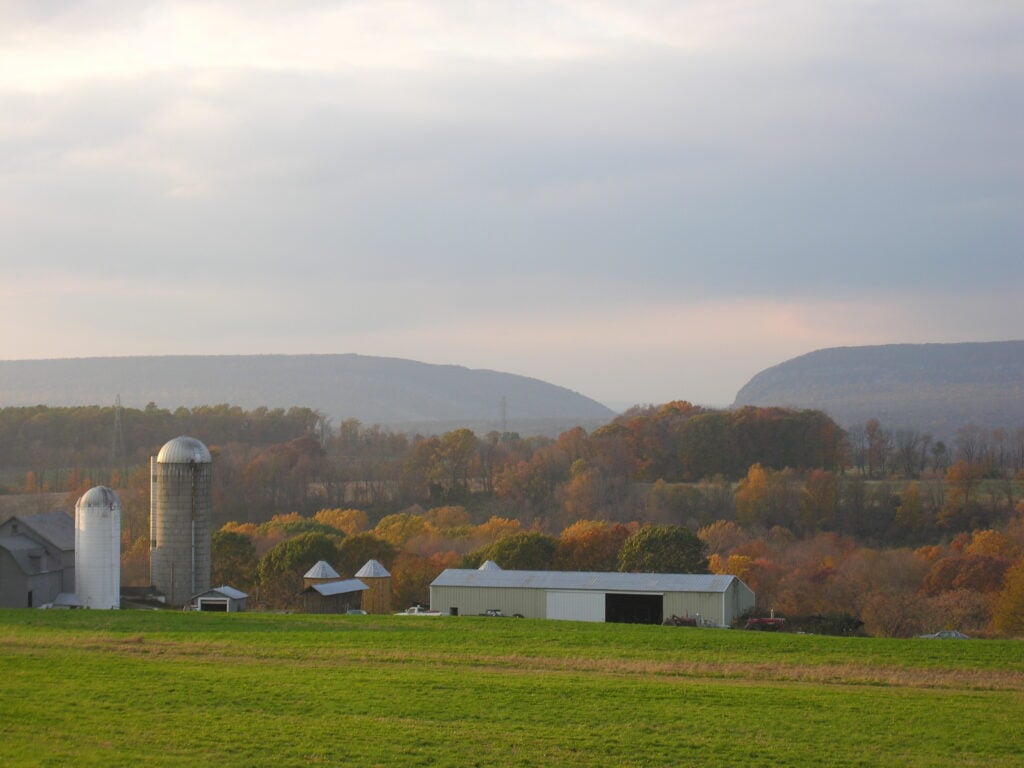
Regional scenery: Delaware Water Gap viewed from New Jersey. Image: public domain.

Specify the evidence your team needs before selecting cameras. NERSA plans commercial video surveillance across qualifying Poconos properties, from public-facing businesses to warehouses, service yards, and multi-building operations.
Turn a coverage request into an observable result
“Cover the parking lot” leaves important questions unanswered. Does the owner need an overview of movement, context for a reported incident, or detail at a particular entry point? State the task, location, operating conditions, and user who needs the record. Different objectives may require different views.
For a Stroudsburg office, the key task may be reviewing entry to a controlled area. For a Mount Pocono warehouse, it may be associating a receiving event with a dock and time interval. At a visitor property, the task may be understanding activity at an authorized common entrance. These examples define questions for an assessment; they are not claims about completed installations.
Evaluate the scene under representative conditions
Review daytime and nighttime light, windows, headlights, obstructions, stock, trailers, vegetation, weather exposure, and mounting access. An empty scene can conceal limitations that appear during normal operation. Test the intended activity at the required location rather than accepting resolution or zoom specifications as proof of performance.
Coordinate camera views with the owner’s privacy and records policies. Identify which areas may be recorded, who approves changes, and who may retrieve or disclose footage. Keep views and permissions proportionate to the authorized purpose.
Choose local, cloud, or hybrid functions deliberately
Identify where recording occurs, where management happens, which functions require internet access, and which subscriptions apply. Local recording, cloud management, remote viewing, and cloud storage are separate design choices. Document the exact platform’s supported behavior instead of treating “cloud” as a complete specification.
Estimate storage against agreed recording settings and retention objectives, then verify the result in the actual configuration. Include remote retrieval needs and network capacity. Ask what happens when a camera, recorder, network connection, or service becomes unavailable and how a responsible person learns of the fault.
Use analytics only with a defined response
A supported analytic event can help focus attention on a selected scene. It still needs suitable placement, representative testing, an authorized reviewer, and an agreed action. Record the conditions used in testing and the limitations observed. Do not describe an alert as proof of an incident before the available information is assessed.
Where remote operator review is proposed, coordinate it with the monitoring provider’s supported devices, service hours, event rules, and response instructions. Recording video is not equivalent to having an operator continuously watch every camera.
Plan administration and supporting infrastructure
Give the owner a documented account structure. Separate viewing, exporting, device configuration, and account administration. Coordinate multi-factor authentication where supported, approved remote support, network access, and update responsibility with IT.
Identify cabling, power, switching, fiber, and building connections early. For an existing installation, evaluate camera condition, view usefulness, recorder support, ownership, and compatibility before recommending reuse or replacement. Keep a record of any retained limitations.
Use an acceptance test that staff can repeat
- Agree each view’s task and representative test conditions.
- Observe the intended activity and retrieve the recorded interval.
- Verify readable camera names and consistent time references.
- Demonstrate export using the approved operational role.
- Test selected analytic or alarm associations where included.
- Coordinate approved fault and restoration checks.
- Record results, limitations, corrections, and completed retests.
Review views when racking, landscaping, signs, parking arrangements, or operating routines change. Use the NERSA commercial video service overview for broader capabilities and the local guides for the property’s operating context.
Define the right scope for your property
Tell Northeast Remote Surveillance and Alarm, LLC about the property address, operating hours, current equipment, and the problems you need to solve. We’ll review the proposed systems, installation coordination, and service requirements for the actual location.
Request a security assessmentCall 1-888-344-3846Related Poconos planning
Warehouse and logistics security · Hospitality and visitor properties · Networks and integration
Commercial, industrial, institutional, and other qualifying projects. Confirm project scope, scheduling, and service arrangements for the specific property.
Customer Project: Pocono Springs Civic Association
See strategic 4K color-at-night camera upgrades and custom solar spillway surveillance at Pocono Springs Civic Association in Newfoundland, PA. Read the Pocono Springs camera takeover and upgrade case study.