
Warehouse perimeter security systems in Allentown, PA protect exterior boundaries, gates, parking edges and vulnerable approaches around industrial facilities.

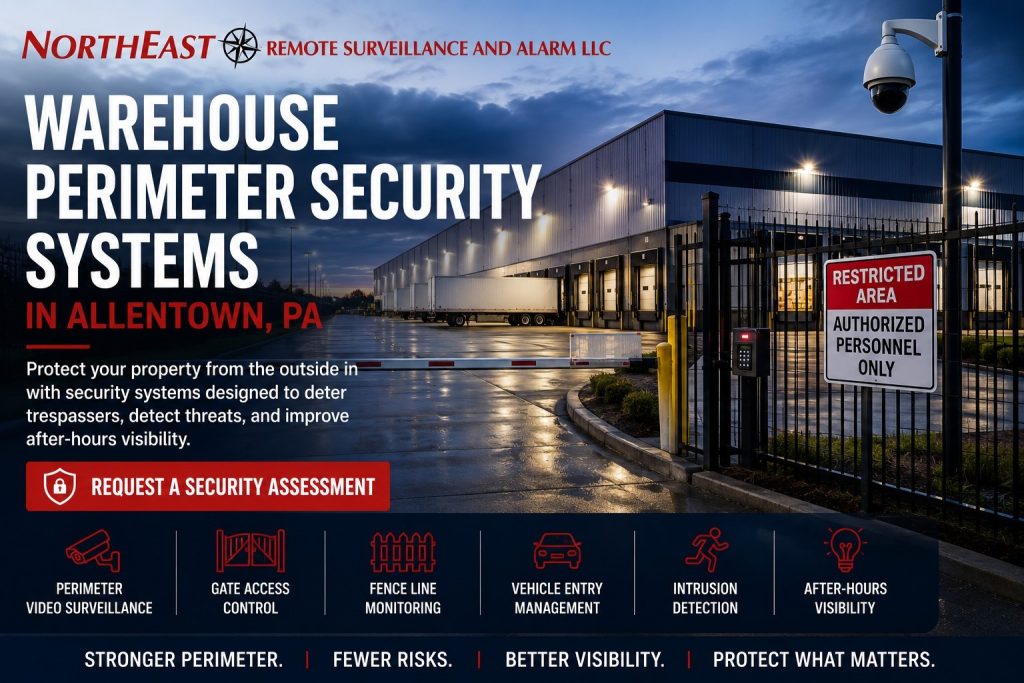
Coordinate this area with the rest of the facility through Allentown warehouse security planning.
Secure the Warehouse Boundary
Perimeter protection starts before activity reaches the building. First, NERSA reviews property lines, fencing, gates, lighting and vehicle routes. Next, we identify the approaches that need clear detection or video coverage.
The plan should match normal operations. Therefore, cameras and alerts must account for employees, deliveries, contractors and scheduled yard activity. Clear detection areas reduce avoidable notifications.
Exterior Camera Coverage
- Fence lines and open property edges
- Vehicle and pedestrian gates
- Rear and side building approaches
- Parking boundaries and walkways
- Outdoor equipment and utility areas
- Blind corners near dock or service zones
For example, a wide camera can show movement along a fence. A second view can capture identifying details at a gate. Together, those views support faster incident review.
Gates, Fencing and Lighting
Physical conditions affect electronic security performance. In addition, damaged fencing or uncontrolled gates can create repeated exposure. Appropriate lighting also improves camera detail after dark.
Meanwhile, gate records can add context to recorded video. Managers can compare an authorized entry with the corresponding vehicle view. This coordination creates a clearer activity record.
After-Hours Detection and Alerts
Selected perimeter zones can use analytics or intrusion detection after normal operations end. Specifically, schedules define when alerts apply. Designated staff then follow the property’s response procedure.
However, each detection area should reflect expected traffic and environmental conditions. NERSA tunes the plan around local use instead of applying one setting everywhere.
Scalable for One Property or Many
A smaller warehouse may need focused coverage at one rear boundary. By contrast, an enterprise may manage several properties with varied fence lines and gates. Standardized viewing and alert procedures can support both.
Most importantly, every location keeps perimeter rules that match local operations. Over time, the system can expand with new cameras, gates or detection zones.
Plan around real perimeter approaches
Walk the warehouse boundary from pedestrian gates, truck lanes and parking edges to rear service doors and outside equipment. List where people can approach unnoticed, where trailers obscure views and which areas remain active overnight. A proposed camera must be able to capture the required detail in actual lighting, weather and traffic conditions; a wide-angle overview may be unsuitable for identifying a person at a distant gate.
Pair deterrence and detection with site operations
Evaluate lighting, fencing, controlled pedestrian paths and gate-operator safety independently from video analytics. Motion or object-detection rules should avoid active truck lanes and known employee paths where possible. Set schedules and review ownership for each zone. Winter snow, wind, wildlife and moving vegetation can affect exterior video detection, so confirm nuisance-alert rates during representative conditions rather than relying on a demonstration clip.
Perimeter commissioning record
- Capture day and night test views from each critical approach.
- Verify weather-rated mounting, camera protection, power and connectivity.
- Test operator safety and required emergency access at powered gates with authorized trades.
- Validate alerts, response contacts and recording retention.
- Document blind spots, temporary obstructions, lighting maintenance and responsibilities for retesting after yard-layout changes.
Survey the entire boundary and its approaches
Start at the public road and walk the line between the warehouse, truck yards, employee parking, gates, loading docks and neighboring property. Identify where fencing changes height or material, where trucks wait, where vegetation blocks a camera, and where people can approach from the rear of a lot. Mark the areas that are actually controlled by the warehouse operator; do not imply an ability to monitor or enforce another property’s boundary. Document access routes for emergency services and routine maintenance vehicles.
Choose detection according to the event, not the device
A fence sensor, beam detector, camera analytic, door contact or monitored gate switch can identify different conditions and can fail in different ways. Define whether the desired result is detection of an individual approaching a door, someone crossing a boundary, a vehicle entering after hours, or a loading area being left open. Consider snow, rain, wildlife, vehicle headlights, moving foliage, vibration and large trucks before setting detection thresholds. A camera facing a long, dark fence line may capture motion but not useful identity detail.
Lighting, video evidence and response paths
Verify lighting at typical operating hours, the actual camera view, environmental ratings, network/power resilience and exportable video detail. Establish which operator will see an alert, what verification is available, when a warning is appropriate and when an incident is escalated. Video talk-down, if used, requires a documented lawful procedure and suitable speaker location; it does not replace dispatch or on-site response. Align alarm priorities with the facility’s occupied and unoccupied schedules.
Gate safety and a realistic test
Vehicle gates must retain approved operator safeguards, monitored entrapment protection and emergency access. Never bypass those functions to make access logic more convenient. Test representative pedestrian, truck and authorized service movements; check false triggers from weather and activity outside the protected perimeter. Deliver a map of zones and camera fields of view, equipment IDs, notification rules, power/communications dependencies and test deficiencies for the owner’s records.
Related Allentown Services
For complete facility planning, review warehouse security systems in Allentown.
Also explore truck yard security and parking lot security cameras.
Schedule a Perimeter Assessment
Finally, schedule an assessment to review boundaries, gates, lighting, cameras and after-hours risk at your Allentown warehouse.
Compliance, Codes & Project Standards
NERSA plans commercial and industrial security work with applicable code, documentation, inspection and authority-having-jurisdiction requirements in mind. Requirements vary by system, property and jurisdiction. These resources support project planning; they do not establish legal compliance, certification or AHJ approval.
Related guidance: Regulatory compliance & inspection readiness · Warehouse & logistics compliance · NERSA project standards