
Project profile: Pocono Springs Civic Association in Newfoundland, Pennsylvania.
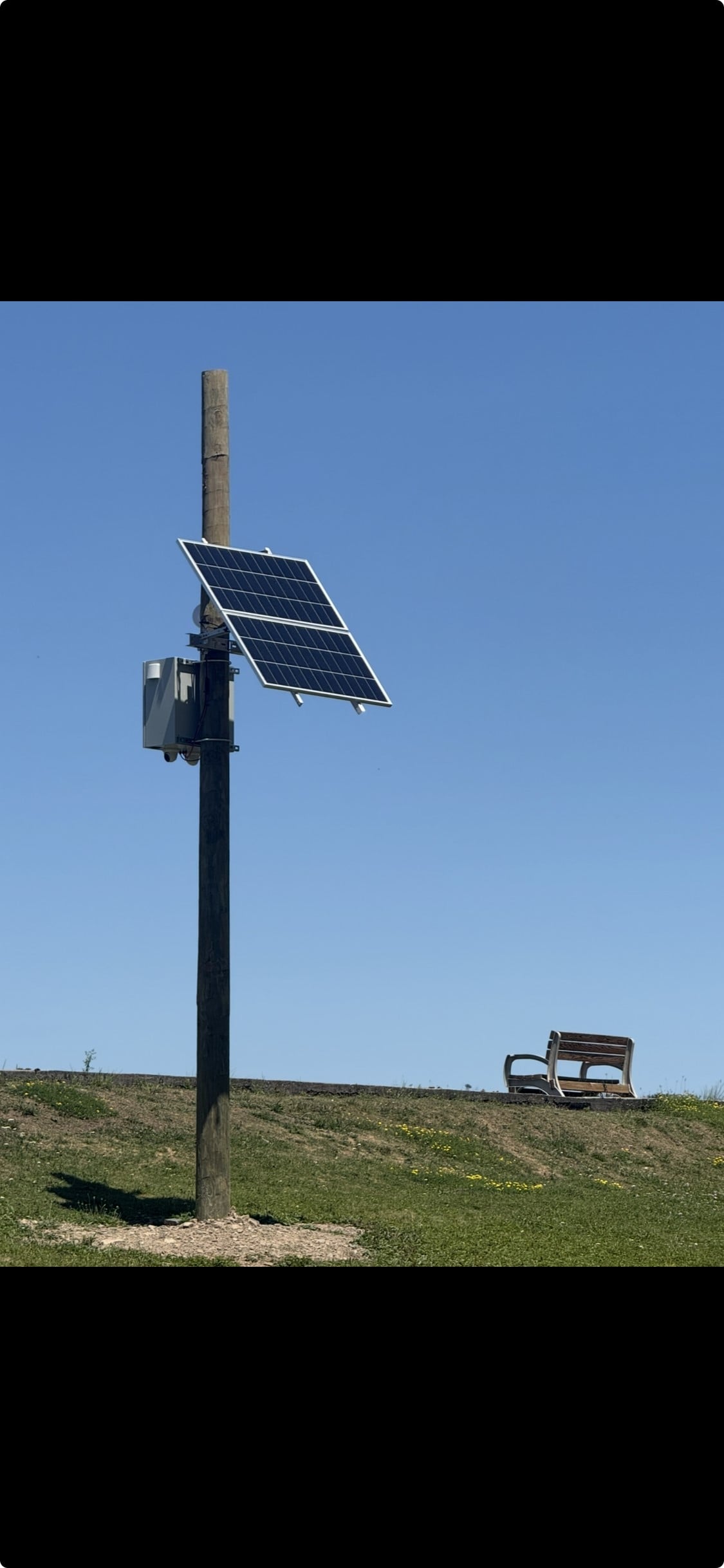
NERSA took over and upgraded the community camera system, adding strategic high-detail coverage across the community property and a custom solar camera at the lake spillway.
A distributed community security challenge
Pocono Springs is a private gated community with multiple access points, public-safety operations, shared recreation areas, service locations, and outdoor infrastructure. That setting requires more than a single-building camera layout. Staff need to understand activity at gates, community facilities, dumpsters, fuel tanks, approaches, and remote areas where conditions change with weather, lighting, season, and water levels.
The association needed a practical takeover and upgrade.
The work focused on strategic camera upgrades and remote spillway observation, connecting the community’s existing surveillance system with new views selected around specific property needs.
Takeover and system review
A responsible takeover starts with understanding what is already installed. That process should consider camera positions, recording and viewing needs, power and communications, equipment access, and the people responsible for responding to events. A working camera is not automatically a useful camera; its angle, lighting, focus, retention, network path, and permissions determine whether it can answer a real question.
A review should also separate coverage limitations from equipment faults. This gives an association a clearer basis for deciding what to keep, what to repair, and where an upgrade could produce useful improvement without treating every location the same.
Strategic 4K color-at-night cameras
NERSA upgraded cameras strategically around the property, including 4K color-at-night cameras at dumpsters, fuel tanks, and other areas selected for operational and security importance.
These locations can be difficult to observe with a distant or low-detail view.
They may be visited after dark, affected by glare or vehicle movement, or involved in questions about access, disposal, deliveries, and property activity.
Higher resolution is useful only when the camera is matched to the scene.
Placement, lens selection, lighting, mounting height, and the intended review task all matter.
The upgraded layout gives each strategic view a defined purpose and makes it easier to evaluate whether the image provides the detail staff actually need.
Custom solar camera at the lake spillway
The community lake spillway presented a separate engineering requirement.
The location required an outdoor observation solution designed around the spillway and its purpose: viewing water flow.
NERSA custom engineered and designed a solar-powered camera installation so the association could monitor water flow and maintain visibility at a remote outdoor location.
At the lake spillway, the solar panel, equipment enclosure, and camera mounting form a purpose-built outdoor installation. A remote solar camera must be designed as a complete system: energy collection, battery capacity, weather exposure, camera duty cycle, communications, mounting, service access, and the viewing purpose all influence the result. The objective is dependable observation over changing conditions, not simply placing a camera where a cable would be inconvenient.
Operational benefits of the upgrade
- Detailed review: higher-resolution views support examination of activity at selected locations, with usefulness depending on placement and conditions.
- After-hours awareness: color-at-night capability supports review where lighting and activity continue outside office hours.
- Remote environmental visibility: the solar spillway camera extends observation to a location that needs its own power and communications plan.
- Clearer ownership: each camera can be documented by location, purpose, access, and response responsibility.
- Better future planning: a strategic layout exposes remaining coverage, infrastructure, and maintenance priorities.
Testing, documentation, and handover
Camera work is complete only when the people operating the system can use it. Handover should include representative daytime and nighttime views, confirmation of recording and retrieval, checks of remote communications where applicable, and documentation for equipment locations and support contacts. For the spillway installation, the operating plan should identify how staff review water-flow conditions, how power or communications faults become visible, and when the solar assembly and enclosure are inspected.
The same discipline applies to dumpsters, fuel tanks, gates, and other strategic areas. The association should know what each view is intended to show, how long footage is retained, who may access it, and how an incident moves from observation to documentation and response.
Why the takeover-and-upgrade model mattered
For Pocono Springs, the value of the project was the combination of system knowledge and targeted improvement. NERSA upgraded strategic camera locations and added a custom solar solution for spillway observation. The result is a camera plan shaped around a real community: entrances, shared spaces, service locations, outdoor infrastructure, public-safety responsibilities, and a remote spillway requiring engineered power and communications.
The project illustrates two complementary priorities: improving security views at active service areas and extending camera coverage to outdoor infrastructure. Both depend on matching the installation to the location, the available conditions, and the questions that community staff need to answer.
Planning takeaway: a community camera upgrade works best when every view has a defined purpose, every remote location has an engineered power and communications plan, and the final handover gives staff the information needed to operate and maintain the system.
Connecting the cameras to the public-safety workflow
A camera system becomes more useful when it fits the community’s established response process. The person reviewing a gate event may not be the person responsible for a dumpster, fuel area, or spillway concern. A documented takeover gives the association a way to capture those differences. Each location can have an identified purpose, an authorized viewer, a response contact, and a clear path for preserving relevant footage. That helps staff move from “something happened on camera” to a documented incident with time, place, and responsible follow-up.
For a community with residents, guests, contractors, maintenance staff, and public-safety personnel, permissions also matter. Access to live views and recorded video should follow assigned responsibilities. A written handover can define who may review an event, who may export evidence, and how account or contact changes are managed when personnel change.
Maintenance for changing outdoor conditions
Outdoor cameras face conditions that indoor equipment does not. Vegetation, snow, glare, rain, insects, changing sun angles, and landscaping can affect a view over time. The solar spillway installation adds energy and communications checks to the normal camera-maintenance routine. Periodic review should confirm that the panel and enclosure remain secure, the lens remains clear, the battery system supports the expected duty cycle, and the remote connection is visible to the people responsible for support.
Strategic cameras should also be reviewed when property operations change. A new dumpster position, fuel-tank work, gate modification, lighting change, or recreation-area renovation can create an obstruction or change the event the camera is expected to show. A short documented review after a site change helps preserve the value of the original design.
Questions the association can use at handover
- What activity is each camera intended to show?
- Which views are available at night, and under what lighting conditions?
- How are recordings searched, exported, and retained?
- Who receives equipment faults or communication failures?
- What should staff check after a power, network, weather, or construction event?
- When should the solar assembly, enclosure, camera mount, and remote communications be inspected?
These questions keep the installation connected to the association’s real work. They also create a useful record for future upgrades, budget decisions, and discussions with facilities, public-safety, IT, and association leadership.
Explore NERSA security case studies and the Poconos regional security guide.