Machine area monitoring cameras help manufacturing facilities improve visibility around production-adjacent spaces, equipment zones, operator approach areas, restricted areas, and operational transition points. This page focuses specifically on camera placement, recording, review, and monitoring around machine areas without turning into a broad manufacturing security system page. For broader production-floor camera planning, start with Video Surveillance for Manufacturing Facilities.
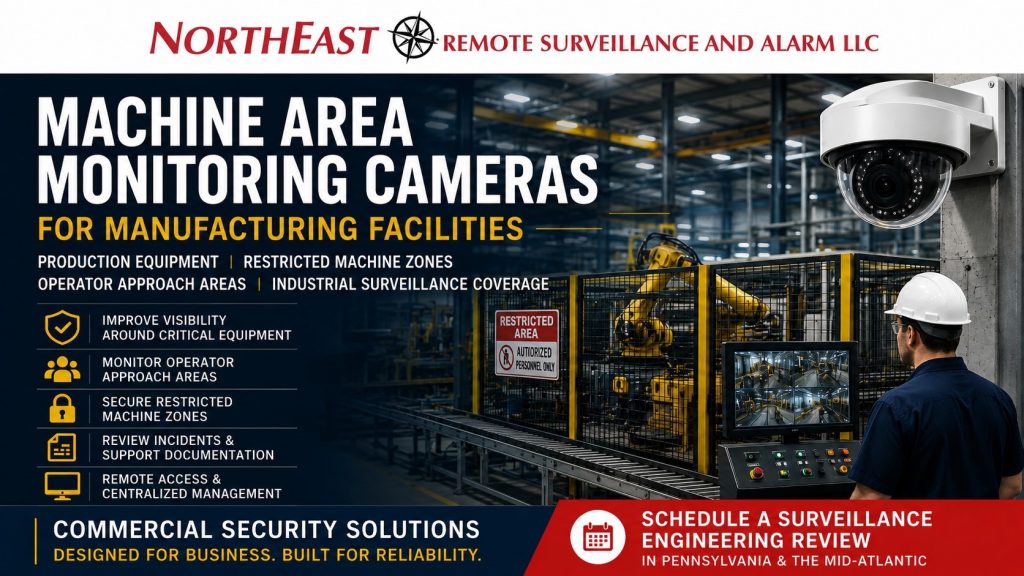
Camera Coverage for Machine Areas and Production-Adjacent Spaces
Machine areas create a different surveillance challenge than standard office entrances, hallways, parking lots, or warehouse aisles. These spaces often involve moving equipment, operator activity, maintenance access, material handling, restricted zones, and production workflows that require clear visual documentation.
A properly designed machine area camera system can help supervisors, facility managers, operations teams, and security personnel review activity around equipment without relying only on verbal accounts or incomplete incident reports. The goal is not to interfere with production. The goal is to create usable visibility around areas where timing, movement, access, and documentation matter.
Northeast Remote Surveillance and Alarm, LLC designs and installs commercial and industrial video surveillance systems for manufacturing environments that need reliable camera placement, usable recordings, remote access, and long-term system organization.
Where Machine Area Monitoring Cameras Are Commonly Used
Machine area monitoring cameras may be used around equipment zones where visibility supports operations, documentation, restricted-area review, or incident investigation. Camera placement should be based on the facility layout, machine location, lighting, obstructions, ceiling height, employee movement, and the type of activity that needs to be reviewed.
Common machine-area camera locations may include:
- Production-adjacent spaces
- Machine approaches
- Operator work zones
- Equipment service areas
- Restricted machinery areas
- Tooling and setup areas
- Material staging points near equipment
- Forklift and pedestrian interaction zones
- Maintenance access points
- Production-floor transition areas
- Quality-control areas near equipment
- High-value production or processing zones
The purpose is not simply to place cameras near machines. The purpose is to position cameras so footage is useful when a facility needs to understand what happened before, during, or after an event.
Why Camera Placement Matters Around Machinery
Machine areas are often visually complicated. Equipment, guards, racks, conveyors, workstations, lighting, columns, storage, and employee movement can all block or distort the camera view. A camera that looks good during installation may not provide useful footage once production is active.
Camera placement should account for:
- viewing angle
- mounting height
- machine obstructions
- glare and reflection
- shadows and low-light areas
- employee movement patterns
- forklift or cart traffic
- maintenance access points
- distance from the activity
- whether identification or overview footage is needed
Some machine areas need wide overview coverage to understand movement and workflow. Other areas may need tighter views to document access, approach direction, or specific activity around a controlled space. The correct design depends on what the facility needs to review later.
Production Visibility Without Turning the System Into a Safety Device
Machine area monitoring cameras can support operational review, documentation, and visibility, but they should not be presented as a replacement for machine guarding, lockout/tagout procedures, safety training, emergency stops, signage, supervision, or required workplace safety controls.
The camera system should be positioned as a documentation and visibility tool. It may help a facility review incidents, understand activity patterns, verify access, investigate damage, support supervisor review, and improve awareness of activity around sensitive areas. It should not be treated as the primary safety system for machinery.
This distinction matters because industrial facilities need practical surveillance without creating unrealistic expectations. Cameras can help document what occurred, but proper safety procedures, training, guarding, and compliance programs remain separate operational responsibilities.
Restricted Machine Zones and Access Review
Some machine areas require stronger visibility because access is limited to trained personnel, supervisors, maintenance staff, contractors, or specific shifts. Cameras near restricted machine zones can help document who entered the area, when activity occurred, and what happened around the equipment.
This type of camera coverage may support:
- access review
- contractor oversight
- maintenance activity documentation
- after-hours review
- restricted-area accountability
- supervisor visibility
- investigation of damage or misuse
- review of unusual activity near equipment
For facilities using analytics around restricted zones, tripwire areas, line-crossing alerts, or activity-based notifications, AI Video Analytics for Workplace Safety is the closest supporting planning page.
Recording, Retention, and Evidence Review
Machine area footage is only useful if it can be found, reviewed, and retained long enough to support the facility’s needs. Manufacturing environments often need footage for incident review, production questions, equipment damage investigation, contractor review, shift review, and internal documentation.
Recording design should consider:
- camera resolution
- frame rate requirements
- lighting conditions
- retention period
- storage capacity
- search and playback workflow
- user permissions
- camera naming
- time synchronization
- remote access
- export process
A machine area camera should be named and organized clearly inside the video system. Facility managers should not have to guess which camera covers a specific line, machine, door, or production area. Clean camera naming and logical grouping make the system more useful after installation.
Network and Infrastructure Requirements
Machine area monitoring cameras often require stronger infrastructure planning than simple office camera installations. Manufacturing facilities may have long cable pathways, high ceilings, difficult mounting points, industrial equipment interference, dust, vibration, heat, and areas where cameras need protection from accidental impact.
Installation planning may need to account for:
- conduit or protected cabling
- PoE switch capacity
- industrial network layout
- rack location
- UPS backup
- cable pathway access
- lift equipment
- serviceability
- network segmentation
- future camera expansion
- coordination with IT or plant maintenance teams
The installation should be designed so the system can be maintained after the project is complete. Clean cable routes, documented camera locations, organized recording equipment, and clear user access are important for long-term reliability.
Machine Area Cameras and Broader Industrial Surveillance
Machine area monitoring is only one part of a manufacturing surveillance plan. A complete facility may also need cameras at entrances, employee doors, shipping areas, receiving areas, parking areas, exterior doors, loading zones, restricted rooms, material storage areas, and perimeter points.
This page should stay focused on machine-area camera coverage, but the design should still fit into the larger surveillance system. Camera placement around equipment should not be isolated from the rest of the facility’s video plan.
For broader commercial and industrial camera system planning outside the machine-area focus, use Commercial & Industrial Video Surveillance Systems.
Compliance and Documentation Awareness
Machine area monitoring cameras may support documentation, workplace review, incident investigation, supervisor visibility, and operational accountability. The system should be planned with awareness of privacy, employee-facing spaces, restricted areas, and how footage will be accessed or shared.
Camera coverage should avoid overreaching into inappropriate areas and should be designed around legitimate operational and security needs. Manufacturing facilities may also need internal policies for video access, footage retention, incident review, and who is authorized to export recordings.
The compliance value of this page should stay practical. It should support operational documentation and inspection readiness language without turning the page into an OSHA, NFPA, or legal compliance article.
Why Manufacturing Facilities Choose NERSA
Northeast Remote Surveillance and Alarm, LLC understands that manufacturing camera systems are not simple plug-and-play installations. Machine areas, production floors, industrial infrastructure, restricted zones, maintenance pathways, employee movement, and exterior facility risks all affect how the system should be designed.
NERSA focuses on commercial and industrial environments where camera placement, recording reliability, infrastructure, and long-term usability matter. We help manufacturing facilities plan surveillance systems around real operating conditions instead of generic camera packages.
Our approach is built around usable footage, clean infrastructure, practical documentation, and surveillance design that supports how the facility actually operates.
Request a Machine Area Camera Assessment
If your manufacturing facility needs better visibility around machine areas, production-adjacent spaces, restricted equipment zones, maintenance areas, or industrial workflow points, Northeast Remote Surveillance and Alarm, LLC can help evaluate the site and recommend a camera layout built around real facility conditions.
Start with a Request a Security Assessment to review camera placement, recording needs, lighting conditions, infrastructure, access concerns, and long-term surveillance planning.
Frequently Asked Questions about Machine Area Monitoring Cameras for Manufacturing Facilities
What are Machine Area Monitoring Cameras for Manufacturing Facilities?
Machine area monitoring cameras are commercial or industrial security cameras placed around production-adjacent spaces, equipment zones, restricted machine areas, maintenance access points, and operator approach areas. They are used to improve visibility and support documentation around important manufacturing activity.
Are machine area monitoring cameras the same as safety systems?
No. Machine area cameras can support visibility, documentation, and incident review, but they are not a replacement for required machine guarding, lockout/tagout procedures, training, signage, supervision, or workplace safety controls.
Where should cameras be placed around machinery?
Camera placement depends on the machine layout, lighting, obstructions, operator movement, maintenance access, and the activity that needs to be reviewed. Common locations include machine approaches, restricted zones, service areas, production transition points, and material staging areas near equipment.
Can cameras help review incidents near machines?
Yes. A properly placed camera system can help a facility review what happened before, during, or after an incident. The usefulness of the footage depends on camera angle, lighting, resolution, recording quality, retention, and how easily the footage can be searched.
Can Machine Area Monitoring Cameras for Manufacturing Facilities be viewed remotely?
Yes. Authorized supervisors, facility managers, or security personnel may be able to view cameras remotely depending on the system design, network configuration, user permissions, and cybersecurity requirements.
Do machine area cameras need AI analytics?
Not always. Some machine areas only need reliable recording and review. Other areas may benefit from analytics such as line crossing, zone activity, object detection, or event-based alerts when the facility has a clear operational reason for using those tools.
How long should machine area camera footage be retained?
Retention depends on the facility’s operational needs, incident review process, risk level, storage capacity, and internal documentation requirements. Higher resolution, more cameras, and longer retention periods require more storage planning.
Can cameras be added to an existing manufacturing surveillance system?
In many cases, yes. Expansion depends on recorder capacity, available licenses, storage, network bandwidth, PoE switch capacity, cable pathways, and whether the existing system can support the additional cameras.
What makes manufacturing camera installation different from office camera installation?
Manufacturing environments often involve higher ceilings, longer cable runs, machinery obstructions, industrial lighting, restricted areas, forklift movement, dust, vibration, and more demanding infrastructure conditions. Camera placement and installation methods need to reflect those conditions.
Does NERSA install residential camera systems?
No. Northeast Remote Surveillance and Alarm, LLC focuses on commercial, industrial, municipal, institutional, manufacturing, warehouse, logistics, healthcare, and business security environments. NERSA does not install residential camera systems.