
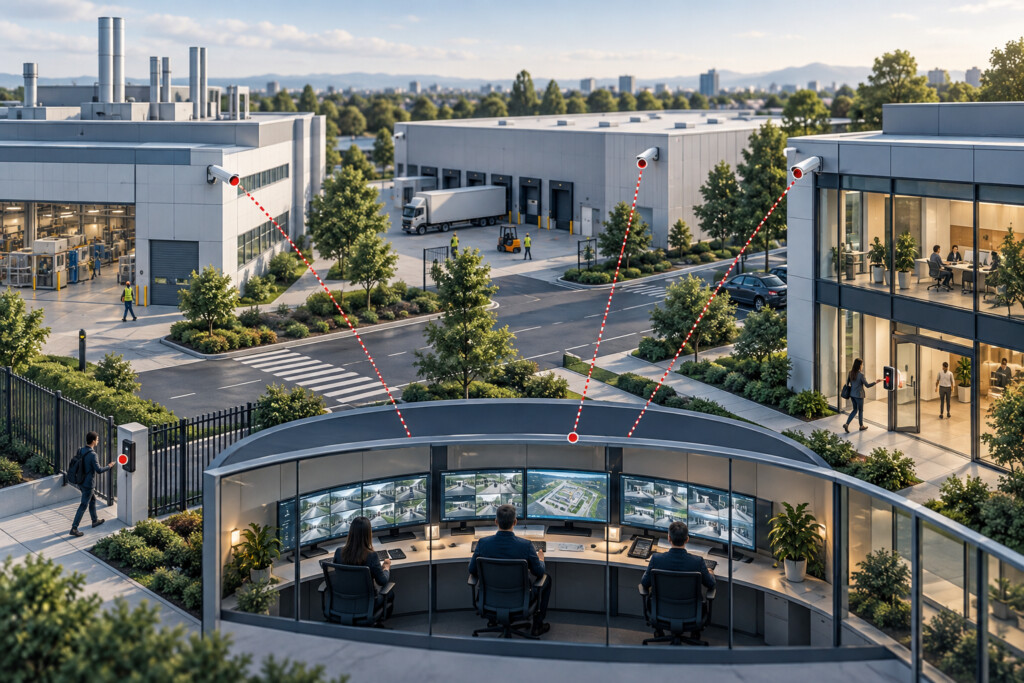


Adding a location is a readiness and governance exercise. A new branch, acquired building, or expanded campus should join the enterprise model with clear ownership, tested connectivity, and documented exceptions.
Part of Multi-Site Enterprise Security.
Check the new site’s readiness
Collect existing equipment, account ownership, software versions, subscriptions, drawings, local contacts, network conditions, and required workflows. Assign the site identifier and proposed administrative roles. Compare the location against the corporate standard and list the gaps that must be resolved before connection.
Resolve inherited systems and ownership gaps
Acquired sites may have overlapping addresses, unknown administrator ownership, incompatible credentials, or contracts that restrict transition. Do not connect an inherited environment before responsible teams approve its boundary and support arrangements. Use a staged plan when the site cannot immediately meet the target standard.
Accept the site into ongoing operations
Verify permissions, naming, event routing, video retrieval, local continuity, health alerts, support contacts, and documentation. Test both central and local roles. Record acceptance and unresolved exceptions in the site register, then transfer responsibility from the deployment team to the ongoing operations owner.
Related planning resources
Frequently Asked Questions
What should be reviewed before adding a facility to an enterprise platform?
Review local readiness, system ownership, connectivity, and documented exceptions. An acquired building or new branch should join the enterprise model with clear responsibilities rather than inherit unresolved account or equipment gaps.
When is a new facility ready for ongoing enterprise operations?
Accept it after the agreed connectivity, operating workflows, ownership, and support conditions are demonstrated. Keep inherited limitations and local exceptions documented. Platform enrollment alone is not the same as operational acceptance.
Let’s talk about your next step
Tell us what you want to improve and which locations are involved. We can help you work through the questions, check what your systems support, and define a practical project scope.
Compliance, Codes & Project Standards
NERSA plans commercial and industrial security work with applicable code, documentation, inspection and authority-having-jurisdiction requirements in mind. Requirements vary by system, property and jurisdiction. These resources support project planning; they do not establish legal compliance, certification or AHJ approval.
Related guidance: Regulatory compliance & inspection readiness · NERSA project standards · Documentation, testing & inspection readiness