
Make warehouse shortages, returns, and dispatch questions easier to review in Scranton.

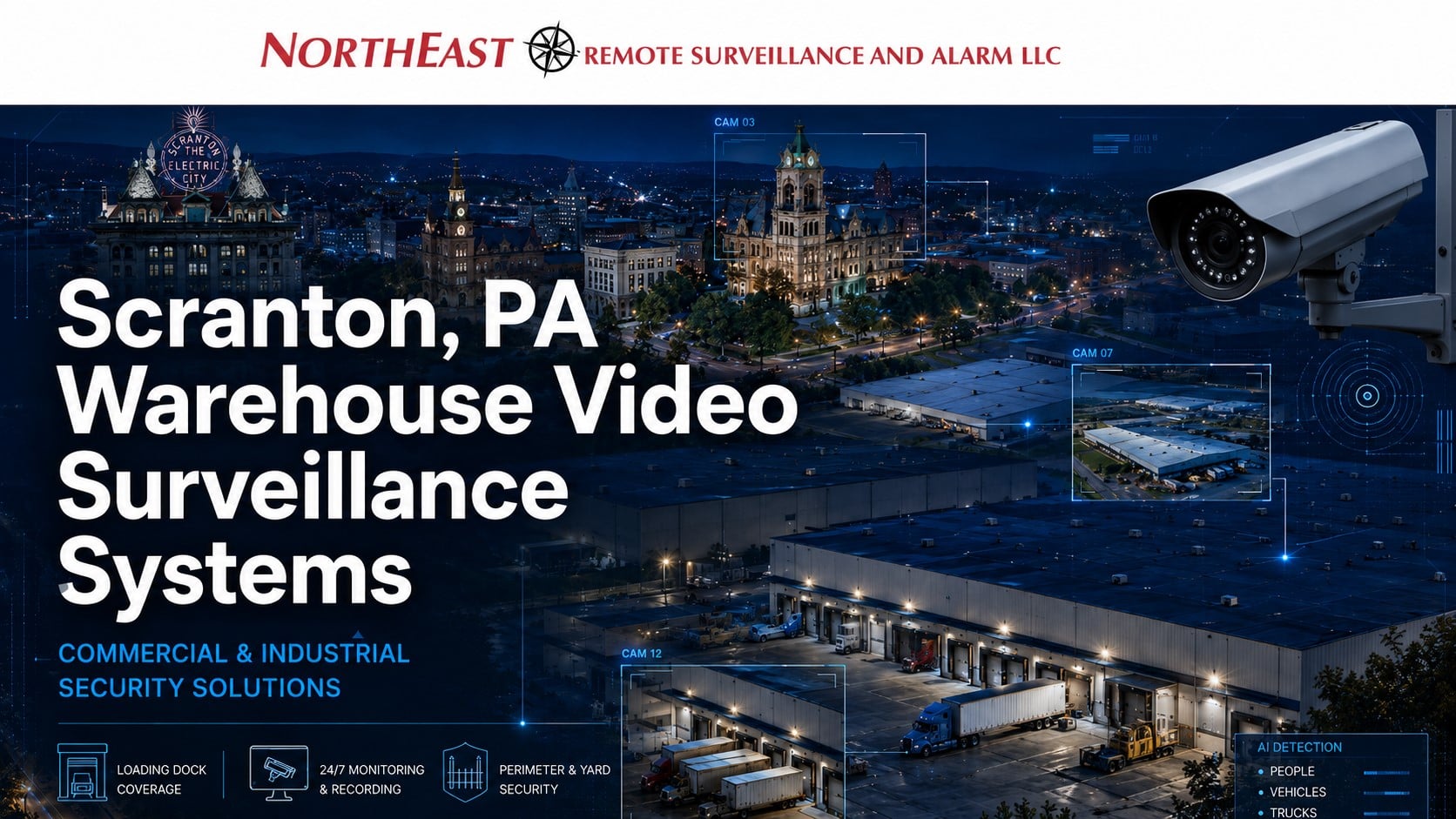
Plan useful camera views and records at the points where goods change hands.
For the wider property and supporting equipment, review Scranton commercial security systems.
Begin with the questions supervisors cannot answer
Instead of starting with a camera count, collect examples of warehouse questions that take too long to resolve. Perhaps a receiving discrepancy is discovered during picking, a return cannot be matched to its inspection, or an order is disputed after dispatch. Each example identifies a sequence of activity and the records needed to understand it.
Keep this review focused on goods inside the warehouse. Vehicle admission and yard circulation are separate planning tasks. The warehouse arrangement should show useful transitions between receiving, storage, packing and release, without duplicating a general overview of every security system on the property.
Connect receiving records to an identifiable place
Identify where deliveries are checked and where damaged or disputed goods are held. If staff perform checks in several locations, document how the receiving record indicates which location was used. A recording is harder to find when the operational paperwork contains no practical reference to the relevant area or time.
Decide what the view must establish. It might show the unloading sequence, an inspection table or movement into a designated holding area. Do not assume a broad view can reveal small labels or confirm quantities hidden inside packaging. Match the intended detail to the actual review question and explain limitations to supervisors.
Give returns their own review path
Returned goods may pass through receipt, inspection, restocking or a separate disposition decision. Map that path and identify who owns each step. A return placed temporarily beside ordinary stock can become difficult to trace even when cameras cover the room.
Consider a returned item that is later reported missing. Staff should be able to establish where it was received, where it was held and which business record describes the next action. Security recordings can support the sequence but do not replace the decision record or prove the contents of a closed container.
Review picking and packing without overpromising
Where discrepancies commonly arise near packing, determine whether a useful view can show the work area without being blocked by shelving, packaging or staff movement. Assess the proposed image under ordinary working conditions. An empty table during installation may look very different during a busy shift.
Set realistic expectations about detail. Seeing an order move through a packing area may be feasible, while reading every small label or identifying every item may not be. Define the required outcome before choosing equipment, and avoid presenting video as a substitute for accurate scanning, inventory control or quality checks.
Manage temporary storage and overflow
Overflow stock and seasonal activity can change the warehouse arrangement. Identify places where goods are left when normal locations are full and assess whether those places remain controlled and reviewable. A camera aimed at the usual aisle may miss a temporary holding area behind stacked materials.
Give supervisors a simple way to request a coverage review when storage patterns change. Updated area names and drawings help reviewers understand both current and earlier recordings. Do not silently rename a camera after moving it without documenting the change, because an older event may then appear to belong to the wrong location.
Restrict areas according to responsibility
Higher-value stock, returns awaiting a decision and sensitive records may require more limited access than general warehouse space. Define who needs entry, during which hours and for what work. Temporary permissions should have an owner and an end point.
Drivers and visiting contractors should have clear destinations and staff contacts. Permission to enter the property should not automatically become unrestricted access to stock areas. Coordinate physical openings, visitor instructions and employee responsibility, with qualified review of door hardware and required exit arrangements.
Make an investigation repeatable
Choose one sample discrepancy and work backward through the relevant business records. Identify the date range, area names and likely transitions before searching recordings. This process helps determine whether camera positions, labels and time settings support the way supervisors actually investigate.
Define who may review footage, who can export it and who coordinates preservation when several departments are involved. Retention should account for the delay between an event and discovery of a problem. Do not select a period solely because it is a default setting or a convenient storage estimate.
Preserve evidence without broadening access
An incident request should identify the relevant period and purpose. Authorized staff can preserve the necessary material without distributing unrestricted camera access to everyone involved in a dispute. Keep a record of who exported footage and where it is stored under the business’s procedures.
Test playback on an approved device outside the recording system. A file that exists but cannot be opened by the intended reviewer is not a complete handover. Confirm camera names and timestamps remain understandable in the exported material and retain any necessary playback instructions.
Review the arrangement with warehouse staff
Include receiving, inventory and shipping supervisors in acceptance testing. Ask them to locate a known event from their normal records, not from a timestamp supplied by the installer. Their experience will reveal whether the arrangement helps real investigations or merely produces attractive live views.
Bring a floor plan, returns procedure, examples of recurring discrepancies and current access rules to NERSA. The resulting plan should make review more practical while preserving the distinction between recorded observation, stock records and the business decisions those records support.
Camera placement and recording options are explained in Scranton video surveillance.
For employee credentials and controlled doors, see Scranton access control.
Cable routes, network connections and equipment support are covered in Scranton infrastructure and cabling.
Compliance, Codes & Project Standards
NERSA plans commercial and industrial security work with applicable code, documentation, inspection and authority-having-jurisdiction requirements in mind. Requirements vary by system, property and jurisdiction. These resources support project planning; they do not establish legal compliance, certification or AHJ approval.
Related guidance: Regulatory compliance & inspection readiness · Warehouse & logistics compliance · NERSA project standards
Request a Scranton Warehouse Security Assessment
Bring your site layout, existing equipment details and the operating problem you need to resolve.