
Commercial intrusion alarm installation in the Lehigh Valley, PA helps business owners protect offices, warehouses, manufacturing facilities, industrial properties and managed commercial buildings.

Request an Installation Assessment
Bethlehem-based Northeast Remote Surveillance and Alarm, LLC (NERSA) plans and installs commercial burglar alarm systems across Allentown, Bethlehem, Easton, Upper Macungie and the Route 22, Route 33 and I-78 industrial corridors. We work around each property’s doors, operating hours, employee access and response requirements.
This page is specifically about new commercial intrusion alarm installation, panel programming and commissioning.
For existing system repairs, provider takeovers, monitoring and broader design topics, visit the Lehigh Valley commercial intrusion alarm systems guide.
Allentown · Bethlehem · Easton · Lehigh Valley
Commercial Intrusion Alarm Installation
Alarm panels, door protection, sensors, communications, programming and testing for working business facilities.
Business Intrusion Alarm Installation for Real Facility Operations
A shop that closes at 6 p.m. does not operate like a distribution warehouse running late shifts. During planning, identify how employees, tenants, cleaning crews, drivers and contractors enter the property; which doors must remain active; and which protected areas should be armed separately. The scope must account for normal operating activity as well as unauthorized entry.
In an Allentown office, this may mean monitored exterior doors and restricted storage. In a Bethlehem manufacturing facility, it may involve production support rooms and controlled zones. A Route 33 warehouse may have dozens of overhead and personnel doors. These are examples of how applications vary, not preset equipment packages.
What NERSA Installs and Configures
- Commercial intrusion alarm control panels, power supplies and backup batteries
- Door and overhead-door contacts, motion sensors, glass-break detection and appropriate specialty devices
- Commercial keypads, user permissions, schedules, area partitions and zone identification
- Wired or compatible wireless detection where the site and system support it
- Alarm transmission equipment, including suitable communications and backup arrangements where specified
- Programming, signal verification, device labels, staff orientation and handover records
NERSA assesses existing cabling, panel condition, account access, equipment compatibility and manufacturer support before deciding whether components can be reused. Any fire alarm or required life-safety system is a separate scope; intrusion equipment does not replace it.
Our Lehigh Valley Installation Process
1. Survey and scope: Walk entrances, shipping areas, inventory rooms and other protected spaces. Record building hours, user groups, site access and existing equipment. Define which events need notification and who is responsible for responding.
2. Install and program: Coordinate device placement, panel location, wiring and power with operations and IT. Assign clear names to each opening or area, configure permissions and arming schedules, and document the communications path.
3. Test and hand over: Verify applicable alarm, tamper, trouble, restoration, power-loss and communications events. If professional monitoring is included, confirm test signals and contact instructions. Train authorized staff in daily arming, disarming and alert handling.
Commercial Alarm Installation for Warehouses and Industrial Sites
Loading doors, truck activity and changing shifts make industrial alarm installation more involved than a simple office package. Door contacts, detection zones, access permissions and reporting should reflect how the facility is used. Work should be scheduled to avoid unnecessary disruption to receiving, shipping and production.
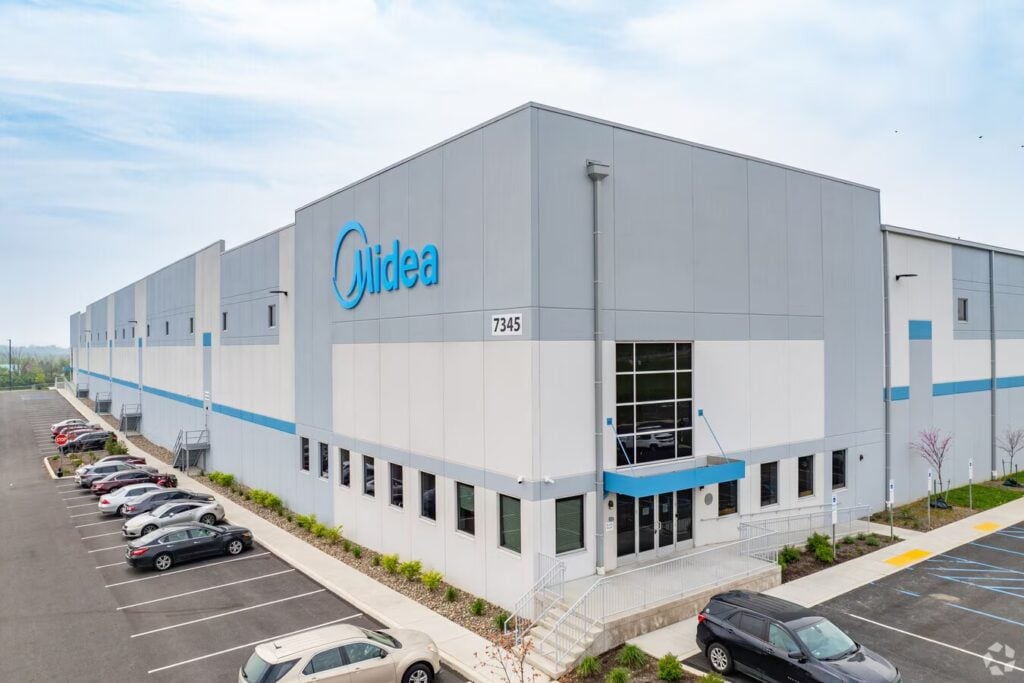
NERSA’s Midea warehouse managed-alarm case study documents a Lehigh Valley scope involving 76 overhead doors and 27 personnel doors—103 doors in total.
It is a concrete example of the planning scale found at a major distribution facility, not a claim that every door needs the same device or that every installation has identical requirements.
Monitoring, Code Coordination and Owner Control
Installation and monitoring should be compared separately.
Determine whether professional monitoring, cellular service, software or ongoing support is included, how communication outages are handled, and whether recurring fees apply.
Confirm who holds administrative control and how authorized staff will manage users, arming and future changes.
Verification methods, monitoring-center contact escalation and potential requests for responding-authority assistance are separate service decisions; see our commercial alarm monitoring services for those procedures and limitations.
Any installation involving shared infrastructure, electrical work, interfaces with required systems or building approvals must be reviewed against the applicable project requirements, including adopted codes and the authority having jurisdiction when appropriate.
The NERSA regulatory and compliance resource explains the broader coordination issues; it does not replace an engineered design or required inspections.
Compare Commercial Intrusion Alarm Installation Quotes
A useful proposal makes the device count understandable, identifies each protected area, and separates equipment, labor, wiring, programming, communications, monitoring and customer training. Ask what remains usable if a subscription or provider arrangement changes. Confirm how the installation will be tested and who accepts the finished system. A low hardware price may omit work needed for a reliable commercial installation.
Common Questions About Lehigh Valley Alarm Installation
Can we keep an existing commercial alarm panel?
Possibly. Equipment condition, software support, device compatibility, administrative access and the installation’s actual requirements determine whether keeping the panel is practical. A site assessment is required before promising reuse.
Can warehouse areas arm independently?
Many compatible commercial intrusion systems support partitions or multiple areas. Permissions, alarm communication and schedules must be matched to the site’s actual operating routine and selected equipment.
Is professional alarm monitoring included?
Monitoring is a separate service decision. An installation assessment should clarify the proposed signal path, monitoring responsibilities, contacts and any monthly or annual charges.
Request a Lehigh Valley Intrusion Alarm Installation Assessment
Tell NERSA where the commercial property is located, which doors or rooms need protection, your operating hours, and whether you already have an alarm system.
We can review the practical installation scope before discussing equipment and pricing.
Request a commercial intrusion alarm installation assessment or call 1-888-344-3846.
Compliance, Codes & Project Standards
NERSA plans commercial and industrial security work with applicable code, documentation, inspection and authority-having-jurisdiction requirements in mind. Requirements vary by system, property and jurisdiction. These resources support project planning; they do not establish legal compliance, certification or AHJ approval.
Related guidance: NERSA project standards · Documentation, testing & inspection readiness