Industrial Intrusion Alarm Systems in Bethlehem, PA

Industrial intrusion alarm systems in Bethlehem, PA must be designed around production schedules, employee movement, contractor access, exterior doors, equipment areas, restricted spaces, and after-hours risk. Northeast Remote Surveillance and Alarm, LLC designs industrial alarm systems for Bethlehem manufacturing plants, production facilities, industrial buildings, warehouse-connected operations, utility areas, and multi-building industrial properties. For broader local industrial planning, start with Manufacturing & Industrial Security Systems in Bethlehem, PA.

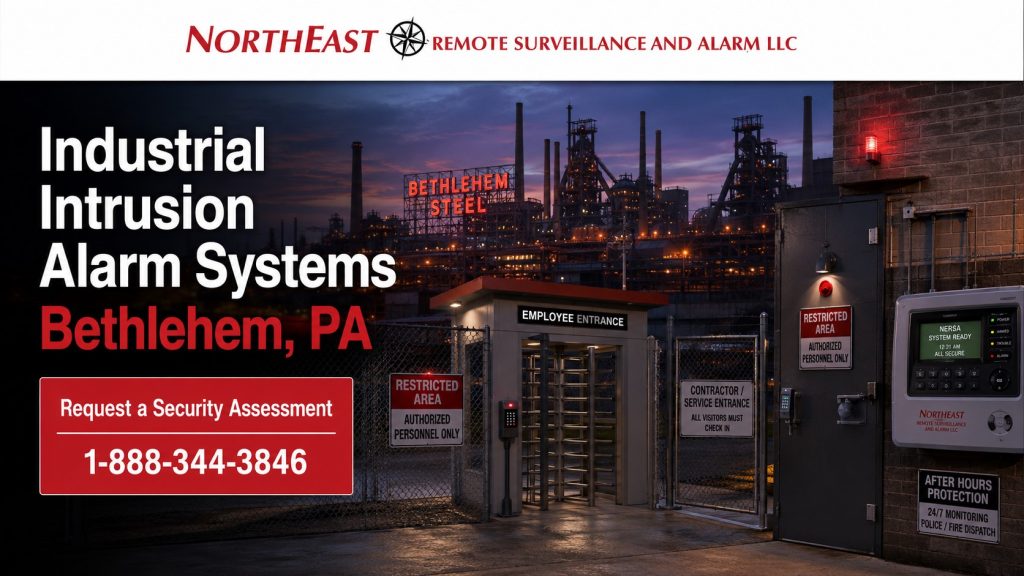
Industrial intrusion alarm systems in Bethlehem, PA graphic featuring Bethlehem industrial security, alarm protection for production facilities, employee and contractor access points, restricted-area protection, monitored industrial entry points, and Northeast Remote Surveillance and Alarm, LLC branding.

Intrusion Alarm Systems Designed for Bethlehem Industrial Operations

Industrial intrusion alarms are different from basic burglar alarms. A manufacturing or industrial facility may include multiple buildings, shift-based access, contractor entrances, loading areas, utility rooms, fenced yards, exterior equipment areas, restricted spaces, and after-hours exposure that require more careful planning.

A strong intrusion alarm system should do more than make noise. It should help management identify where an event occurred, understand whether activity is authorized, support faster review, reduce unnecessary dispatches, and strengthen protection around the facility’s real operating conditions.

For Bethlehem industrial properties, alarm design should reflect production operations, plant schedules, service access, employee entrances, gate activity, and the difference between daytime workflow and after-hours risk.

Where Industrial Facilities Need Intrusion Alarm Protection

Industrial intrusion alarms should be planned around the parts of the property that create the highest exposure. Not every door, room, building, and yard condition creates the same risk, so the system should be structured by area, use, and operating pattern.

Exterior Doors and Employee Entrances

Exterior doors are a primary intrusion point in industrial facilities. Employee entrances, rear doors, side doors, and service doors often need protection tied to schedules, entry activity, and after-hours conditions.

These doors may also need coordination with access control so the facility can separate authorized credential use from unexpected alarm events.

Contractor and Vendor Access Points

Contractor entrances, receiving doors, service entrances, and maintenance access points often create exposure because outside personnel may arrive at irregular times or use entrances that are not constantly supervised. Alarm protection at these openings helps support accountability and after-hours protection.

For controlled entry planning at these points, use Industrial Access Control in Bethlehem, PA.

Loading Areas and Shipping Zones

Loading zones combine open building access, overhead doors, shipping activity, dock movement, and after-hours vulnerability. Alarm protection can help secure dock-related doors, receiving offices, connected storage areas, and other openings that create risk when operations slow down or stop.

Restricted Rooms and Interior Zones

Industrial buildings often contain electrical rooms, IT spaces, inventory rooms, control spaces, maintenance areas, and restricted production zones that should not be accessible to everyone in the facility. Alarm partitions and interior detection can help protect these areas separately from the rest of the building.

Utility Areas and Detached Structures

Some Bethlehem industrial sites include utility buildings, detached storage areas, equipment rooms, service structures, and other spaces outside the main production building. These areas may need separate alarm protection because they have different access patterns and different after-hours exposure.

How Industrial intrusion alarm systems in Bethlehem, PA Work

A strong industrial alarm system usually combines detection devices, control equipment, user management, and response workflows. The design should be based on how the property operates, not just on a list of devices.

Common components may include:

  • Door contacts for protected openings
  • Motion detection for interior areas
  • Glass-break or specialty detection where appropriate
  • Alarm keypads or managed arming points
  • Multiple partitions for different buildings or departments
  • Remote user management and alarm notifications
  • Monitoring and dispatch coordination
  • Integration with cameras and access control

The system should make it easier to understand which area was affected, what time the event occurred, who was supposed to be on site, and whether the activity requires review or escalation.

Alarm Partitions, Schedules, and User Control

Industrial facilities often need more than one armed area. A production building, warehouse-connected space, office area, detached utility building, contractor entrance, or fenced structure may all need different arming schedules and user permissions.

Partitions allow management to control separate areas independently. This helps a facility keep one area armed while another area remains active for production, maintenance, cleaning crews, or scheduled contractor work.

User control also matters. Alarm permissions should be assigned by role so employees, managers, maintenance staff, contractors, and after-hours personnel do not all have the same authority.

Alarm Verification and Faster Response

A dependable industrial alarm system should help management determine whether an event is real. Alarm events are more useful when they can be reviewed against door activity, schedules, camera views, or monitored procedures.

This is especially important for Bethlehem industrial properties that need better after-hours visibility, reduced false dispatches, stronger documentation, and faster event understanding.

For video coverage that supports alarm review and event documentation, use Manufacturing Security Cameras in Bethlehem, PA.

Integration With Cameras, Access Control, and Monitoring

Industrial intrusion alarms become more valuable when they work with other parts of the security system. Alarm activity can be tied to camera views, credential activity, restricted doors, and monitored response workflows.

An alarm can identify a triggered area. Video can help show what happened in that area. Access control can show whether someone used a credential before or after the event. Monitoring can help determine whether the event needs review, notification, or escalation.

For after-hours response workflows and monitored industrial protection, use Industrial Remote Video Monitoring in Bethlehem, PA.

Industrial Alarm Planning for Real Bethlehem Risk Conditions

Bethlehem industrial properties often deal with shift changes, service contractors, exterior storage, production schedules, multiple buildings, warehouse-connected spaces, and areas that are active during some hours but quiet during others. These conditions affect how alarm systems should be designed, armed, monitored, and managed.

A locked alarm plan should answer practical questions. Which doors need protection? Which areas need separate partitions? Which buildings stay active later? Which spaces should trigger immediate concern after hours? Which users need alarm authority? Which events should be reviewed with video?

The goal is to build an alarm system that fits operations instead of forcing industrial operations to fit a generic alarm package.

Compliance-Aware Industrial Alarm Planning

Industrial intrusion alarm systems do not make a facility compliant by themselves, but they can support documentation, restricted-area accountability, after-hours protection, incident review, and operational control. Alarm planning may also intersect with life-safety coordination, power requirements, protected openings, user-permission management, and installation conditions.

Industrial alarm systems should be designed with awareness of egress, fire/life-safety conditions, emergency access, and any site-specific installation or documentation concerns that affect long-term reliability and inspection readiness.

For broader compliance routing, use Industrial and Warehouse Security Compliance.

Industrial Facilities NERSA Supports in Bethlehem

Northeast Remote Surveillance and Alarm, LLC designs industrial intrusion alarm systems for Bethlehem manufacturing plants, production facilities, industrial buildings, warehouse-connected operations, utility areas, detached structures, equipment rooms, restricted spaces, contractor entrances, and multi-building commercial properties.

These environments often involve high-value equipment, scheduled employee access, after-hours service work, restricted production zones, and multiple entry points that require stronger alarm planning than a small commercial office or retail space.

The system should be designed around the actual property layout, operating schedule, risk exposure, integration needs, and long-term service expectations.

Request a Bethlehem Industrial Intrusion Alarm Assessment

If your Bethlehem facility needs better protection for exterior doors, employee entrances, contractor access points, restricted rooms, utility areas, loading zones, detached structures, or after-hours industrial exposure, Northeast Remote Surveillance and Alarm, LLC can help design the system around the way your property actually operates.

Call 1-888-344-3846 or use the Request a Security Assessment page to begin a Bethlehem industrial intrusion alarm review.

Frequently Asked Questions

What are Industrial intrusion alarm systems in Bethlehem, PA?

An industrial intrusion alarm system is an electronic alarm system designed to protect industrial buildings, production facilities, restricted rooms, employee entrances, contractor access points, utility areas, and other sensitive areas from unauthorized entry or after-hours activity.

How is an industrial intrusion alarm different from a basic burglar alarm?

Industrial intrusion alarms usually protect larger and more complex environments. They often involve multiple buildings, separate alarm partitions, scheduled access, contractor activity, warehouse-connected operations, and integration with cameras, access control, and monitoring.

What areas of a Bethlehem industrial facility should be protected by an intrusion alarm?

Common alarm-protected areas include exterior doors, employee entrances, contractor entrances, receiving doors, loading zones, restricted rooms, utility spaces, detached structures, office-connected areas, and sensitive interior zones.

Can industrial intrusion alarms be divided into separate areas?

Yes. Alarm partitions can separate buildings, departments, entrances, utility spaces, and restricted zones so different areas can be armed or disarmed independently based on the facility’s operating schedule.

Should industrial intrusion alarms integrate with cameras?

Yes. Alarm integration with cameras helps management review what happened in the triggered area, verify activity, and understand whether the event requires follow-up or escalation.

Can alarm systems support after-hours protection for industrial facilities?

Yes. Industrial intrusion alarms are especially useful for after-hours protection because they help identify unexpected entry, unauthorized movement, or activity in protected areas when the facility is not fully staffed.

Can intrusion alarms work with access control?

Yes. Access control and intrusion alarms can work together so facilities can manage doors, schedules, user permissions, and event review more effectively.

Do industrial alarm systems help reduce false dispatches?

They can. Stronger area design, better user management, clearer schedules, and integration with cameras or monitored review can help reduce unnecessary alarm events and improve how the facility responds.

Does an industrial intrusion alarm make a facility compliant?

No. An intrusion alarm does not make a facility compliant by itself. It can support documentation, access accountability, operational control, and after-hours protection, but compliance depends on the broader safety, security, and operational framework of the site.

What is the next step for planning Industrial intrusion alarm systems in Bethlehem, PA?

The next step is a site-specific security assessment. NERSA reviews the building layout, entrances, restricted areas, operating schedule, user needs, existing infrastructure, integration goals, and after-hours risk before recommending a system design.

Scroll to Top
1-888-344-3846