Loading dock access control in Easton, PA should be planned around employee entrances, dock-adjacent doors, shipping offices, receiving areas, overhead-door workflow, vendor movement, and after-hours dock exposure. Northeast Remote Surveillance and Alarm, LLC designs and installs loading dock access control systems for Easton warehouses, distribution buildings, logistics properties, contractor facilities, service operations, light industrial buildings, and commercial properties that need tighter control around active dock areas.
For broader commercial access-control planning throughout Easton, visit Commercial Access Control Systems Easton, PA.
For broader citywide planning across cameras, alarms, access control, and integrated commercial security, start with Easton Commercial and Industrial Security Systems.
Request a Loading Dock Access Control Assessment
If your Easton warehouse, distribution building, logistics property, contractor facility, service operation, or commercial building has dock-adjacent doors, shipping offices, receiving entrances, vendor access points, or after-hours dock exposure that needs better control, Northeast Remote Surveillance and Alarm can evaluate the property and discuss the available options.
Call 1-888-344-3846 or use Request a Security Assessment to request a loading dock access control assessment.
Loading Dock Access Control Built Around Dock Activity
Loading docks are active transition points between the inside and outside of the building. Employees, vendors, drivers, deliveries, pickups, materials, and equipment often move through the same area throughout the day.
A loading dock access control system should help control which people can use dock-adjacent doors, when access is allowed, and how entry activity is documented. The goal is better door control without slowing down normal shipping, receiving, and warehouse operations.
Where Loading Dock Access Control Matters Most
Employee and Staff Dock Entrances
Employee entrances near the dock often need stronger control because they may be used by warehouse staff, shipping personnel, supervisors, drivers, and service vendors. Access control can help limit entry to authorized users and document when those doors are used.
Shipping and Receiving Doors
Shipping offices, receiving rooms, dispatch doors, and dock-adjacent interior doors often need controlled access. These areas may connect office space, warehouse space, inventory zones, and exterior dock activity.
Side Doors and Rear Access Points
Side doors, rear doors, and dock-area man doors can create security gaps when they rely only on keys. Access control helps reduce unmanaged key use, unauthorized entry, and unclear after-hours door activity.
Restricted Dock-Adjacent Areas
Some loading dock areas connect to inventory rooms, tool storage, maintenance spaces, equipment rooms, or warehouse-to-office transitions. These openings may need separate permissions from the rest of the building.
Door Hardware, Credentials, and Schedules
Loading dock access control should match the door, the traffic pattern, and the way the dock operates. Some doors may need card readers, fobs, mobile credentials, keypad entry, electric strikes, electrified locks, request-to-exit devices, door position monitoring, or scheduled locking.
The system should help management control access by user, door, schedule, and role. It should also create a cleaner record of who used a door, when access occurred, and whether the opening was part of normal dock activity.
For broader warehouse door-control planning beyond the dock area, use Easton Warehouse Access Control Systems.
Access Control for Vendor and Driver Movement
Loading docks often involve vendors, drivers, contractors, delivery personnel, and service providers who should not have uncontrolled access to the building. Access control can help separate authorized staff movement from visitor, vendor, and delivery activity.
The right design depends on how the site receives deliveries, how drivers check in, where staff meet vendors, and which doors should remain staff-only. The goal is to improve dock-area accountability without creating unnecessary friction for daily operations.
Access Control and Camera Review
Access control documents when a credential was used. Camera coverage helps show what actually happened at the dock, near the door, or around the trailer area.
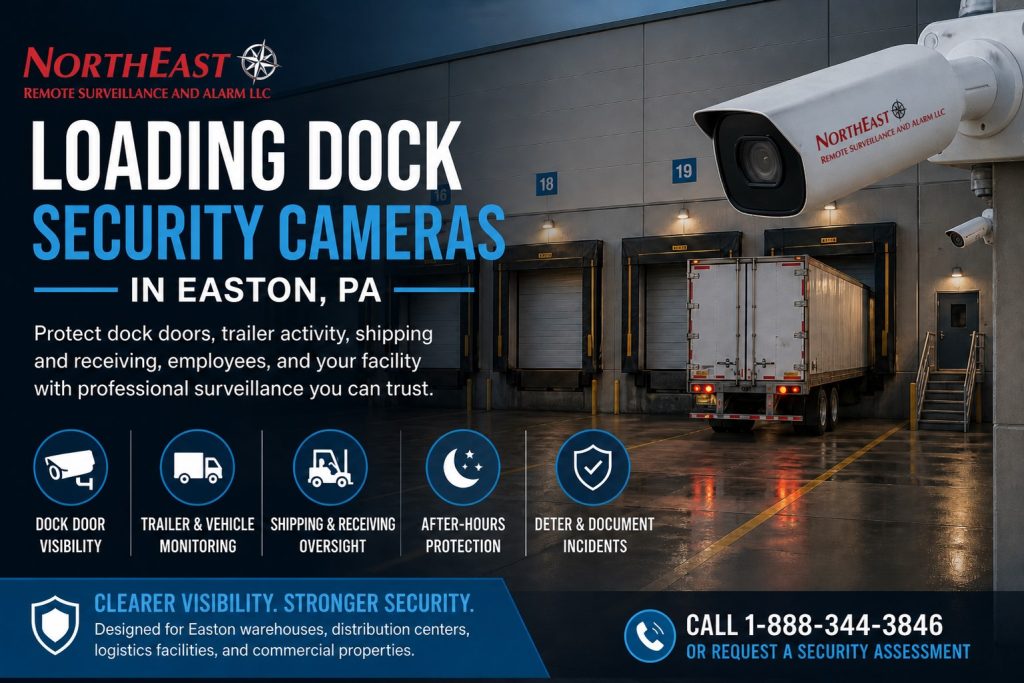
For dock areas where door activity needs visual documentation, use Loading Dock Security Cameras in Easton, PA as the supporting camera page.
After-Hours Dock Door Control
Loading dock doors and dock-adjacent access points can become higher-risk areas after the building closes. Side doors, rear entrances, shipping offices, receiving areas, and warehouse-to-dock transitions should be reviewed for unauthorized entry risk.
Access control can help manage after-hours permissions, reduce open-door exposure, and support cleaner review of door activity.
Upgrading Existing Loading Dock Access Control
Many Easton facilities already have some level of door security near the dock, but the system may no longer match the building. Common problems include shared keys, outdated readers, poor door hardware, missing audit trails, weak scheduling, uncontrolled side doors, or dock doors that are difficult to manage after hours.
An upgrade may include replacing outdated readers, improving credentials, adding access control to key dock-adjacent doors, correcting hardware problems, improving schedules, or adding door position monitoring where appropriate.
The best upgrade is not always controlling every opening. The best upgrade is controlling the doors that matter most to dock activity, employee movement, vendor access, and after-hours exposure.
New Loading Dock Access Control Systems
A new loading dock access-control project should begin with a review of how people move through the dock area and how those doors are used throughout the day.
Planning may include:
- Identifying dock-adjacent controlled doors
- Reviewing employee and vendor movement
- Reviewing shipping and receiving entrances
- Reviewing existing door hardware
- Identifying user groups
- Establishing schedules
- Selecting credential technology
- Reviewing door-position monitoring
- Planning request-to-exit operation
- Reviewing power requirements
- Reviewing network communication
- Establishing administrator responsibilities
- Testing closing and latching
- Planning future expansion
The system should support normal dock operations while improving control over the openings that matter most.
From One Dock Door to Larger Logistics Operations
NERSA supports loading dock access-control projects ranging from one controlled dock-adjacent personnel door to larger warehouse and logistics properties with multiple receiving areas, shifts, entrances, and buildings.
A smaller property may need:
- One controlled employee entrance
- One shipping-office door
- Individual credentials
- Basic schedules
A growing facility may later require:
- Additional dock-adjacent doors
- Multiple shifts
- Vendor-specific permissions
- Restricted support areas
- Additional shipping or receiving offices
- Remote administration
Larger operations may require:
- Multiple buildings
- Centralized credential management
- Standardized hardware
- Department-specific permissions
- Coordinated employee offboarding
- Multi-location reporting
- Common documentation
The system should meet the current need while allowing practical expansion as the operation grows.
Built for Easton Loading Dock Operations
Northeast Remote Surveillance and Alarm, LLC designs loading dock access control systems for Easton warehouses, distribution facilities, logistics properties, service buildings, contractor facilities, light industrial buildings, mixed office-warehouse properties, and commercial buildings with active shipping and receiving operations.
The system should support normal dock workflow while improving control over employee entrances, rear doors, shipping offices, receiving areas, restricted rooms, and dock-adjacent access points.
Frequently Asked Questions
What is loading dock access control?
Loading dock access control manages who can use dock-adjacent doors, employee entrances, shipping offices, receiving areas, rear doors, and restricted openings near the loading dock.
What doors should be controlled around a loading dock?
Common doors include employee entrances, rear doors, side doors, shipping office doors, receiving room doors, warehouse-to-office transitions, restricted storage doors, and dock-adjacent man doors.
Can access control reduce key problems at loading docks?
Yes. Access control can reduce reliance on shared keys by using credentials, schedules, user permissions, and audit trails for important dock-area openings.
Can loading dock access control work with cameras?
Yes. Cameras can provide visual context around dock-area door activity, trailer movement, deliveries, and after-hours events.
Is loading dock access control different from warehouse access control?
Yes. Warehouse access control covers the broader building. Loading dock access control focuses on dock doors, dock-adjacent openings, shipping and receiving access, vendor movement, and after-hours dock exposure.
Can older dock-area door systems be upgraded?
Yes. Older systems can often be improved with updated readers, better credentials, corrected door hardware, schedules, audit trails, and door monitoring where appropriate.
Request Loading Dock Access Control in Easton, PA
If your Easton warehouse, distribution building, logistics property, contractor facility, service building, or commercial property needs better access control around loading dock doors, Northeast Remote Surveillance and Alarm, LLC can help.
NERSA can review:
- Employee dock entrances
- Shipping office doors
- Receiving entrances
- Side and rear doors
- Vendor access points
- Restricted dock-adjacent areas
- Existing readers
- Credentials
- Door hardware
- Access schedules
- Door-position monitoring
- Request-to-exit operation
- Existing wiring
- Power supplies
- Network requirements
- Existing-system upgrades
Commercial and industrial systems only.
Call 1-888-344-3846 or use Request a Security Assessment to request a loading dock access control assessment.