
Motorize an existing commercial exit device without losing safe, familiar push-to-exit operation.

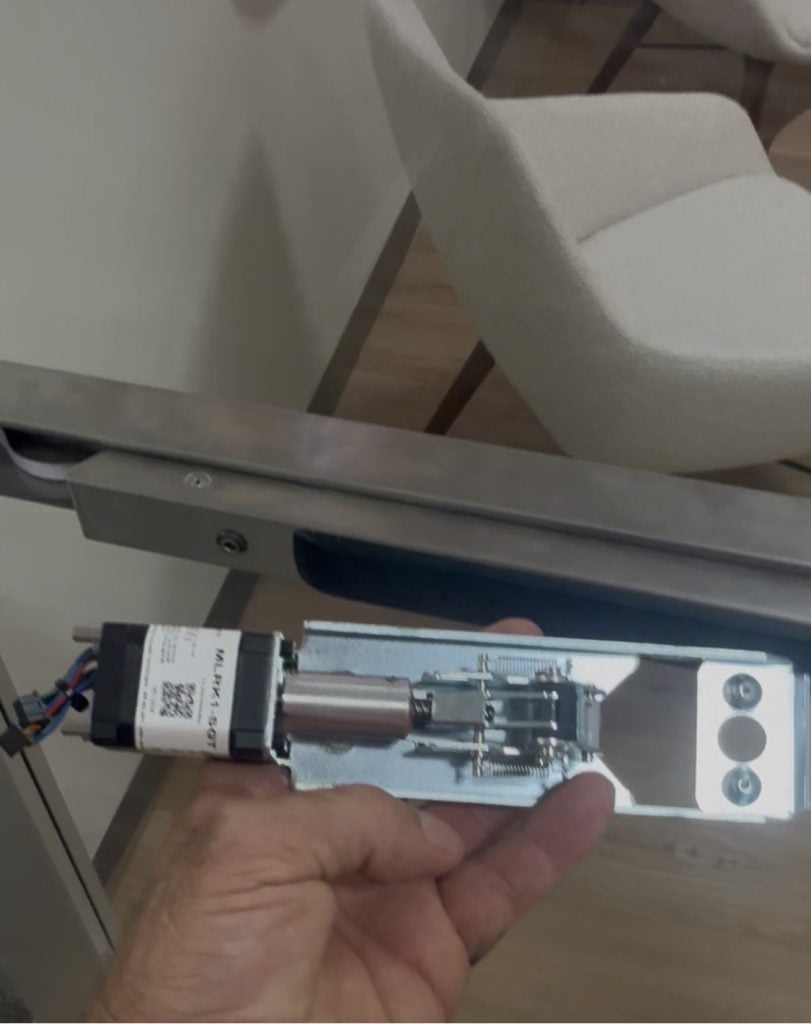
Northeast Remote Surveillance and Alarm, LLC upgrades suitable commercial doors so an access control system can manage entry while occupants continue to exit through the push bar. This work requires the lock, exit device, reader, controller, cabling, power, door position, and life-safety operation to be planned together.
Why Motorize an Exit Push Bar
A mechanical exit device may work well for egress but lack a supported way to release the door electronically from the secure side. Motorization or approved electrification can let an authorized card, fob, mobile credential, schedule, or remote command unlock the latch mechanism while preserving normal push-to-exit use.
The correct approach depends on the door, frame, existing exit device, fire rating, traffic level, and access objective. Not every push bar should be modified, and some openings require a compatible replacement device.
What the Upgrade May Include
- Compatible motorized or electrified exit hardware
- Reader, controller, and programmed permissions
- Power supply and supervised door wiring
- Door-position monitoring and request-to-exit input
- Adjustment of the door, frame, closer, and latch
Watch the existing push bar motorization demonstration for a brief view of the hardware in operation.
Coordinate Hardware Before Installation
Access problems often come from combining parts that were never evaluated as one opening. We review the panic or fire-exit hardware, trim, hinges, latch alignment, door closer, frame, reader location, cable path, controller output, and available power. This helps prevent unreliable release, dragging doors, incomplete latching, and repeated service calls.
Protect Egress and Door Requirements
Electronic entry control must not compromise required egress. The design may need coordination with applicable building, fire, accessibility, and life-safety requirements. Final hardware selection and release behavior depend on the opening and the authority having jurisdiction. NERSA documents these conditions instead of treating the door as a simple lock swap.
Use a Serviceable Power-Transfer Path
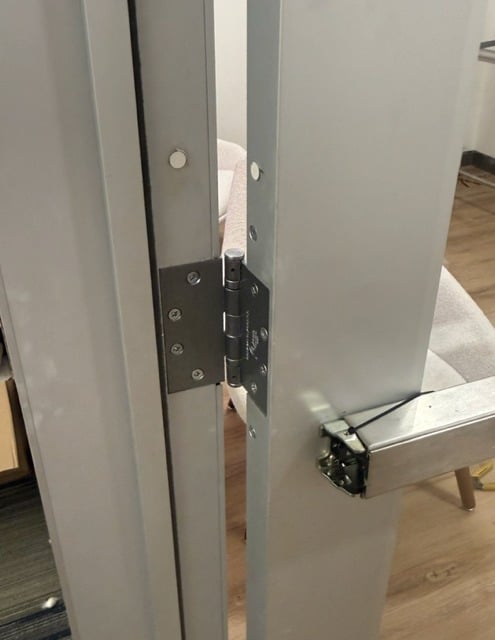
Door-mounted hardware needs a protected path for power and signals.
The solution may use an approved power-transfer hinge or another listed transfer method suited to the opening.
A door-position contact can report whether the door is closed, held, or forced.
See the related door hardware demonstration.
Test the Complete Opening
Testing should cover credential entry, free egress, schedules, manual operation, latch alignment, closer action, door-position reporting, loss of power, and the intended emergency behavior. We label the controller connections and document the installed hardware so future service does not rely on guesswork.
Connect the Door to a Larger Access Plan
A motorized exit device can work as one part of a broader commercial access control system.
Permissions, audit history, video surveillance, intrusion alarms, intercoms, and remote management may be coordinated when the platform and operating plan support them.
Frequently Asked Questions
Can every existing push bar be motorized?
No. Compatibility, condition, listing, door type, and code requirements must be reviewed first.
Will people still push the bar to exit?
Yes, the intended upgrade preserves normal egress operation while electronically managing authorized entry.
Does the door need a power-transfer hinge?
It needs a suitable protected power-transfer method. The right component depends on the door and hardware.
Can the system report a held-open door?
Yes, when door-position monitoring, controller programming, and notification features are included and configured.
Request a Commercial Door Assessment
Use our security assessment form to review an exit device, repair an unreliable opening, or plan an access control upgrade for a commercial or industrial property.
Compliance, Codes & Project Standards
NERSA plans commercial and industrial security work with applicable code, documentation, inspection and authority-having-jurisdiction requirements in mind. Requirements vary by system, property and jurisdiction. These resources support project planning; they do not establish legal compliance, certification or AHJ approval.
Related guidance: Regulatory compliance & inspection readiness · Access control & door hardware standards · NFPA 101 & egress planning · ADA access-control planning