Loading Dock Surveillance Cameras for Warehouses, Distribution Centers, and Industrial Facilities
By Northeast Remote Surveillance and Alarm, LLC (NERSA)
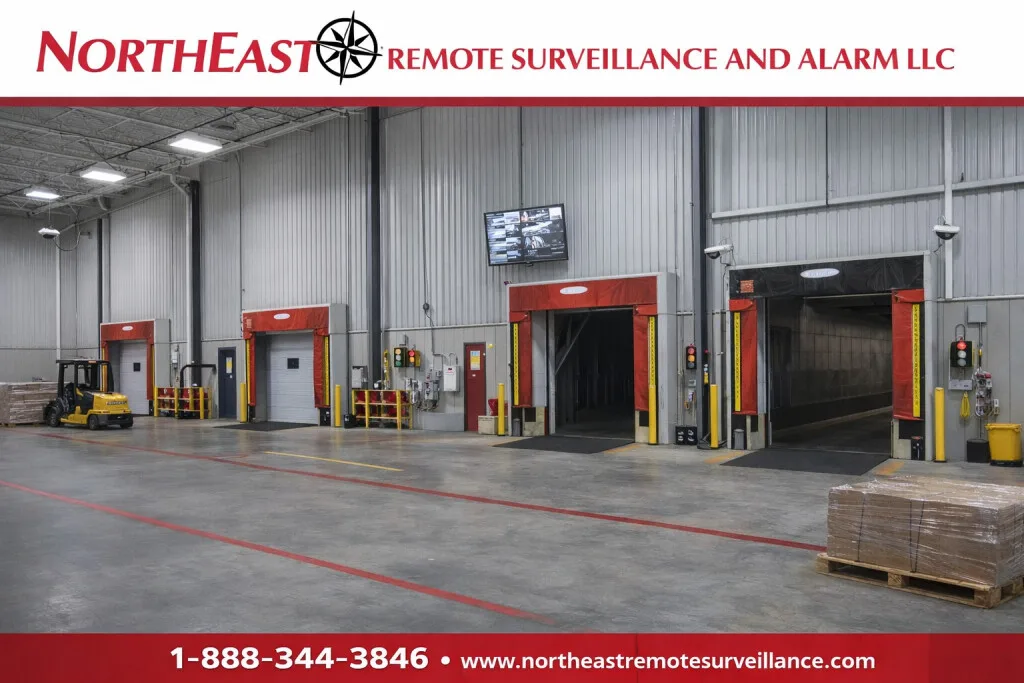
Loading docks are the operational heart of modern warehouses, logistics hubs, manufacturing plants, and distribution centers. Every day thousands of trailer movements, forklift operations, pallet transfers, and personnel interactions occur in these high-risk areas. Despite their importance, loading docks are also one of the most vulnerable security and safety zones inside an industrial facility.
Cargo theft, workplace accidents, fraudulent claims, and operational disputes frequently originate at loading docks. Without proper surveillance coverage, businesses often have no verifiable evidence when an incident occurs.
Loading dock surveillance cameras solve this problem by providing continuous visibility, incident documentation, safety monitoring, and operational intelligence. When engineered correctly, a loading dock camera system allows warehouse managers, security teams, and operations personnel to monitor every trailer movement, dock interaction, and personnel activity in real time.

This cornerstone guide explains:
- Why loading dock surveillance is essential
- How to design a professional dock camera system
- Recommended camera placement strategies
- Compliance considerations
- How facilities can prevent loss, accidents, and liability
- Why industrial companies across Pennsylvania rely on Northeast Remote Surveillance and Alarm, LLC (NERSA) for secure, engineered systems.
Why Loading Dock Surveillance Cameras Are Critical
1. Cargo Theft Prevention
Cargo theft continues to rise across North America. According to logistics security reports, trailer staging areas and loading docks are among the most targeted zones for opportunistic theft.
Typical theft scenarios include:
- Drivers departing with unauthorized freight
- Pallets disappearing during loading
- Third-party carriers manipulating paperwork
- Unauthorized trailer swaps
- Internal theft
A properly designed surveillance system provides clear video evidence of every pallet entering or leaving a trailer.
2. Worker Safety and OSHA Protection
Loading docks involve heavy equipment operating in tight areas:
- Forklifts
- Pallet jacks
- Terminal tractors
- Yard trucks
- Delivery vehicles
Accidents frequently occur during:
- Trailer docking
- Forklift loading operations
- Pedestrian crossing zones
High-resolution cameras provide incident documentation and help companies:
- Investigate accidents
- Improve training programs
- Reduce insurance exposure
- Document OSHA compliance
3. Protection Against Fraudulent Claims
One of the fastest growing problems in logistics operations is false injury claims and cargo damage disputes.
Without video documentation, companies may face:
- Workers compensation claims
- Driver damage disputes
- Product loss allegations
- Insurance litigation
Dock surveillance cameras provide time-stamped visual evidence of every event.
4. Operational Efficiency Monitoring
Surveillance cameras are not only security tools. They also provide operations intelligence.
Managers can analyze:
- Dock door utilization
- Trailer dwell times
- Forklift productivity
- Driver wait times
- Yard congestion
This information allows logistics operations to improve throughput and efficiency.
Key Areas That Require Loading Dock Camera Coverage
A professional dock surveillance system should monitor five critical zones.
1. Trailer Approach Lanes
These cameras monitor:
- Trucks approaching docks
- Terminal tractor positioning
- Driver behavior
- Backing accidents
Recommended camera specifications:
- 4MP–8MP resolution
- Wide dynamic range
- Low-light capability
- 100–120° field of view
2. Trailer Docking Zone
This is where most incidents occur.
Cameras should capture:
- Trailer backing activity
- Dock plate deployment
- Trailer door opening
- Cargo loading and unloading
High-resolution coverage allows investigators to identify:
- Driver actions
- Equipment usage
- Safety violations
3. Interior Dock Door View
Interior cameras monitor the moment cargo transfers from the warehouse into the trailer.
This allows visibility into:
- Pallet counts
- Product handling
- Employee activity
- Cargo staging
Interior cameras also help detect:
- Shrinkage
- Misloads
- Process errors
4. Forklift Traffic Corridors
Forklifts are responsible for a large percentage of warehouse accidents.
Strategic camera placement helps monitor:
- Forklift speed
- Blind intersections
- Worker interactions
This improves safety awareness and training.
5. Yard Surveillance Integration
Loading dock surveillance systems should integrate with yard security cameras.
Yard cameras monitor:
- Trailer parking areas
- Gate access
- Perimeter security
- Container storage zones
Together they create a complete logistics surveillance ecosystem.
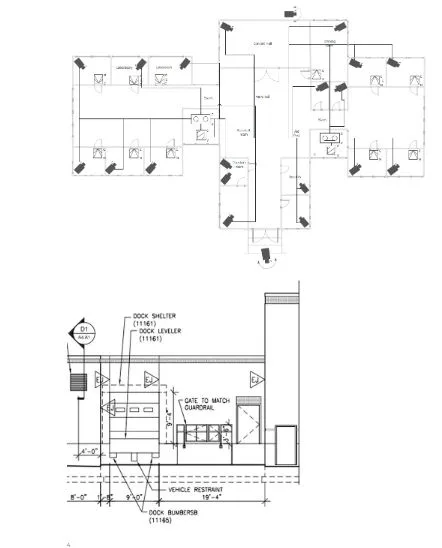
Loading Dock Camera Placement Diagrams (Industrial Surveillance Design)
These diagrams illustrate how professional loading dock surveillance systems should be positioned to achieve complete visibility of trailer movements, cargo transfers, and forklift activity. These layouts are commonly used by security engineers when designing surveillance systems for warehouses, distribution centers, and logistics facilities.

4
Purpose
This layout captures truck approach lanes and trailer docking activity.
Recommended Camera Positions
Camera Position A — Dock Approach Monitoring
- Mounted above dock doors or on building corners
- Covers trucks entering the dock area
- Captures driver activity and backing behavior
Camera Position B — Dock Door Surveillance
- Mounted above each dock door
- Captures trailer backing, dock plate deployment, and door operations
Camera Position C — Yard Monitoring
- Positioned on light poles or building corners
- Monitors staging areas and trailer parking zones
Engineering Notes
Professional dock surveillance systems should provide:
- 30–40 pixels per foot in trailer docking zones
- Wide dynamic range to handle sunlight glare
- Night visibility for 24/7 operations
2. Interior Dock Door Camera Layout
4
Purpose
Interior cameras capture cargo handling operations and forklift activity.
Recommended Camera Positions
Camera Position D — Interior Dock Door Camera
- Mounted above each dock door
- Captures pallet movement into trailers
Camera Position E — Forklift Corridor Monitoring
- Installed above high traffic forklift aisles
- Helps detect safety violations and accidents
Camera Position F — Cargo Staging Area Coverage
- Monitors freight waiting for shipment
- Detects shrinkage or product loss
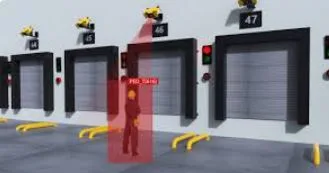
3. Live Dock Monitoring Display Layout

Purpose
Dock monitors provide real-time visibility for workers.
Typical configuration:
- 10-inch viewing screens
- 2 dock cameras per screen
- Split screen or rotating camera view
Benefits include:
- Safer trailer docking
- Reduced accidents
- Better coordination between drivers and warehouse staff
Engineering a Professional Loading Dock Camera System
Many facilities make the mistake of installing cameras without proper engineering. This results in:
- Poor video quality
- Blind spots
- Ineffective incident investigations
NERSA designs systems using forensic surveillance engineering principles.
Pixel Density Standards
Professional systems follow a measurement called pixels per foot (PPF).
Typical targets:
| Surveillance Objective | Pixel Density |
|---|---|
| General monitoring | 10–20 PPF |
| Activity observation | 20–30 PPF |
| Identification | 40+ PPF |
| Forensic evidence | 60+ PPF |
For loading docks, 40 pixels per foot is recommended to capture detailed operational events.
Camera Types for Loading Dock Environments
Fixed Dome Cameras
Best for:
- Indoor dock areas
- Forklift corridors
- Ceiling mounting
Benefits:
- Discreet installation
- Wide coverage
- Vandal resistant
Bullet Cameras
Ideal for:
- Exterior dock lanes
- Trailer parking areas
- Yard monitoring
Benefits:
- Long distance visibility
- Adjustable lens angles
Multi-Sensor Cameras
Multi-sensor cameras monitor multiple docks simultaneously.
Advantages include:
- Reduced installation costs
- Wide area coverage
- Simplified infrastructure
License Plate Recognition Cameras
Facilities handling high volumes of trucks benefit from LPR systems that capture:
- License plates
- Carrier identification
- Trailer numbers
This helps track vehicles entering and exiting the facility.
Loading Dock Camera Placement Guide
A properly engineered loading dock surveillance system uses layered camera coverage.
Example for a 50-dock distribution center:
| Location | Camera Count |
|---|---|
| Dock approach lanes | 10 |
| Dock door exterior | 25 |
| Interior dock views | 25 |
| Forklift corridors | 15 |
| Yard coverage | 12 |
Total system size: 87 cameras
This provides complete operational visibility.
Live Monitoring for Dock Workers
Many large warehouses install live viewing monitors for dock workers.
These monitors allow employees to see trailers approaching before they arrive.
Typical configuration:
- 10-inch or 15-inch displays
- Two dock cameras per screen
- Continuous scrolling view
Benefits include:
- Safer trailer docking
- Reduced accidents
- Improved workflow coordination
Cybersecurity Considerations for Industrial Surveillance
Industrial security systems must also be protected from cyber threats.
Best practices include:
- VLAN network segmentation
- Secure camera passwords
- Firmware management
- Isolated recording servers
NERSA designs systems that align with modern cybersecurity standards.
Compliance and Regulatory Considerations
Many industries must follow strict regulatory requirements.
Relevant standards include:
- OSHA workplace safety regulations
- Supply chain security standards
- Cargo security programs
- Insurance documentation requirements
Video surveillance often becomes critical evidence during compliance audits.
AI Video Analytics for Loading Docks
Modern surveillance platforms incorporate AI video analytics.
Examples include:
- Person detection
- Vehicle detection
- Forklift activity tracking
- Intrusion alerts
AI allows security teams to receive real-time alerts for abnormal activity.
Remote Monitoring and Cloud Access
Today’s industrial surveillance systems allow managers to access cameras from:
- Desktop computers
- Mobile devices
- Security operations centers
Remote access allows:
- Corporate oversight
- Incident review
- Multi-facility monitoring
Why Companies Choose Northeast Remote Surveillance and Alarm (NERSA)
NERSA specializes in industrial surveillance engineering for logistics and manufacturing environments.
Our systems are designed for:
- Warehouses
- Distribution centers
- Manufacturing plants
- Transportation hubs
- Cold storage facilities
NERSA provides:
- Professional system design
- Industrial camera installation
- Secure networking architecture
- Remote monitoring capabilities
- Long-term system support
Our engineers design systems that deliver reliable evidence, operational intelligence, and security protection.
Loading Dock Surveillance Case Study
A Pennsylvania logistics facility experienced recurring disputes with drivers regarding damaged freight.
NERSA installed:
- Dock door cameras
- Interior cargo monitoring cameras
- Yard surveillance integration
Results:
- Damage claims dropped 80%
- Incident investigations resolved within minutes
- Operational efficiency improved
Video evidence transformed the facility’s dispute resolution process.
Future of Loading Dock Surveillance
Surveillance technology continues to evolve.
Future systems will include:
- AI cargo verification
- Autonomous vehicle monitoring
- Smart dock sensors
- Integrated logistics analytics
Facilities that adopt advanced surveillance systems gain significant operational advantages.
Loading Dock Surveillance FAQ
Why are loading dock cameras important?
Loading dock cameras document cargo handling, monitor safety conditions, and provide evidence for disputes or accidents.
Where should loading dock cameras be installed?
Cameras should cover trailer approach lanes, dock doors, interior loading areas, forklift traffic corridors, and yard zones.
What resolution is recommended for dock surveillance?
Most facilities use 4MP to 8MP cameras with pixel density targets of 40 pixels per foot for clear identification.
Can cameras monitor forklift activity?
Yes. Cameras placed above traffic corridors allow managers to monitor forklift operations and improve safety.
Do loading dock cameras reduce theft?
Yes. Visible surveillance systems significantly reduce cargo theft and internal shrinkage.
Protect Your Facility With Professional Dock Surveillance
Loading docks are among the most critical operational areas in any logistics facility.
Without proper monitoring, companies expose themselves to:
- Cargo theft
- Workplace accidents
- Fraudulent claims
- Operational inefficiencies
A professionally engineered loading dock surveillance system protects your facility while improving operational visibility.
Northeast Remote Surveillance and Alarm, LLC (NERSA) designs and installs industrial surveillance systems for warehouses, manufacturing facilities, and logistics centers across Pennsylvania and the Mid-Atlantic.
If your facility needs a professionally engineered loading dock surveillance system, contact NERSA today.
📞 1-888-344-3846
🌐 www.northeastremotesurveillance.com
Below is a 100-Question Loading Dock Security FAQ written to support your Loading Dock Surveillance Cameras cornerstone page for Northeast Remote Surveillance and Alarm, LLC (NERSA).
The questions are written with SEO intent for warehouses, logistics facilities, manufacturing plants, and distribution centers in Pennsylvania and the Mid-Atlantic region and help Google understand the page topic depth.
You can paste this directly into WordPress.
Loading Dock Security Camera Systems FAQ
Warehouse & Logistics Surveillance by Northeast Remote Surveillance and Alarm, LLC
1. Why are loading docks considered high-risk security areas?
Loading docks involve constant truck traffic, cargo transfers, forklift activity, and employee movement, which creates opportunities for theft, accidents, and operational disputes.
2. What are loading dock surveillance cameras used for?
Loading dock cameras monitor trailer docking activity, cargo loading operations, forklift movement, and employee safety conditions.
3. Where should loading dock security cameras be installed?
Cameras should cover trailer approach lanes, dock doors, cargo transfer areas, forklift corridors, and staging zones.
4. Do loading dock cameras help prevent cargo theft?
Yes. Visible surveillance systems deter internal and external theft while providing video evidence for investigations.
5. What resolution should loading dock cameras have?
Most industrial installations use 4MP to 8MP cameras to capture detailed activity at dock doors.
6. Can loading dock cameras monitor forklift activity?
Yes. Cameras placed above forklift corridors can monitor operator behavior and safety compliance.
7. How many cameras are needed for a loading dock?
A typical warehouse dock door requires 2–3 cameras to cover the exterior trailer area and interior cargo handling zone.
8. Do loading dock surveillance cameras record video?
Most systems record continuously or during motion events depending on facility security policies.
9. Can loading dock cameras help resolve freight damage disputes?
Yes. Video evidence helps determine whether cargo was damaged during loading, transportation, or unloading.
10. Are loading dock cameras used for employee safety monitoring?
Yes. Surveillance systems help monitor safety conditions and prevent workplace accidents.
Dock Door Surveillance Questions
11. Should every dock door have its own camera?
In most warehouse environments each dock door should have dedicated surveillance coverage.
12. Can cameras monitor trailer backing operations?
Yes. Exterior dock cameras capture trucks approaching and docking.
13. Can loading dock cameras monitor trailer doors opening?
Yes. Cameras positioned above dock doors can capture trailer door activity.
14. Do dock cameras record pallet movement into trailers?
Interior cameras monitor pallets being loaded or unloaded.
15. What is the best mounting height for dock cameras?
Most dock cameras are mounted between 12 and 20 feet high depending on the facility.
16. Can dock cameras monitor terminal tractor activity?
Yes. Cameras can capture yard trucks moving trailers between dock doors.
17. Do cameras monitor dock plate operations?
Yes. Surveillance systems capture dock leveler deployment and trailer entry.
18. Can cameras capture trailer numbers?
Yes. High resolution cameras can identify trailer markings and numbers.
19. Do loading dock cameras work at night?
Yes. Modern cameras use infrared or low-light sensors for night visibility.
20. Can dock cameras detect unauthorized activity?
Advanced systems can trigger alerts when unauthorized activity occurs.
Warehouse Operations Security Questions
21. Why do warehouses install surveillance at loading docks?
Loading docks are where cargo enters and leaves the building, making them a critical security point.
22. Can dock cameras monitor employee productivity?
Some facilities use surveillance to evaluate loading efficiency and workflow.
23. Do surveillance systems reduce warehouse theft?
Yes. Visible cameras reduce internal and external theft.
24. Are dock cameras used in distribution centers?
Yes. Distribution centers commonly install surveillance across all dock doors.
25. Do manufacturing facilities use dock cameras?
Manufacturers use them to monitor incoming raw materials and outgoing shipments.
26. Can cameras monitor staging areas near docks?
Yes. Cameras can monitor pallets staged for shipment.
27. Can dock cameras monitor forklift accidents?
Yes. Cameras can capture collisions or unsafe forklift operations.
28. Can dock cameras detect unauthorized personnel?
Yes. AI analytics can detect unauthorized access.
29. Can cameras monitor warehouse entry points near docks?
Yes. Entry points are often included in surveillance coverage.
30. Do cameras help investigate safety incidents?
Yes. Video recordings provide clear documentation of events.
Surveillance System Technology Questions
31. What types of cameras are used for loading docks?
Common types include dome cameras, bullet cameras, and multi-sensor cameras.
32. Are IP cameras used for dock surveillance?
Yes. Most modern systems use IP network cameras.
33. Can loading dock cameras integrate with security systems?
Yes. Cameras can integrate with alarms, access control, and monitoring systems.
34. What is video analytics in surveillance systems?
Video analytics automatically detects activity such as people, vehicles, or objects.
35. Can dock cameras trigger alerts?
Yes. Systems can notify managers when unusual activity occurs.
36. Do loading dock cameras support remote viewing?
Yes. Authorized users can view cameras from computers or mobile devices.
37. Can surveillance systems monitor multiple warehouses?
Yes. Central monitoring platforms can manage multiple facilities.
38. Do cameras integrate with access control systems?
Yes. Cameras often work alongside card access systems.
39. Can cameras capture license plates?
Specialized cameras can capture license plate numbers.
40. Do dock cameras store video locally or in the cloud?
Systems may store video on local servers or cloud platforms.
Compliance and Safety Questions
41. Are loading dock cameras required by law?
They are not always required but are often recommended for safety and liability protection.
42. Do cameras support OSHA safety investigations?
Yes. Video footage helps document workplace incidents.
43. Can surveillance systems support insurance claims?
Yes. Recorded footage helps resolve insurance disputes.
44. Do cameras help document workplace injuries?
Yes. Surveillance can confirm accident details.
45. Are surveillance cameras allowed in warehouses?
Yes, provided employee privacy laws are respected.
46. Do facilities need signage for cameras?
Many companies post signs informing employees and visitors of surveillance.
47. Can surveillance help reduce workers compensation claims?
Video evidence often helps verify incident details.
48. Can surveillance systems document safety compliance?
Yes. Cameras help verify safety procedures.
49. Can cameras monitor safety zones around dock doors?
Yes. Cameras can observe restricted areas.
50. Do dock cameras help prevent accidents?
Yes. Visibility encourages safer behavior.
Logistics Security Questions
51. Can cameras track incoming shipments?
Yes. Cameras document trailer arrivals.
52. Can cameras monitor outgoing freight?
Yes. Systems capture shipments leaving the dock.
53. Can cameras identify carriers?
Video may capture company logos on trucks.
54. Can surveillance reduce shipping errors?
Yes. Video review helps identify mistakes.
55. Do cameras monitor driver behavior?
Exterior cameras observe drivers during docking.
56. Can dock cameras monitor trailer swaps?
Yes. Cameras record trailer exchanges.
57. Can cameras capture cargo handling practices?
Yes. Interior dock cameras monitor loading procedures.
58. Do cameras monitor third-party logistics operations?
Yes. 3PL facilities rely heavily on dock surveillance.
59. Can surveillance improve operational efficiency?
Yes. Managers can review workflow performance.
60. Do cameras monitor yard traffic near docks?
Yes. Yard cameras track vehicle movement.
Security System Design Questions
61. How many cameras are needed for a warehouse dock?
Most facilities require 2–4 cameras per dock door.
62. Should dock cameras be indoor or outdoor rated?
Exterior cameras must be weather-rated.
63. What field of view should dock cameras have?
Wide-angle lenses typically cover dock zones effectively.
64. What is pixel density in surveillance systems?
Pixel density measures image clarity relative to distance.
65. What pixel density is recommended for docks?
Approximately 40 pixels per foot for identification.
66. Should cameras cover forklift lanes?
Yes. Forklift traffic zones are high-risk areas.
67. Can cameras monitor trailer interiors?
Some systems monitor trailer interiors during loading.
68. Should dock lighting be considered for surveillance?
Yes. Proper lighting improves video quality.
69. Do camera angles matter in surveillance design?
Yes. Proper angles eliminate blind spots.
70. Can surveillance systems scale as warehouses grow?
Yes. Most systems are expandable.
Monitoring and Management Questions
71. Can dock cameras be monitored live?
Yes. Security personnel can view live video feeds.
72. Can warehouse staff view cameras?
Authorized employees may have access to video.
73. Are surveillance systems monitored remotely?
Yes. Monitoring centers can watch cameras remotely.
74. Do cameras record continuously?
Some systems record continuously while others record events.
75. Can recorded video be searched easily?
Yes. Modern systems allow event search.
76. How long is video stored?
Storage periods vary from 30 to 90 days or longer.
77. Can video be exported for investigations?
Yes. Footage can be saved for evidence.
78. Are dock cameras reliable in industrial environments?
Industrial cameras are designed for harsh conditions.
79. Can systems detect motion automatically?
Yes. Motion detection is common.
80. Can alerts be sent to managers?
Yes. Notifications can be sent via email or mobile apps.
Installation Questions
81. How long does dock camera installation take?
Most installations take several days depending on system size.
82. Do dock cameras require network infrastructure?
Yes. Cameras connect to recording systems through networks.
83. Can cameras operate over existing cabling?
Sometimes existing infrastructure can be used.
84. Do dock cameras require maintenance?
Periodic maintenance ensures optimal performance.
85. Can surveillance systems be upgraded later?
Yes. Systems can be expanded with additional cameras.
86. Are wireless cameras used in warehouses?
Most professional systems use wired connections for reliability.
87. Can dock cameras operate during power outages?
Backup power systems can maintain operation.
88. Are surveillance systems scalable for large warehouses?
Yes. Systems can support hundreds of cameras.
89. Can cameras integrate with existing security infrastructure?
Yes. Most systems support integration.
90. Do installation companies design camera layouts?
Yes. Professional integrators engineer surveillance coverage.
Northeast Remote Surveillance and Alarm Questions
91. Who installs loading dock surveillance systems in Pennsylvania?
Northeast Remote Surveillance and Alarm, LLC installs surveillance systems for warehouses and industrial facilities.
92. Does NERSA design warehouse security systems?
Yes. NERSA engineers surveillance solutions for logistics operations.
93. What industries does NERSA serve?
NERSA supports warehouses, manufacturing plants, logistics centers, and distribution facilities.
94. Does NERSA install cameras for dock doors?
Yes. Dock door surveillance is a common installation.
95. Does NERSA design large warehouse systems?
Yes. Systems can scale to hundreds of cameras.
96. Does NERSA provide remote monitoring solutions?
Yes. Remote viewing and monitoring options are available.
97. Can NERSA design systems for logistics hubs?
Yes. NERSA specializes in industrial surveillance engineering.
98. Does NERSA serve the Lehigh Valley logistics corridor?
Yes. NERSA supports facilities throughout the Lehigh Valley and Mid-Atlantic region.
99. Can NERSA install cameras in existing warehouses?
Yes. Systems can be installed in existing facilities.
100. How can a warehouse request a surveillance consultation?
Facilities can contact Northeast Remote Surveillance and Alarm, LLC to schedule a surveillance system consultation.
Request a Loading Dock Surveillance Consultation
If your facility operates loading docks, trailer staging areas, or warehouse distribution operations, a professionally engineered surveillance system can significantly improve operational visibility and security.
Contact Northeast Remote Surveillance and Alarm, LLC today.
📞 Call: 1-888-344-3846
🌐 www.northeastremotesurveillance.com
Our engineers will evaluate your facility and design a surveillance system that provides complete visibility across dock doors, warehouse floors, and logistics yard operations.
Northeast Remote Surveillance and Alarm, LLC
Industrial Surveillance Systems for Warehouses and Logistics Facilities
Serving the Mid-Atlantic Industrial Corridor, Pennsylvania, New Jersey, Delaware, Maryland, and New York