
Fire alarm monitoring in Reading, PA starts with clear signal handling, current account information, and a dependable communication path.
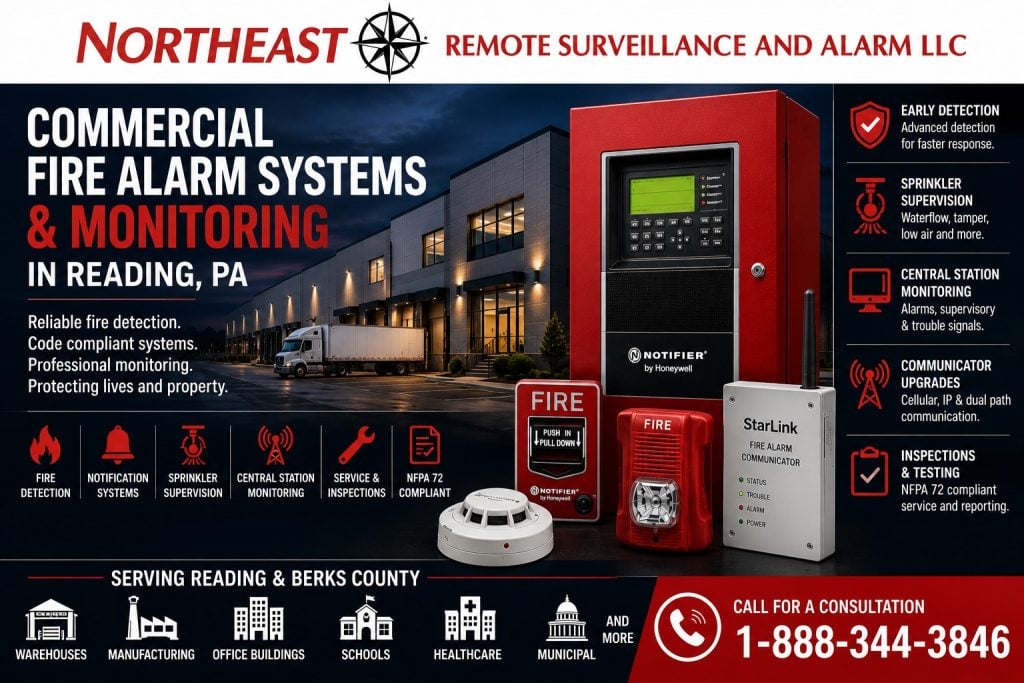
Use these guides to review an existing system’s monitoring arrangements and prepare questions for your service team.
Review the complete reporting arrangement
A Reading fire alarm monitoring review begins at the installed system and follows the reporting path to the receiving service. Identify the panel and communicator, current service arrangements, account information, and recent signal problems. A change in telephone or network service should be reviewed in the context of that complete arrangement.
Use communication guidance for a proposed reporting-path change and system service guidance for faults involving the installed equipment. Keep the building’s fire alarm responsibilities distinct from other commercial monitoring services, even when the same property uses several systems.
Coordinate a transition and verify its result
Provide the service team with current records, responsible contacts, and the reason for the review. Agree the timing and coordination of any change with the affected parties. Avoid assuming that a communicator being online establishes that all expected signals and account details are correct.
An arranged verification should confirm the agreed reporting and identification of relevant signals, along with current contact instructions. Document what changed, who supports each part of the reporting path, and how trouble conditions will be handled. Building-specific requirements and acceptance steps should be established by the responsible project team.
Fire Alarm Monitoring Guides
Choose the guide that matches the reporting, signal-identification, or inspection-preparation question at your facility.
Monitoring and Supervision — Review how fire alarm signals reach the monitoring service.
Waterflow and Tamper Monitoring — Review monitored sprinkler waterflow and valve conditions.
Trouble and Supervisory Signals — Understand signal types and follow-up needs.
Inspection Readiness — Prepare system information and access for inspection activities.
For new detection and notification equipment or a broader installation project, start with Reading commercial fire alarm systems.
For an existing communicator, use the upgrade guide below.
Existing-System Review
Use these resources to review the installed communicator, monitoring account, and broader fire-alarm service scope.
Reading Fire Alarm Communicator Upgrades — Evaluate existing communication equipment and proposed changes.
Monitoring Account Review — Review account information and responsible-party contacts.
Commercial Fire Alarm Services — Explore broader installation and life-safety service planning.
Reference Resources
Review these reference materials with the responsible service team and officials when defining project requirements.
NFPA inspection, testing, and maintenance training — Explore fire alarm training resources.
Reading fire-code document — Review the city’s published document for project discussions with the responsible officials.
Reading Security Planning
Use the Reading commercial security guide to coordinate related property needs while keeping fire-alarm responsibilities distinct.
Reading Commercial Security Systems — Coordinate monitoring with the rest of your property’s security.
Request a commercial fire alarm assessment to review your Reading facility.