
Warehouse access control standards help an organization manage permissions consistently as buildings, staffing, and equipment change.

Request a warehouse access review
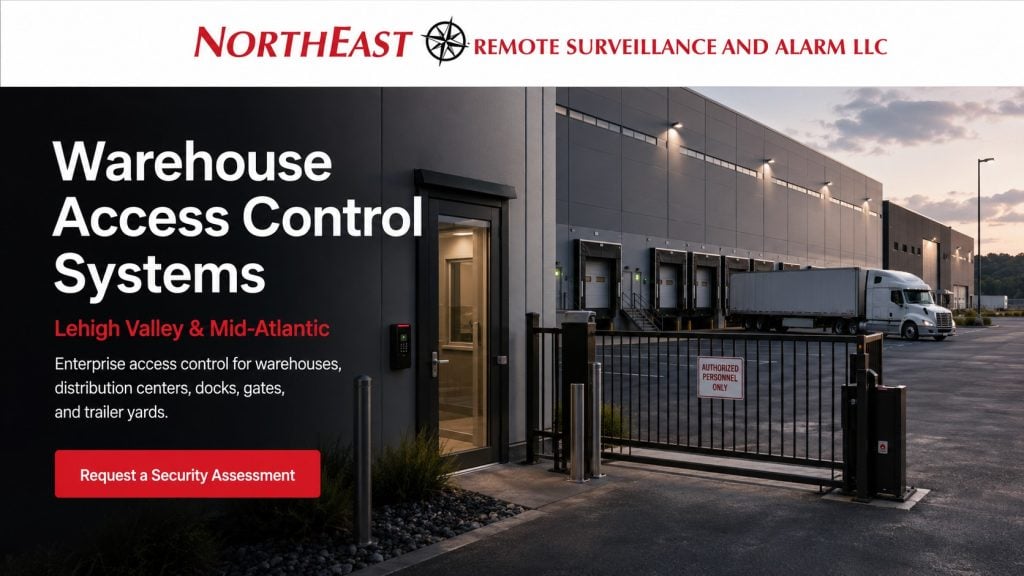
NERSA helps warehouse operators define a repeatable approach for access groups, opening records, temporary labor, approvals, and system handover across supported Pennsylvania and Mid-Atlantic projects.
Define Warehouse Access Control Standards Before Selecting Equipment
For Philadelphia facilities, compare warehouse access-control planning with manufacturing access requirements.
Shift patterns, contractor access, and controlled areas should determine the local implementation.
Start with a common record for each controlled opening. Include its building, door name, operating hours, responsible manager, and approved user groups. Also record the installed reader, controller, locking hardware, and network connection so later projects can assess compatibility.
Standard names make records easier to compare across locations. However, a shared naming convention should still describe the actual opening. A receiving office, employee entrance, and restricted inventory cage need separate records even when the same employee uses all three.
Set Repeatable Approval and Expiration Rules
Define who requests access, who approves it, and who makes the system change. The approval should specify locations, openings, schedules, and an end date when appropriate. Then check the assigned permission against that request rather than copying another employee’s access without review.
Temporary labor requires a clear sponsor and review date. When assignments end, remove the relevant permissions and account for issued credentials. For employees moving between warehouses, review both the destination and the previous site so access does not accumulate with each transfer.
Test Exceptions and Document Changes
A useful standard includes tests for approved entry, denied access, expired credentials, schedule boundaries, and event reporting. During a pilot, ask local staff to demonstrate normal shift changes and a realistic temporary-worker request. Record unexpected results before repeating the design elsewhere.
Some facilities need exceptions because their doors, hours, or delivery procedures differ. Document the reason, approving person, and review date. This keeps local changes visible without forcing every warehouse to operate identically.
Keep Ownership and Handover Clear
Authorized customer administrators should receive current equipment records, account ownership details, training, and service contacts. Review these records after an expansion or provider change. Before retiring an old platform, confirm that required users, permissions, and records have transferred as intended.
For overall technology and opening design, review commercial access control systems.
For a facility in the region, use the Lehigh Valley warehouse access control guide.
Coordinate other building needs through warehouse security planning.
Request a warehouse access review with your opening list, permission groups, approval process, and current equipment records.