
Employee theft prevention and internal security systems in Allentown, PA help businesses protect inventory, tools, restricted areas, and daily operations.

Request a commercial security assessment
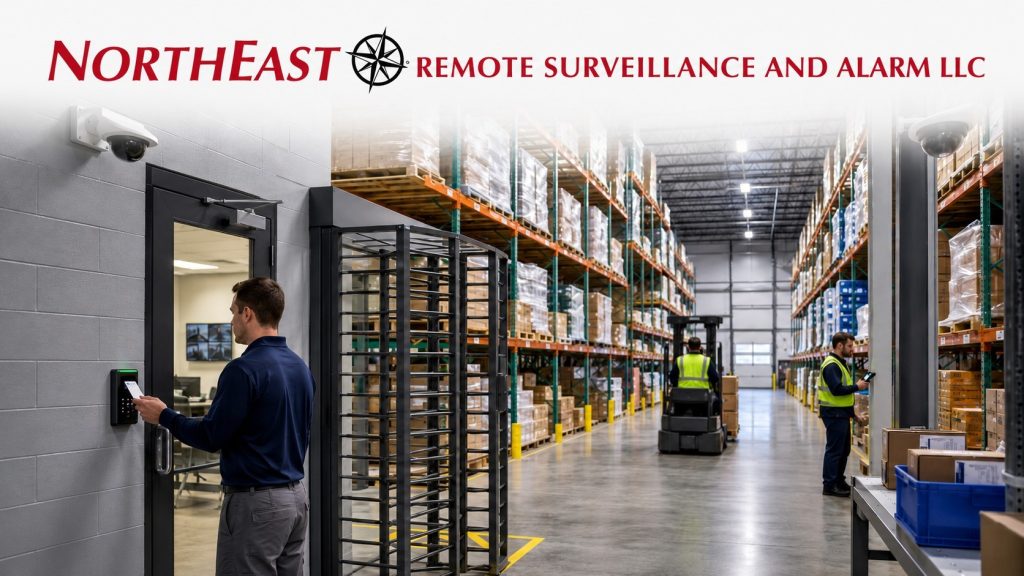
Coordinate this area with the rest of the facility through Allentown warehouse security planning.
NERSA designs internal security systems for warehouses, distribution buildings, manufacturing facilities, offices, contractor yards, logistics operations, and multi-site commercial properties.
For dock doors, shipping lanes, receiving activity, trailer staging, and freight movement, review Loading Dock Security Systems in Allentown, PA.
Plan Internal Security Around Documented Events
First, internal security is not just about watching employees. It is about protecting the business from weak visibility, poor access control, unclear responsibility, and security gaps that make incidents hard to prove or prevent.
In practice, internal security planning for many Allentown facilities may involve:
- Warehouse employee access
- Shipping and receiving accountability
- Product movement review
- Restricted room control
- Tool crib or equipment access
- Inventory storage visibility
- Employee entrance monitoring
- Vendor and contractor access
- After-hours activity review
- Management office and records protection
The goal is to create a clear record of activity around sensitive areas without disrupting normal operations.
Security Cameras for Internal Accountability
Video surveillance is one of the most important parts of an internal security system. Cameras can help management review product movement, employee traffic, warehouse activity, tool access, receiving activity, office entries, and incidents that may otherwise become disputes.
A strong internal camera layout may cover employee entrances, warehouse aisles, and shipping and receiving areas. Cover stockrooms, inventory rooms, tool storage, production areas, service corridors, and other sensitive points.
For commercial camera planning, visit Allentown commercial security camera systems.
Shipping, Receiving, and Inventory Movement
Many internal loss issues develop around product movement. This can include incoming freight, outgoing shipments, staged pallets, returns, driver handoffs, unverified pickups, damaged product, missing tools, or movement between warehouse zones.
Specifically, an internal security system can help businesses review when product arrived, who handled it, where it moved, and whether activity matched the expected workflow.
Access Control for Restricted Areas
Access control helps businesses limit who can enter sensitive areas and create a record of activity around controlled doors. This is especially important for offices, inventory rooms, electrical rooms, IT closets, tool cribs, warehouse cages, management areas, employee entrances, and dock-adjacent doors.
Instead of relying only on physical keys, businesses can use credentials, keycards, fobs, mobile credentials, schedules, user permissions, and access logs to improve accountability.
For commercial door-control planning, visit Access control systems in Allentown, PA.
Tool Cribs, Parts Rooms, and Equipment Storage
Additionally, tool cribs, parts rooms, equipment cages, and maintenance storage areas often need stronger control than general warehouse space. These areas may contain tools, replacement parts, electronics, supplies, service equipment, or specialized materials that are difficult to track once removed.
In practice, a better internal security layout combines controlled access, camera review, user permissions, and activity logs. The business can see who entered the area and when activity occurred.
Employee Entrances and Staff Movement
Employee entrances can become important review points for attendance, shift changes, unauthorized entry, after-hours movement, and access into operational areas. Properly placed cameras and access control can improve accountability without relying on guesswork after an incident.
Additionally, these systems can distinguish between normal staff movement, vendor activity, delivery activity, and suspicious access into sensitive parts of the building.
After-Hours Internal Security
Internal security problems are not limited to business hours. Facilities may have second shifts, late deliveries, cleaning crews, contractors, maintenance staff, or limited overnight staffing.
After-hours planning may involve alarm protection, access schedules, video verification, and camera alerts. Review activity around employee doors, dock areas, warehouse interiors, offices, and restricted rooms.
Alarm Protection for Internal Security
Intrusion alarms can support internal security by protecting vulnerable doors, warehouse entries, restricted spaces, offices, and after-hours zones. When alarm activity is paired with camera review, businesses can better understand whether an event was unauthorized entry, employee activity, contractor access, or a false alarm.
Reducing Disputes and Improving Incident Review
A properly designed internal security system can help reduce confusion after an incident. Instead of relying on memory, assumptions, or conflicting stories, management can review video, access logs, alarm events, and activity timelines.
Additionally, this can help businesses investigate missing inventory, unauthorized access, policy violations, delivery disputes, dock activity, and after-hours events with better clarity.
Evidence Review and User Accountability
Define who can review footage and access logs, how an incident is recorded, and who can export evidence. Keep original exports and relevant timestamps available for authorized review. An access event identifies a credential, not necessarily the person using it; compare records with footage and operational facts before drawing conclusions.
Integrated Employee Theft Prevention Systems in Allentown
In practice, the strongest internal security plans combine surveillance cameras, access control, intrusion alarms, monitoring, video review, user permissions, and documented system design.
Depending on the property, this may include:
- Camera coverage for sensitive interior areas
- Dock and shipping area surveillance
- Employee entrance cameras
- Restricted room access control
- Warehouse cage or tool crib protection
- Alarm protection for after-hours access
- Access logs for controlled doors
- Video retention for incident review
- Remote access for management
- System documentation for accountability
For complete warehouse protection, visit Allentown warehouse security systems.
Employee Theft Prevention Security Installation in Allentown, PA
Northeast Remote Surveillance and Alarm, LLC designs employee theft prevention and internal security systems in Allentown, PA. Specifically, these systems strengthen accountability around people, product, access points, restricted rooms, shipping areas, and after-hours activity.
Some facilities need better camera coverage. Others need access control, alarm integration, restricted area protection, improved retention, or a more complete system that connects internal activity with dock, warehouse, and building security.
If your Allentown facility needs better visibility or stronger access accountability, Northeast Remote Surveillance and Alarm, LLC can help. In addition, NERSA can improve loss-prevention review and connect internal security systems.
Frequently Asked Questions about Employee Theft Prevention and Internal Security Systems in Allentown, PA
Can security cameras help reduce employee theft?
Yes. Properly placed commercial security cameras can help document activity around inventory, shipping areas, restricted rooms, employee entrances, tool cribs, and product movement. The key is designing camera coverage around operational risk, not just placing cameras randomly.
Should employee theft prevention systems include access control?
Yes. Access control helps limit who can enter sensitive areas such as offices, inventory rooms, warehouse cages, IT closets, tool rooms, and dock-adjacent spaces. It also creates an access history that can support incident review.
Can internal security systems help with shipping and receiving disputes?
Yes. Camera coverage, access logs, and alarm activity can show when product arrived and who handled it. Businesses can review where it moved and whether activity matched shipping or receiving procedures.
Is this the same as a loading dock security system?
No. Loading dock security focuses specifically on dock doors, trailer activity, shipping lanes, receiving areas, and exterior dock exposure. Internal security focuses more broadly on employee access, inventory movement, restricted rooms, tool storage, and accountability inside the facility.
Can NERSA integrate cameras, access control, and alarms for internal security?
Yes. Northeast Remote Surveillance and Alarm, LLC can design integrated systems that combine commercial video surveillance, access control, intrusion alarms, monitoring, and infrastructure planning for Allentown commercial and industrial facilities.
Request an Internal Security Assessment
Request a commercial security assessment.
Compliance, Codes & Project Standards
NERSA plans commercial and industrial security work with applicable code, documentation, inspection and authority-having-jurisdiction requirements in mind. Requirements vary by system, property and jurisdiction. These resources support project planning; they do not establish legal compliance, certification or AHJ approval.
Related guidance: Regulatory compliance & inspection readiness · NERSA project standards · Documentation, testing & inspection readiness