
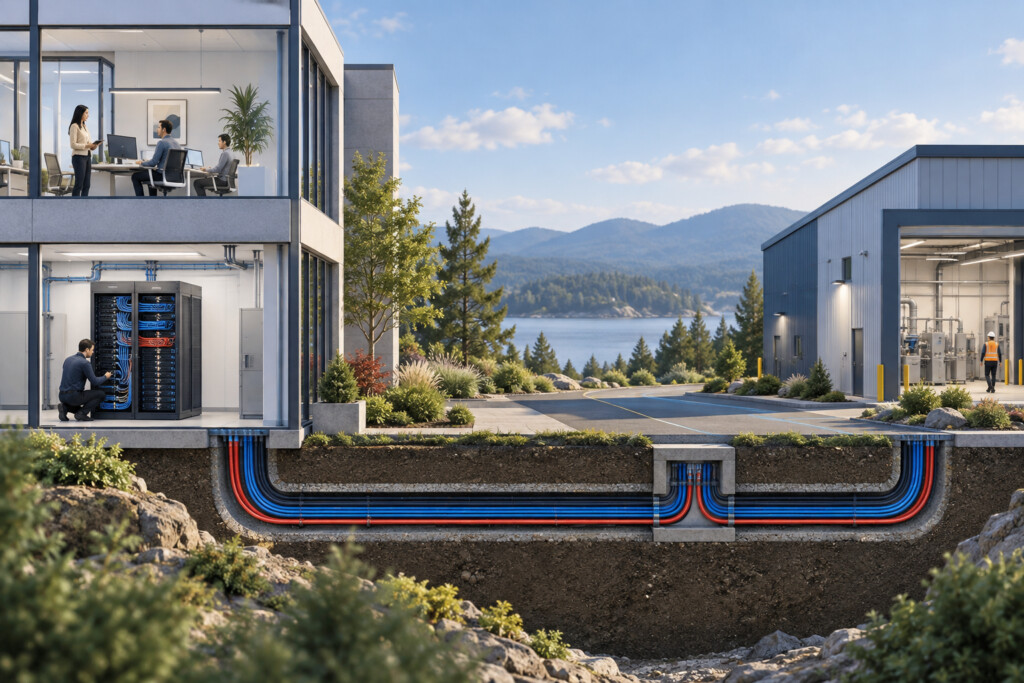


A security network reference design gives new and existing facilities a consistent set of connectivity rules without assuming every building has the same infrastructure. Both your security team and IT owner should be able to use it.
Part of Physical Security Network and Infrastructure for Enterprise Systems.
Describe zones and permitted dependencies
Identify cameras, controllers, management servers, viewing clients, hosted services, and approved support paths. Record the required connections and responsible owners. The purpose is a reviewed communication model; a network label alone does not establish isolation or access control.
Reserve addressing and naming consistently
Use a site-aware address and naming plan that accounts for growth, acquisitions, routed connections, and overlapping inherited networks. Record who manages names, addresses, time services, and certificates. Then check that adding a site will not create confusing device records.
Size links and power for the intended workload
Include recording streams, viewing sessions, exports, updates, and recovery traffic in capacity planning. Document switch power budgets, uplink assumptions, cabinet conditions, backup power, and remote-building connections. Use site measurements to check the design before choosing equipment.
Publish the support boundary
Identify which team changes network policy, maintains switches, supports wide-area links, and accepts security-system connectivity tests. Keep approved configurations and change records accessible to authorized staff. The final design should include both a diagram and a practical responsibility list.
Explore supporting enterprise resources
- Enterprise Security IP Address and Device Naming Planning — An enterprise address and naming plan should make each security device identifiable across locations and future growth.
- Enterprise Remote-Site Connectivity and Local Continuity — Remote-site planning must distinguish the functions that need a central connection from those that can continue locally.
Related planning resources
- Network Segmentation for Commercial Security Systems
- PoE Switching for Video Surveillance
- Fiber Infrastructure for Commercial Security Systems
- Wireless Bridges for Remote Security Cameras
Let’s talk about your next step
Tell us what you want to improve and which locations are involved. We can help you work through the questions, check what your systems support, and define a practical project scope.