
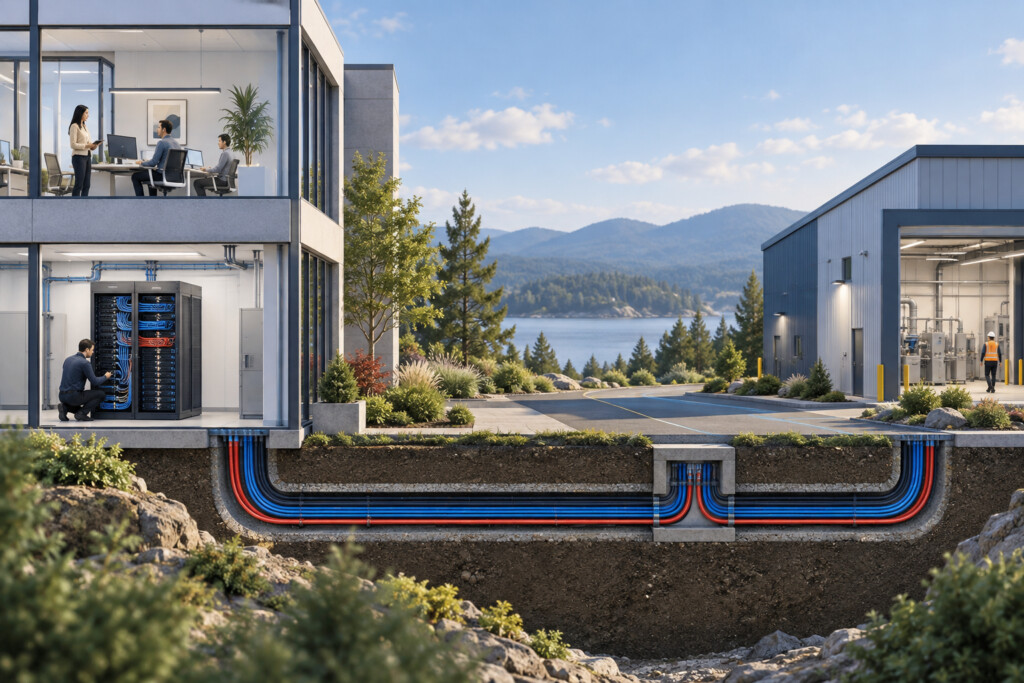


Enterprise physical security cybersecurity coordination translates the customer’s IT requirements into maintainable controls for cameras, controllers, servers, hosted platforms, and support access. The work depends on clear ownership across product and organizational boundaries.
Part of Physical Security Network and Infrastructure for Enterprise Systems.
Assign responsibility by control
Identify who approves device accounts, remote access, network rules, software updates, certificates, backups, and incident escalation. Where multiple vendors participate, document who owns each connection and who can authorize a change. Maintain customer control of primary accounts and recovery processes.
Record the supported baseline
Capture device models, software versions, supported authentication methods, required services, and maintenance constraints. Track exceptions where a legacy device cannot meet the approved baseline. Give each exception a compensating-control decision, owner, and review or replacement date.
Schedule changes with local teams
Agree on maintenance windows with each site and identify the people who must be available. Tell operators which functions may be interrupted, who will confirm recovery, and how to report an unexpected problem. Keep a shared change calendar so work on networks, servers, and security devices does not create conflicting outages.
Validate boundaries and recovery
Review approved communication paths with IT and demonstrate required operation under agreed interruption scenarios. Keep cybersecurity incident handling within the customer’s established process. Physical-security support should have a defined escalation role without being represented as a replacement for the customer’s broader cybersecurity program.
Firmware and patch planning
Maintain manufacturer support information and an approved version baseline for each device family. Review relevant changes, compatibility requirements, and rollback options before deployment. Pilot updates with representative integrations, then schedule waves that account for local operating constraints. Verify recording, access, event delivery, and health reporting after installation. Track devices that cannot be updated as owned exceptions with an agreed review or replacement plan.
Explore supporting enterprise resources
- Enterprise Physical Security Vendor Remote-Access Governance — Vendor remote access should provide the minimum approved capability needed for support, with customer ownership and a clear end to the session or authorization.
- Enterprise Security Certificate Lifecycle Management — Certificates can become a shared operational dependency across security servers, devices, browsers, and integrations.
- Enterprise Physical Security IT and OT Coordination — Security systems in industrial environments may cross the responsibilities of corporate IT, plant engineering, and operational technology teams.
Related planning resources
- Cybersecurity & Data Protection Standards
- Network Security for Security Systems | VPN & Parallel Infrastructure
- Network Segmentation for Commercial Security Systems
Let’s talk about your next step
Tell us what you want to improve and which locations are involved. We can help you work through the questions, check what your systems support, and define a practical project scope.