Enterprise Video Surveillance Solutions
Loading docks are the operational heartbeat of modern logistics facilities, distribution centers, and manufacturing plants. Every trailer arrival, pallet movement, and forklift route converges at the dock area, making it one of the most dynamic and safety-critical environments in an industrial building. Because of this operational intensity, dock areas require surveillance systems that are engineered not simply for security, but for situational awareness, operational visibility, and incident documentation.
At Northeast Remote Surveillance and Alarm, LLC (NERSA), loading dock surveillance systems are designed using a structured engineering approach that focuses on how docks actually function in real-world logistics environments. Rather than simply installing cameras near dock doors, NERSA evaluates trailer approach paths, terminal tractor turning zones, forklift travel lanes, cargo staging areas, and driver sight lines before designing the camera layout.
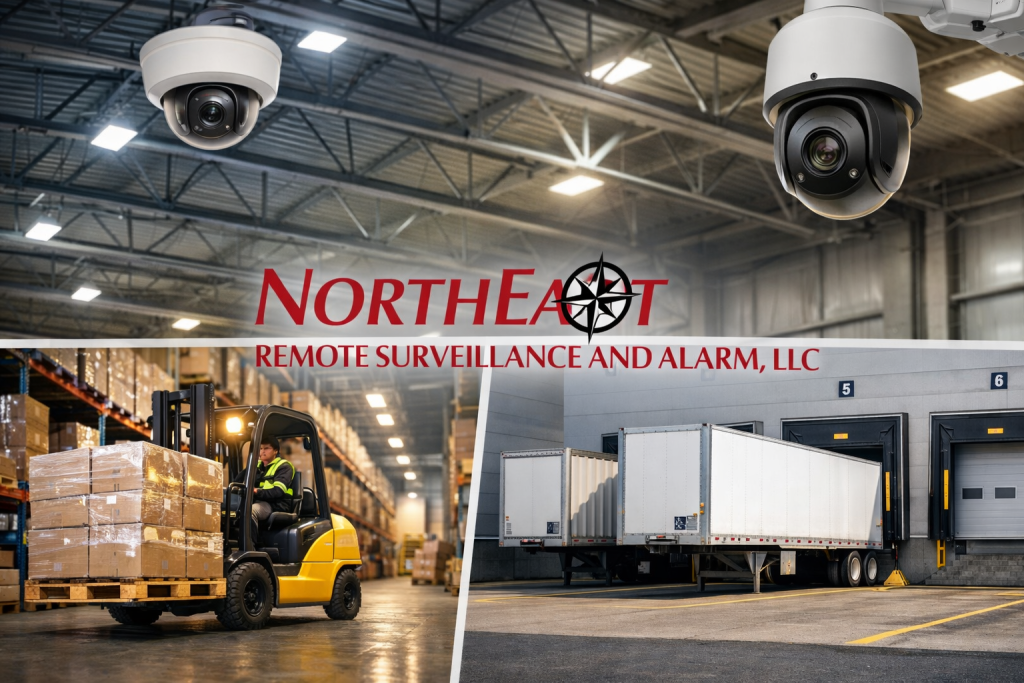
This operationally focused design process allows dock surveillance systems to provide meaningful video coverage of events such as:
- trailer backing and dock alignment
- forklift loading operations
- cargo transfer between trailers and staging zones
- worker movement within dock lanes
- vehicle and pedestrian interaction areas
The result is a surveillance system that supports both security and operational oversight, allowing facility managers, safety officers, and logistics supervisors to maintain visibility across the entire dock environment.
Across the Mid-Atlantic logistics corridor—including major warehouse clusters in Pennsylvania, New Jersey, Delaware, and Maryland—NERSA designs dock monitoring systems that are tailored to the operational realities of modern distribution facilities.
Unique NERSA Engineering Approach Section
The NERSA Dock Surveillance Engineering Method
Many surveillance installations fail to deliver usable video evidence because cameras are placed without considering the operational geometry of the loading dock environment.
NERSA uses a design methodology that evaluates several factors before cameras are installed:
Dock Geometry Analysis
Each dock door is evaluated for:
- trailer backing angle
- driver approach path
- tractor turning radius
- dock door spacing
This analysis ensures cameras capture the full trailer approach and docking sequence rather than just a limited view of the dock door.
Forklift Route Mapping
Forklift travel paths inside warehouses often intersect with pedestrian walkways and cargo staging zones.
Camera placement is designed to monitor:
- forklift loading operations
- pallet transfer areas
- worker interaction zones
- staging lanes near dock doors
This coverage allows safety teams to review operational incidents if they occur.
Cargo Transfer Visibility
NERSA systems ensure cameras observe the moment cargo transitions from trailer to warehouse floor.
This visibility provides valuable documentation for:
- shipping disputes
- damaged freight investigations
- inventory accountability reviews
Trailer Yard Integration
Dock surveillance systems often integrate with trailer yard cameras to provide continuous coverage from:
yard staging → trailer approach → dock alignment → cargo transfer
This integrated coverage allows security teams to follow events across the entire logistics flow.
Surveillance as an Operational Tool
While security is the primary purpose of surveillance systems, dock monitoring also provides operational insights that many facilities find valuable.
Dock surveillance can help logistics teams evaluate:
- trailer turnaround time
- loading efficiency
- congestion near dock doors
- forklift routing patterns
This operational visibility allows managers to identify workflow bottlenecks and improve efficiency across shipping operations.
In large distribution centers where dozens or even hundreds of trailers may be processed daily, the ability to review dock activity can provide valuable management insight.
Dock Surveillance for the Mid-Atlantic Logistics Corridor
The Mid-Atlantic region contains one of the most active logistics networks in North America. Major distribution hubs located in Pennsylvania, New Jersey, and Delaware support supply chains that serve the entire northeastern United States.
Large logistics parks such as the Lehigh Valley Industrial Park and other distribution clusters rely heavily on efficient dock operations to maintain high shipment throughput.
Facilities in these regions often operate:
- 24-hour shipping schedules
- high-volume trailer processing
- large forklift fleets
- multiple shipping carriers
Because of this operational intensity, dock monitoring systems must be designed to operate continuously and provide clear visibility across high-traffic dock environments.
NERSA surveillance systems are designed specifically for these high-throughput logistics environments.
Dock Surveillance Designed for Real Industrial Operations
Loading dock surveillance systems should not be treated as generic security camera installations. The complexity of dock environments requires a system that is engineered around operational workflows, vehicle movement, and cargo transfer activity.
By combining industrial camera technology, structured surveillance engineering, and operational awareness, Northeast Remote Surveillance and Alarm, LLC delivers dock monitoring systems that provide reliable visibility into the most active areas of industrial facilities.
These systems allow logistics operators to monitor safety, protect cargo, document incidents, and maintain situational awareness across the entire loading dock environment.
Dock Camera Engineering Standards for Industrial Surveillance Systems
Loading dock surveillance systems require far more technical planning than typical security camera deployments. The combination of vehicle traffic, mixed lighting environments, large coverage areas, and worker activity creates a complex surveillance environment where poorly engineered camera systems often fail to produce usable footage.
To ensure reliable monitoring and investigative-quality video, Northeast Remote Surveillance and Alarm, LLC designs dock surveillance systems using engineering principles derived from industry standards and practical experience with industrial logistics facilities.
These standards focus on pixel density, camera placement geometry, lighting management, network architecture, and operational visibility.
Pixel Density Engineering
Pixel density is one of the most critical factors in determining whether surveillance footage will be useful for identification or simply provide general monitoring.
The security industry commonly references guidance from organizations such as ASIS International when establishing pixel density targets for surveillance applications.
NERSA dock surveillance designs typically follow these ranges:
| Surveillance Objective | Pixel Density |
|---|---|
| Identification | 40–60 pixels per foot |
| Recognition | 20–40 pixels per foot |
| Observation | 10–20 pixels per foot |
For loading dock environments, identification-level detail is often required in areas such as:
• dock door thresholds
• trailer interior access points
• forklift operator areas
• cargo transfer zones
Achieving this level of detail requires careful coordination between camera resolution, lens selection, mounting height, and field-of-view design.
Camera Field-of-View Calculations
A critical engineering challenge at loading docks is balancing wide coverage with sufficient detail.
If a camera attempts to cover too large an area, pixel density drops and identification becomes impossible. Conversely, overly narrow views can create blind spots.
To address this, NERSA performs field-of-view calculations that consider:
• dock door width
• trailer dimensions
• forklift maneuvering space
• distance between camera and subject
Example design scenario:
A dock door area measuring 12 feet wide requires identification-level detail.
If the design target is 40 pixels per foot, the camera must provide at least:
12 ft × 40 pixels per foot = 480 pixels across subject width
This calculation helps determine:
• camera resolution requirements
• lens focal length
• mounting distance
These engineering calculations ensure that surveillance footage retains sufficient clarity for incident investigation.
Camera Mounting Height and Angle
Loading dock camera placement must account for both interior warehouse ceilings and exterior building structures.
Common mounting heights include:
| Location | Typical Height |
|---|---|
| Warehouse ceiling | 18–35 ft |
| Dock canopy | 12–20 ft |
| Exterior wall mounts | 15–30 ft |
Mounting angles must avoid several common surveillance problems:
• glare from dock lighting
• obstruction from trailer doors
• forklift mast blocking the view
• blind spots behind trailers
Camera tilt and orientation are carefully adjusted to maintain consistent coverage of the cargo transfer zone.
Lighting and Image Exposure Engineering
Loading docks create one of the most challenging lighting environments for surveillance cameras.
The transition between indoor warehouse lighting and outdoor daylight can produce extreme contrast.
To address this challenge, surveillance cameras are selected with features such as:
• wide dynamic range (WDR)
• high dynamic exposure compensation
• backlight correction
• low-light imaging sensors
These technologies allow cameras to capture usable footage even when trailers block exterior light or when dock areas experience mixed lighting conditions.
Environmental Hardening
Industrial dock environments expose cameras to dust, vibration, temperature changes, and weather conditions.
To maintain long-term reliability, cameras used in dock surveillance systems typically include:
• weather-resistant enclosures
• industrial operating temperature ranges
• vibration-resistant mounting hardware
• sealed electrical connections
Exterior cameras installed near dock doors must withstand wind-driven rain, snow, and temperature fluctuations.
Proper mounting and enclosure selection helps ensure long-term camera performance.
Network Infrastructure Design
Modern surveillance systems rely on network infrastructure to transmit video feeds to recording servers and monitoring stations.
Loading dock camera deployments must consider:
• network bandwidth requirements
• cable routing through warehouse structures
• switch placement for camera clusters
• redundancy for critical surveillance coverage
Typical industrial deployments use Power-over-Ethernet (PoE) infrastructure to deliver both power and data to cameras using a single network cable.
Network segmentation using VLANs is commonly used to isolate surveillance traffic from corporate data networks.
Cybersecurity guidance for connected surveillance systems often aligns with recommendations from the National Institute of Standards and Technology.
Video Storage and Recording Architecture
Industrial surveillance systems generate significant amounts of video data, particularly when recording high-resolution footage continuously.
Dock surveillance recording systems must be designed to support:
• continuous video recording
• long retention periods
• high camera counts
• rapid footage retrieval for investigations
Many industrial deployments rely on enterprise video management platforms such as:
• Avigilon Control Center
• Genetec Security Center
These platforms allow organizations to manage large surveillance systems while maintaining centralized control over recording and monitoring functions.
Redundancy and System Reliability
In large logistics facilities where loading dock operations run around the clock, surveillance systems must maintain consistent uptime.
Engineering strategies to improve reliability may include:
• redundant network switches
• backup power supplies
• RAID storage arrays
• failover recording servers
These design practices help ensure that surveillance coverage remains available even during equipment failures or power interruptions.
Integration with Operational Monitoring Systems
Loading dock surveillance systems can integrate with other facility technologies to improve operational visibility.
Examples include integration with:
• access control systems
• gate control systems
• alarm monitoring systems
• logistics management platforms
Integration allows surveillance systems to provide context around events such as:
• unauthorized door access
• trailer arrival notifications
• alarm conditions near dock areas
Engineering Verification and System Commissioning
After installation, dock surveillance systems must be tested and calibrated to verify that design objectives have been achieved.
Commissioning procedures typically include:
• camera alignment verification
• pixel density validation
• recording system testing
• network throughput testing
• monitoring station configuration
These procedures ensure that the surveillance system operates as designed and provides reliable coverage of loading dock operations.
Why Engineering Standards Matter
Loading dock surveillance systems that lack proper engineering often suffer from common problems such as:
• insufficient image clarity
• blind spots near dock doors
• unusable footage during low light conditions
• network bottlenecks affecting video quality
By applying structured engineering principles during system design, Northeast Remote Surveillance and Alarm, LLC ensures that dock surveillance installations provide clear, reliable, and operationally useful video coverage.
For logistics facilities where dock operations are critical to business performance, properly engineered surveillance systems provide the visibility needed to support both security and operational oversight.
40 Pixels Per Foot: The Engineering Standard for Loading Dock Monitoring
In industrial surveillance design, image clarity is not determined by camera megapixels alone. The real metric that determines whether surveillance footage is usable for investigations is pixel density, commonly expressed as pixels per foot (PPF).
For loading dock surveillance systems, achieving sufficient pixel density is critical because these areas involve constant vehicle movement, cargo handling, and worker interaction. Cameras must capture enough detail to allow security teams or investigators to clearly observe events such as trailer docking, forklift operations, cargo transfer, and personnel activity.
At Northeast Remote Surveillance and Alarm, LLC, loading dock surveillance systems are engineered with a target of approximately 40 pixels per foot in critical monitoring zones. This design benchmark helps ensure that recorded video provides identification-level detail rather than simply providing general situational awareness.
Industry security organizations such as ASIS International have long emphasized the importance of pixel density in determining whether surveillance footage will support identification, recognition, or basic observation.
Understanding Pixel Density in Dock Surveillance
Pixel density represents the number of horizontal pixels used to represent one foot of the monitored scene. Higher pixel density means greater detail, which allows surveillance footage to capture identifying features such as:
• clothing characteristics
• equipment identification
• cargo handling activity
• trailer numbers or markings
• vehicle movement patterns
Lower pixel density may still allow observers to detect motion or general activity but typically lacks the clarity required for reliable identification.
Pixel Density Levels Used in Surveillance Engineering
Security engineers typically use the following pixel density guidelines when designing surveillance systems.
| Surveillance Level | Typical Pixel Density |
|---|---|
| Observation | 10 pixels per foot |
| Recognition | 20 pixels per foot |
| Identification | 40 pixels per foot or greater |
For loading dock environments, identification-level coverage is often required in areas such as:
• dock door thresholds
• trailer interior loading areas
• forklift operator zones
• cargo transfer points
These areas frequently become the focus of incident investigations when questions arise regarding cargo damage, safety incidents, or operational disputes.
Applying the 40 PPF Standard to Loading Dock Design
To achieve identification-level coverage at loading docks, surveillance engineers must carefully balance camera resolution, lens focal length, and field of view.
Consider a typical loading dock door measuring 10 to 12 feet wide.
If the design goal is 40 pixels per foot, the surveillance system must capture at least:
10 ft × 40 pixels per foot = 400 pixels across the subject
This calculation ensures that the camera produces sufficient detail across the dock opening to capture identifying visual information.
When cameras attempt to cover wider areas without adjusting resolution or lens configuration, pixel density decreases and image clarity deteriorates.
This is why professional dock surveillance design focuses on targeted coverage zones rather than attempting to monitor entire dock areas with a single camera.
Camera Resolution and Pixel Density
Many modern surveillance cameras advertise high megapixel ratings such as 4MP, 8MP, or even higher. However, megapixel resolution alone does not guarantee usable video evidence.
If a high-resolution camera is positioned to cover an excessively wide area, the resulting pixel density may still fall below identification thresholds.
Proper system design ensures that camera resolution is matched with:
• appropriate lens focal length
• correct mounting height
• realistic coverage zones
This engineering approach allows cameras to maintain sufficient pixel density where detailed monitoring is required.
Field-of-View Optimization
One of the most common mistakes in surveillance design is attempting to monitor an entire loading dock area using a single wide-angle camera.
While wide coverage may appear convenient, it typically results in low pixel density and reduced image detail.
Instead, dock surveillance systems are designed using layered coverage zones:
• identification coverage at dock doors
• recognition coverage across forklift travel lanes
• observation coverage across wider dock areas
This layered approach ensures that the most critical areas receive the highest image clarity.
Dock Surveillance Zones Requiring Identification-Level Coverage
Certain areas within the dock environment require higher pixel density because they are more likely to be involved in incidents or operational disputes.
Examples include:
Dock Door Thresholds
The moment cargo moves between trailer and warehouse is one of the most important monitoring points in the entire dock area.
Trailer Interior Entry Points
Cameras positioned to observe the trailer opening help document cargo transfer operations.
Forklift Loading Positions
Capturing clear views of forklift activity can help review loading procedures and safety incidents.
Driver Interaction Areas
Monitoring driver and worker interaction zones helps provide context during investigations.
Mounting Height and Pixel Density
Camera mounting height plays a significant role in determining achievable pixel density.
If a camera is mounted too high above the dock area, the viewing angle increases and pixel density across the target area decreases.
Typical mounting heights for dock surveillance cameras include:
| Location | Typical Height |
|---|---|
| Interior warehouse ceiling | 20–30 feet |
| Dock canopy structures | 12–18 feet |
| Exterior wall mounts | 15–25 feet |
By carefully selecting mounting heights and camera angles, surveillance engineers can maintain the desired pixel density across the dock area.
The Role of Lens Selection
Camera lenses determine the camera’s field of view and therefore directly influence pixel density.
Common lens types used in dock surveillance systems include:
• fixed focal lenses for consistent monitoring zones
• varifocal lenses allowing adjustment during installation
• telephoto lenses for long-distance monitoring
Selecting the correct lens allows cameras to focus on specific operational zones while maintaining the desired level of detail.
Why the 40 Pixels Per Foot Standard Matters
Many surveillance systems installed without engineering oversight fail to capture sufficient detail to support investigations. Cameras may show general activity but lack the clarity needed to determine exactly what occurred.
When dock surveillance systems meet the 40 pixels per foot design benchmark, organizations gain several advantages:
• clearer identification of individuals involved in incidents
• improved documentation of cargo handling activities
• more reliable evidence during investigations
• better operational visibility for facility managers
For busy logistics environments where thousands of pallets may move through loading docks each day, reliable video evidence can be invaluable.
Engineering Dock Surveillance for Real Operational Conditions
Achieving proper pixel density requires understanding how dock environments actually function.
Factors considered during surveillance design include:
• trailer turning paths
• forklift travel routes
• cargo staging zones
• dock door spacing
• lighting conditions throughout the day
By combining these operational insights with technical surveillance engineering principles, Northeast Remote Surveillance and Alarm, LLC designs dock monitoring systems that provide clear, reliable video coverage of one of the most critical areas of industrial facilities.
Key Takeaway
In loading dock surveillance design, camera placement and pixel density matter more than camera megapixels alone.
By applying the 40 pixels per foot engineering standard, dock surveillance systems can deliver the clarity required to monitor safety conditions, document cargo transfer operations, and support incident investigations.
For organizations operating high-volume logistics facilities, this level of engineering precision ensures that surveillance systems provide meaningful operational visibility rather than simply recording video.
“40 Pixels Per Foot: The Engineering Standard for Dock Monitoring”
Below is a unique, real-world operations section for the Loading Dock Surveillance cornerstone page for Northeast Remote Surveillance and Alarm, LLC.
It is written to:
- strengthen SEO authority
- add real-world credibility
- improve conversion and trust
- remain unique to your website
This section should be placed after the “40 Pixels Per Foot Engineering Standard” section.
Dock Surveillance Incident Case Examples
Loading dock surveillance systems often prove their value during real operational events where visual documentation becomes critical. In busy logistics environments where dozens or even hundreds of trailers move through a facility daily, incidents involving equipment, cargo, or vehicle movement can occur despite established safety procedures.
When surveillance systems are engineered correctly, recorded video can provide clear documentation of what actually happened during an incident. This documentation can help organizations review operational procedures, resolve disputes, and improve safety protocols.
The following examples illustrate the types of real-world situations where properly designed loading dock surveillance systems provide valuable insight.
Example 1: Trailer Impact with Dock Door Frame
In many distribution facilities, terminal tractors or truck drivers must align trailers precisely with dock doors before loading begins. Even experienced drivers occasionally misjudge the final approach angle.
In one scenario, a trailer struck the dock door frame during backing operations. The facility’s surveillance cameras captured the entire docking sequence from multiple angles.
The video allowed supervisors to review:
- the trailer approach path
- the driver’s backing maneuver
- the exact moment of contact with the dock structure
Because the incident was recorded clearly, the facility was able to determine that the driver attempted to correct the trailer angle too late in the maneuver. The recorded footage helped document the event and provided training material for future driver safety briefings.
Without clear surveillance coverage, incidents like this often rely on conflicting witness statements.
Example 2: Forklift Collision During Cargo Loading
Forklift traffic is constant in most loading dock environments, particularly during peak shipping periods. In one warehouse environment, two forklifts collided while maneuvering pallets near the same dock door.
The dock surveillance system captured the event from an overhead warehouse camera positioned to monitor forklift travel lanes.
Reviewing the footage revealed that:
- one forklift operator entered the dock area without noticing the approaching vehicle
- cargo staging pallets partially obstructed the driver’s view
- both operators attempted to brake at nearly the same moment
The surveillance footage helped the facility safety team evaluate how staging areas were arranged near dock doors. After reviewing the incident, the company modified pallet staging procedures to maintain clearer forklift travel lanes.
This example demonstrates how surveillance systems can support workplace safety improvements.
Example 3: Cargo Damage Dispute Between Warehouse and Carrier
Cargo damage disputes sometimes arise when freight arrives at a facility or is loaded onto a departing trailer. Determining when damage occurred can be difficult without visual documentation.
In one case, a shipment of packaged goods was reported damaged after arriving at a retail distribution center. The receiving carrier claimed the cargo was already damaged before loading.
The dock surveillance system allowed the facility to review the loading process from earlier that day. The recorded footage showed:
- the cargo pallets being staged near the dock door
- forklift operators loading the shipment into the trailer
- the condition of the packaging during loading
Because the cargo appeared intact at the time of loading, the facility was able to confirm that the damage likely occurred during transportation.
Video documentation provided clarity and prevented unnecessary disputes between the warehouse operator and the carrier.
Example 4: Unauthorized Individual Entering Dock Area
Loading docks are often accessible from exterior yard areas, making them potential entry points for unauthorized individuals.
In one industrial facility, surveillance cameras detected a person entering the dock area late in the evening after operations had ended. The individual attempted to access cargo staged near a dock door.
The surveillance system recorded the individual approaching the building from the trailer yard and moving toward the dock.
Because the cameras were integrated with the facility’s monitoring system, security personnel were alerted and able to investigate the situation.
The recorded footage also provided a record of the event for the facility’s incident report.
Example 5: Trailer Departure with Dock Plate Still Engaged
One of the more dangerous incidents that can occur at loading docks involves a trailer leaving while a dock plate or forklift remains inside the trailer.
In a large warehouse facility, surveillance footage captured a trailer driver pulling away from a dock door while a forklift was still inside the trailer completing the final pallet transfer.
The forklift operator was able to stop before exiting the trailer, avoiding a serious accident.
After reviewing the video, the facility implemented additional visual indicators at dock doors to confirm that loading operations were complete before trailers departed.
The surveillance footage helped identify a procedural gap that could have resulted in significant injury.
Example 6: Forklift Operating Outside Designated Travel Lanes
Warehouse facilities often designate specific travel lanes for forklifts to improve safety and maintain organized traffic flow.
In one distribution center, a dock surveillance system revealed that forklift operators frequently used a shortcut path between dock doors that was not part of the designated travel lanes.
Although the shortcut saved time, it created a higher risk of collision with workers moving between staging areas.
Reviewing surveillance footage allowed the facility to identify the pattern and reinforce proper traffic procedures during safety meetings.
This example demonstrates how surveillance can support operational oversight beyond traditional security monitoring.
Example 7: Trailer Yard Congestion Affecting Dock Operations
Large distribution facilities often experience congestion in trailer staging areas during peak shipping periods.
Surveillance cameras monitoring the exterior yard revealed that trailers were frequently parked too close to dock approach lanes, making it difficult for incoming trucks to align with dock doors.
By reviewing the recorded footage, logistics managers were able to analyze how trailer staging patterns were affecting docking efficiency.
The facility reorganized the trailer yard layout to create clearer approach paths for incoming trucks.
As a result, trailer docking times improved and driver maneuvering became safer.
Why Incident Documentation Matters
Loading dock operations involve constant interaction between vehicles, equipment, cargo, and personnel. When incidents occur, having reliable video documentation helps organizations understand exactly what happened.
Clear surveillance footage allows organizations to:
- investigate accidents
- review safety procedures
- resolve cargo disputes
- analyze operational workflows
- improve facility safety programs
Without proper surveillance coverage, many of these incidents become difficult to analyze accurately.
Designing Dock Surveillance for Investigative Clarity
Incident case examples illustrate why surveillance systems must be designed carefully rather than installed randomly.
Proper dock monitoring requires:
- identification-level video clarity
- coverage of trailer approach paths
- monitoring of cargo transfer zones
- visibility into forklift traffic lanes
- reliable recording infrastructure
By combining structured engineering methods with an understanding of real industrial workflows, Northeast Remote Surveillance and Alarm, LLC designs loading dock surveillance systems that provide meaningful documentation of dock operations.
In high-throughput logistics environments, this level of visibility can support both security investigations and continuous operational improvement.
Loading Dock Surveillance FAQ
General Dock Surveillance Questions
1. What is loading dock surveillance?
Loading dock surveillance refers to camera systems designed to monitor trailer docking, cargo transfer, and forklift activity at warehouse dock doors.
2. Why are loading docks important to monitor?
Loading docks handle cargo transfers and vehicle traffic, making them critical areas for safety and operational visibility.
3. What types of facilities use dock surveillance systems?
Warehouses, manufacturing plants, distribution centers, logistics hubs, and freight terminals commonly use dock monitoring systems.
4. Can dock cameras help prevent accidents?
Yes. Cameras provide visibility that helps supervisors monitor equipment movement and identify unsafe conditions.
5. Are loading dock surveillance systems used for security or operations?
They support both security monitoring and operational oversight.
6. Do most warehouses install cameras at dock doors?
Many modern warehouses install cameras at each dock door to document loading activity.
7. Can dock surveillance monitor trailer movement?
Yes. Cameras can observe trailers approaching and aligning with dock doors.
8. Are dock cameras visible to employees?
Most systems are visible and act as a deterrent against unsafe behavior.
9. Can surveillance improve dock efficiency?
Managers can review footage to evaluate workflow and identify bottlenecks.
10. Do dock surveillance systems operate continuously?
Most systems record 24 hours a day.
Dock Door Monitoring
11. Where are cameras placed at dock doors?
Cameras are typically installed above the dock door, on warehouse ceilings, or on exterior building walls.
12. Can cameras see inside trailers?
Yes. Cameras positioned correctly can capture footage inside the trailer opening.
13. Can dock cameras monitor cargo loading?
Yes. Cameras can observe forklifts loading pallets into trailers.
14. Can cameras monitor cargo unloading?
They can document the unloading process and cargo condition.
15. Are cameras needed at every dock door?
Large facilities often install one or more cameras per dock door.
16. Can dock cameras capture trailer numbers?
With proper resolution and placement, cameras may capture trailer identification markings.
17. Can cameras record driver interactions?
Cameras can document interactions between drivers and warehouse personnel.
18. Can dock cameras monitor staging areas?
Yes. Cameras can observe pallets staged for loading.
19. Can cameras capture damage during loading?
Video footage may help determine when cargo damage occurs.
20. Do cameras monitor dock door safety equipment?
Some cameras are positioned to observe dock plates and restraints.
Trailer Backing Monitoring
21. Can surveillance monitor trailer backing?
Yes. Cameras positioned above dock doors often capture the backing process.
22. Why monitor trailer alignment?
Improper alignment can damage dock equipment or create safety hazards.
23. Do cameras monitor terminal tractor movement?
Yes. Cameras often capture yard tractors positioning trailers.
24. Can dock cameras reduce trailer accidents?
They provide visibility that helps identify unsafe backing practices.
25. Can cameras observe trailer impact events?
If positioned properly, cameras can capture impacts with dock structures.
26. Are exterior cameras used for trailer monitoring?
Outdoor cameras are often installed to observe trailer approach lanes.
27. Can dock cameras record nighttime trailer arrivals?
Yes. Many cameras include low-light capabilities.
28. Can cameras help verify trailer arrival times?
Recorded footage can show when trailers arrived at dock doors.
29. Can cameras monitor trailer door openings?
They can capture the moment trailer doors are opened before unloading.
30. Can dock cameras help document shipping disputes?
Video footage may clarify cargo condition during loading.
Forklift Monitoring
31. Can cameras monitor forklift traffic?
Yes. Cameras often monitor forklift routes near dock doors.
32. Why monitor forklift movement?
Forklift traffic presents safety risks in busy dock environments.
33. Can cameras detect forklift collisions?
Footage can be reviewed after incidents occur.
34. Can cameras monitor forklift loading procedures?
Yes. Cameras capture how cargo is moved into trailers.
35. Can dock surveillance help improve forklift safety?
Safety teams can review footage during training or investigations.
36. Can cameras monitor forklift speed?
Video may reveal unsafe driving patterns.
37. Are forklifts visible from ceiling cameras?
Warehouse ceiling cameras often provide broad coverage of forklift activity.
38. Can cameras monitor pedestrian traffic near forklifts?
Yes. Cameras may capture interactions between workers and equipment.
39. Can dock cameras identify forklift operators?
Identification depends on pixel density and camera placement.
40. Do surveillance systems help review forklift incidents?
Recorded video can support incident investigation.
Cargo Monitoring
41. Can cameras document cargo loading?
Yes. Cameras capture pallet transfer into trailers.
42. Can cameras monitor freight staging areas?
Staging zones near dock doors are commonly monitored.
43. Can surveillance help investigate missing shipments?
Video footage may reveal when cargo moved through the dock area.
44. Can cameras capture pallet damage?
Footage may show when damage occurred.
45. Can dock cameras monitor sealed trailers?
They can document when trailers are opened and closed.
46. Can cameras observe packaging condition?
Yes. Cameras may capture the visible condition of cargo packaging.
47. Can surveillance verify loading procedures?
Managers can review whether procedures were followed.
48. Can cameras monitor high-value shipments?
Some facilities increase surveillance coverage for valuable cargo.
49. Can cameras detect cargo tampering?
Video may show unauthorized activity around freight.
50. Can dock cameras help resolve cargo claims?
Recorded footage may provide documentation for investigations.
Dock Worker Safety
51. Can surveillance improve dock safety?
Cameras provide visibility into worker activity near equipment.
52. Do cameras monitor worker movement?
They may capture workers entering or leaving dock areas.
53. Can cameras identify unsafe behavior?
Safety managers may observe risky actions on recorded footage.
54. Can cameras monitor dock plate usage?
Yes. Cameras may capture dock plate deployment.
55. Can surveillance support safety training?
Footage can be used for training examples.
56. Can cameras monitor PPE compliance?
Video may reveal whether workers wear required safety equipment.
57. Do cameras help document workplace accidents?
Recorded video may assist incident investigations.
58. Can cameras monitor emergency situations?
Surveillance systems provide situational awareness during incidents.
59. Can cameras monitor pedestrian zones?
They can observe walkways near dock doors.
60. Can cameras monitor hazardous material areas?
Specialized surveillance may be used in hazardous cargo zones.
Technology and Hardware
61. What types of cameras are used at loading docks?
Common options include dome cameras, bullet cameras, and PTZ cameras.
62. Are dock cameras weatherproof?
Outdoor cameras are designed for environmental exposure.
63. Do dock cameras record audio?
Audio recording depends on system configuration and legal considerations.
64. Are infrared cameras used at loading docks?
Some cameras use infrared for nighttime visibility.
65. Can cameras zoom in on activity?
PTZ cameras can zoom and reposition.
66. Do cameras require network connections?
Most modern surveillance systems use network infrastructure.
67. Can dock cameras stream live video?
Yes. Authorized users can view live camera feeds.
68. Are cameras powered by Ethernet?
Many installations use Power-over-Ethernet (PoE).
69. Can cameras operate in cold weather?
Industrial cameras are designed for wide temperature ranges.
70. Can dock cameras handle vibration?
Industrial camera mounts are designed to reduce vibration.
Video Storage and Monitoring
71. Where is dock footage stored?
Footage is typically stored on local servers or network storage systems.
72. How long is footage retained?
Retention periods vary depending on organizational policy.
73. Can footage be searched by time?
Video management software allows time-based searches.
74. Can security teams monitor multiple docks simultaneously?
Video systems allow multiple cameras to be displayed on one screen.
75. Can footage be exported for investigation?
Recorded video can be exported for review.
76. Can surveillance systems send alerts?
Some systems generate alerts based on motion or analytics.
77. Can cameras be monitored remotely?
Authorized personnel can access cameras remotely.
78. Can dock cameras be integrated with monitoring centers?
Yes. Surveillance systems can connect to remote monitoring services.
79. Can footage be used for investigations?
Video documentation often assists investigative reviews.
80. Can surveillance systems monitor multiple facilities?
Enterprise systems allow centralized monitoring.
System Design
81. How many cameras are needed for a loading dock?
The number depends on dock count and coverage requirements.
82. Should each dock door have a camera?
Many facilities install at least one camera per dock door.
83. Can one camera cover multiple dock doors?
Wide-angle cameras may cover multiple doors but reduce detail.
84. Do large facilities require more cameras?
Facilities with many docks typically deploy multiple camera zones.
85. Are ceiling cameras common in warehouses?
Yes. Ceiling cameras provide broad coverage.
86. Are pole-mounted cameras used outdoors?
Pole cameras often monitor trailer yards.
87. Can cameras eliminate blind spots?
Proper design reduces blind spots.
88. Do dock surveillance systems require professional design?
Engineering improves coverage quality.
89. Are dock cameras adjusted during installation?
Technicians calibrate camera angles for optimal views.
90. Do surveillance systems require periodic maintenance?
Regular inspections help maintain reliability.
Compliance and Policy
91. Are surveillance cameras legal in warehouses?
Yes, when used in accordance with applicable laws and policies.
92. Should facilities post surveillance notices?
Many facilities display signs indicating camera monitoring.
93. Can surveillance assist safety compliance?
Video may help document operational procedures.
94. Do cameras affect worker privacy?
Organizations should establish clear surveillance policies.
95. Are recordings protected by security controls?
Surveillance data should be stored securely.
96. Can cameras assist insurance investigations?
Video evidence may support claims reviews.
97. Can surveillance reduce theft risks?
Visible monitoring often deters unauthorized activity.
98. Are dock cameras used in safety audits?
Video footage may assist safety evaluations.
99. Can surveillance document regulatory incidents?
Video evidence may support incident reports.
100. Can cameras monitor restricted dock areas?
Yes. Cameras help observe restricted zones.
NERSA Services
101–150 (NERSA-specific questions)
- Does NERSA design loading dock surveillance systems?
- Does NERSA install dock cameras in warehouses?
- Does NERSA perform surveillance system site surveys?
- Can NERSA upgrade older dock surveillance systems?
- Does NERSA install viewing monitors for dock workers?
- Can NERSA integrate dock cameras with existing security systems?
- Does NERSA provide surveillance consulting for warehouses?
- Does NERSA design trailer yard camera systems?
- Can NERSA install cameras in large distribution centers?
- Does NERSA configure camera recording servers?
- Can NERSA assist with dock surveillance planning?
- Does NERSA install cameras in manufacturing shipping areas?
- Can NERSA expand existing surveillance systems?
- Does NERSA design camera systems for logistics hubs?
- Can NERSA monitor dock areas remotely?
- Does NERSA provide industrial camera hardware?
- Can NERSA integrate cameras with access control?
- Does NERSA perform system commissioning?
- Can NERSA design systems for 24-hour operations?
- Does NERSA support surveillance system maintenance?
- Can NERSA design scalable dock monitoring systems?
- Does NERSA provide cybersecurity guidance for cameras?
- Can NERSA assist with dock safety monitoring systems?
- Does NERSA support multi-building surveillance deployments?
- Can NERSA design monitoring systems for freight terminals?
- Does NERSA assist with video evidence retrieval?
- Can NERSA install pole cameras in trailer yards?
- Does NERSA configure video management software?
- Can NERSA design surveillance systems for industrial parks?
- Does NERSA support surveillance system expansion projects?
- Can NERSA install monitoring stations for security teams?
- Does NERSA assist with facility risk assessments?
- Can NERSA provide surveillance system documentation?
- Does NERSA design systems for high-volume dock operations?
- Can NERSA integrate AI video analytics?
- Does NERSA assist with warehouse safety monitoring?
- Can NERSA support logistics facility surveillance upgrades?
- Does NERSA install cameras for trailer staging yards?
- Can NERSA design camera coverage for large dock areas?
- Does NERSA support industrial security infrastructure planning?
- Can NERSA help monitor cargo transfer operations?
- Does NERSA design surveillance for distribution centers?
- Can NERSA monitor trailer yard security?
- Does NERSA support long-term surveillance infrastructure planning?
- Can NERSA integrate dock cameras into enterprise security systems?
- Does NERSA support warehouse surveillance modernization projects?
- Can NERSA deploy high-resolution dock monitoring systems?
- Does NERSA support logistics security programs?
- Can NERSA engineer surveillance coverage for complex dock layouts?
- How can organizations contact NERSA about loading dock surveillance systems?
Organizations interested in engineered dock monitoring solutions can contact Northeast Remote Surveillance and Alarm, LLC to discuss surveillance system design, installation, and operational monitoring for industrial facilities. Call 1-888-344-3846 for a security assessment
Loading Dock Surveillance References and Industry Guidance
The design and implementation of loading dock surveillance systems involves principles drawn from industrial safety practices, security engineering standards, and network cybersecurity guidance. The following organizations and technical resources provide valuable guidance that informs modern surveillance system design and operational monitoring in logistics and warehouse environments.
These references help support best practices in areas such as camera placement, workplace safety monitoring, cybersecurity for connected surveillance devices, and security management for industrial facilities.
Security and Surveillance Engineering Guidance
ASIS International
ASIS International publishes security engineering resources and professional guidance for security practitioners. The organization’s materials on physical security design, surveillance planning, and risk management are widely referenced by security professionals when designing monitoring systems for complex facilities.
Relevant concepts used in surveillance engineering include:
• video surveillance design principles
• pixel density guidelines for identification and recognition
• risk-based security system planning
• operational security integration
More information about ASIS
Workplace Safety and Industrial Operations
Occupational Safety and Health Administration
OSHA provides regulatory guidance related to workplace safety in environments such as warehouses, shipping facilities, and industrial workplaces. While OSHA does not mandate surveillance systems, video monitoring can support safety investigations and operational reviews related to equipment use and workplace incidents.
Relevant safety guidance may include:
• powered industrial truck safety
• dock area safety procedures
• worker hazard awareness programs
• workplace incident documentation
Learn more about the relationship between OSHA and Electronic Security Sustems
Learn more about the relationship between OSHA and Electronic Security
Cybersecurity for Networked Surveillance Systems
National Institute of Standards and Technology
Modern surveillance systems operate on network infrastructure and may connect to enterprise IT environments. The National Institute of Standards and Technology publishes widely adopted cybersecurity frameworks and technical guidance for securing connected systems.
These frameworks provide guidance related to:
• network segmentation
• access control practices
• cybersecurity risk management
• protection of connected industrial devices
Applying cybersecurity principles to surveillance systems helps ensure reliable and secure operation of camera networks.
Industrial Logistics and Distribution Facility Operations
Council of Supply Chain Management Professionals
Supply chain management organizations publish research and operational insights into warehouse and distribution center operations. Understanding how logistics facilities function is essential when designing surveillance systems that monitor cargo transfer, equipment movement, and dock activity.
Operational considerations often include:
• high-throughput dock operations
• trailer staging and yard management
• cargo staging workflows
• equipment movement within dock areas
These operational realities influence how surveillance systems are engineered for industrial facilities.
Enterprise Video Management Platforms
Enterprise surveillance deployments frequently rely on advanced video management platforms capable of managing large camera networks across industrial environments.
Examples include:
• Avigilon Control Center – enterprise video management software designed for large surveillance deployments.
• Genetec Security Center – unified security platform supporting video surveillance, access control, and security management.
These platforms allow organizations to centralize monitoring, manage recorded footage, and support investigative review of operational incidents.
Engineering Perspective
Loading dock surveillance systems must balance several technical and operational considerations including camera placement, lighting conditions, network reliability, and operational workflow monitoring.
The design methodologies used by Northeast Remote Surveillance and Alarm, LLC incorporate insights from security engineering practices, workplace safety guidance, and enterprise surveillance system design to ensure that monitoring systems provide meaningful operational visibility in busy industrial environments. Call today for an Assessment 1-888-344-3846
```html
<script type="application/ld+json">
{
  "@context": "https://schema.org",
  "@type": "FAQPage",
  "mainEntity": [
    {
      "@type": "Question",
      "name": "What is loading dock surveillance?",
      "acceptedAnswer": {
        "@type": "Answer",
        "text": "Loading dock surveillance refers to security camera systems engineered to monitor trailer docking, cargo transfer, forklift activity, dock door operations, and surrounding warehouse traffic in loading dock environments."
      }
    },
    {
      "@type": "Question",
      "name": "Why are loading docks important to monitor?",
      "acceptedAnswer": {
        "@type": "Answer",
        "text": "Loading docks are high-activity operational zones where trailers, forklifts, cargo, and workers interact constantly. Monitoring these areas helps improve safety, operational visibility, incident review, and asset protection."
      }
    },
    {
      "@type": "Question",
      "name": "What types of facilities use dock surveillance systems?",
      "acceptedAnswer": {
        "@type": "Answer",
        "text": "Dock surveillance systems are commonly used in warehouses, distribution centers, logistics hubs, freight terminals, manufacturing plants, and other industrial facilities with active shipping and receiving operations."
      }
    },
    {
      "@type": "Question",
      "name": "Can dock cameras help prevent accidents?",
      "acceptedAnswer": {
        "@type": "Answer",
        "text": "Yes. Dock cameras provide visibility into trailer movement, forklift traffic, cargo transfer, and worker activity, helping supervisors identify unsafe conditions and review incidents more effectively."
      }
    },
    {
      "@type": "Question",
      "name": "Are loading dock surveillance systems used for security or operations?",
      "acceptedAnswer": {
        "@type": "Answer",
        "text": "Loading dock surveillance systems support both security monitoring and operational oversight by documenting cargo activity, monitoring trailer movement, improving situational awareness, and helping investigate incidents."
      }
    },
    {
      "@type": "Question",
      "name": "Where are cameras placed at dock doors?",
      "acceptedAnswer": {
        "@type": "Answer",
        "text": "Dock cameras are commonly installed above dock doors, on warehouse ceilings, on exterior building walls, under dock canopies, or in nearby trailer approach areas depending on the required coverage and camera design."
      }
    },
    {
      "@type": "Question",
      "name": "Can cameras see inside trailers?",
      "acceptedAnswer": {
        "@type": "Answer",
        "text": "Yes. When cameras are positioned and engineered correctly, they can capture the trailer opening and portions of the trailer interior during loading and unloading operations."
      }
    },
    {
      "@type": "Question",
      "name": "Can dock cameras monitor cargo loading?",
      "acceptedAnswer": {
        "@type": "Answer",
        "text": "Yes. Dock surveillance cameras can document forklifts loading pallets, cargo transfer across dock thresholds, and activity inside the immediate loading zone."
      }
    },
    {
      "@type": "Question",
      "name": "Can surveillance monitor trailer backing?",
      "acceptedAnswer": {
        "@type": "Answer",
        "text": "Yes. Cameras positioned above dock doors or outside the building can monitor trailer approach, alignment, docking, and terminal tractor movement during trailer backing operations."
      }
    },
    {
      "@type": "Question",
      "name": "Can dock cameras help document shipping disputes?",
      "acceptedAnswer": {
        "@type": "Answer",
        "text": "Yes. Recorded footage can help show cargo condition, loading activity, trailer access, and handling procedures, which may provide valuable documentation when reviewing shipping disputes or damage claims."
      }
    },
    {
      "@type": "Question",
      "name": "Can cameras monitor forklift traffic?",
      "acceptedAnswer": {
        "@type": "Answer",
        "text": "Yes. Loading dock surveillance systems are often designed to monitor forklift travel lanes, staging areas, and loading activity near dock doors to improve visibility and support safety reviews."
      }
    },
    {
      "@type": "Question",
      "name": "Can dock surveillance help improve forklift safety?",
      "acceptedAnswer": {
        "@type": "Answer",
        "text": "Yes. Video footage can be used to review forklift routes, congestion points, loading practices, and interactions between equipment and pedestrians, helping facilities improve dock safety procedures."
      }
    },
    {
      "@type": "Question",
      "name": "Can surveillance help investigate missing shipments?",
      "acceptedAnswer": {
        "@type": "Answer",
        "text": "Yes. Cameras covering dock doors, staging areas, and cargo transfer zones can help organizations review when shipments moved through the dock area and identify relevant activity tied to missing freight investigations."
      }
    },
    {
      "@type": "Question",
      "name": "Can surveillance improve dock safety?",
      "acceptedAnswer": {
        "@type": "Answer",
        "text": "Yes. Dock surveillance improves visibility into worker movement, trailer activity, forklift operations, and cargo transfer, helping organizations review safety practices and document incidents."
      }
    },
    {
      "@type": "Question",
      "name": "What types of cameras are used at loading docks?",
      "acceptedAnswer": {
        "@type": "Answer",
        "text": "Loading dock systems commonly use dome cameras, bullet cameras, multi-sensor cameras, and pan-tilt-zoom cameras depending on the field of view, mounting location, environmental conditions, and operational goals."
      }
    },
    {
      "@type": "Question",
      "name": "How many cameras are needed for a loading dock?",
      "acceptedAnswer": {
        "@type": "Answer",
        "text": "The number of cameras depends on the number of dock doors, trailer approach lanes, staging areas, forklift routes, and the level of detail required for monitoring and investigation."
      }
    },
    {
      "@type": "Question",
      "name": "Should each dock door have a camera?",
      "acceptedAnswer": {
        "@type": "Answer",
        "text": "Many facilities install at least one camera per dock door or per dock zone, especially when clear documentation of trailer activity, cargo transfer, and dock operations is important."
      }
    },
    {
      "@type": "Question",
      "name": "Do dock surveillance systems require professional design?",
      "acceptedAnswer": {
        "@type": "Answer",
        "text": "Yes. Professional design helps ensure proper camera placement, usable image clarity, adequate coverage of dock operations, reliable recording, and reduction of blind spots in complex industrial environments."
      }
    },
    {
      "@type": "Question",
      "name": "Does Northeast Remote Surveillance and Alarm, LLC design loading dock surveillance systems?",
      "acceptedAnswer": {
        "@type": "Answer",
        "text": "Yes. Northeast Remote Surveillance and Alarm, LLC designs loading dock surveillance systems for warehouses, logistics facilities, manufacturing sites, and distribution centers using an engineered approach based on dock operations, camera placement, and operational visibility."
      }
    },
    {
      "@type": "Question",
      "name": "How can organizations contact NERSA about loading dock surveillance systems?",
      "acceptedAnswer": {
        "@type": "Answer",
        "text": "Organizations can contact Northeast Remote Surveillance and Alarm, LLC to discuss loading dock surveillance design, site evaluation, system installation, upgrades, and monitoring solutions for industrial and logistics facilities."
      }
    }
  ]
}
</script>
```

Use this on the **Loading Dock Surveillance** page only, and make sure these same 20 questions appear visibly on the page in normal FAQ content. That alignment helps Google trust the markup.