
Allentown access control door hardware connects an electronic entry decision with a working physical opening.

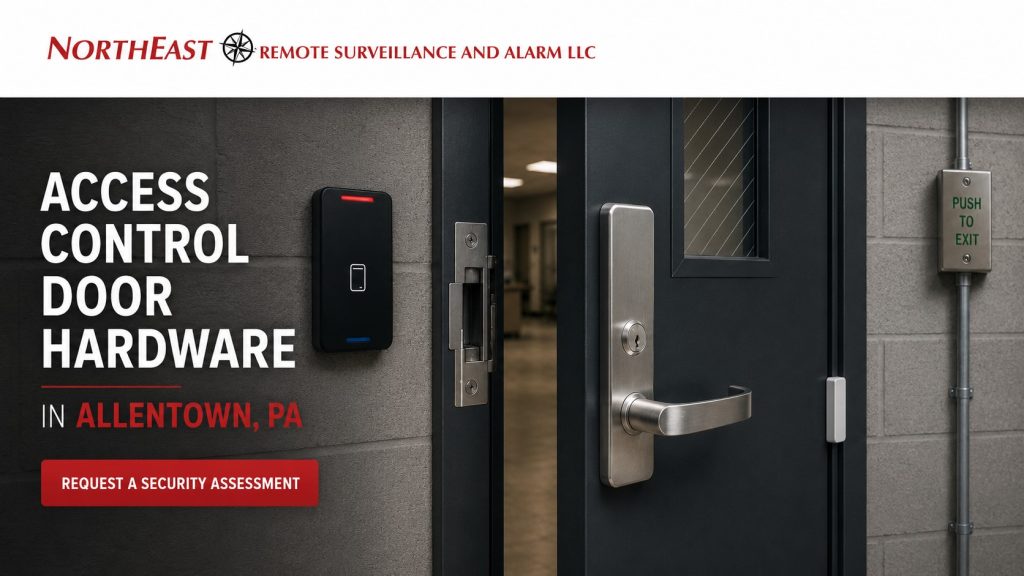
Coordinate doors, permissions and administration with Allentown access control systems.
NERSA evaluates existing-door retrofits and hardware problems around reliable release, closing, and relatching.
Inspect the Existing Door First
Review the door, frame, hinges, closer, latch, and exit hardware before choosing an electronic lock. Note sagging, binding, rebound, weather exposure, and heavy traffic. A reader or longer unlock timer will not correct every mechanical problem.
Record the manufacturer and model of hardware proposed for reuse. Compatibility, condition, wiring paths, and the required operation determine whether a retrofit is practical. Identify specialist door or structural work before installation.
Choose Hardware for the Opening
Possible arrangements include electric strikes, electrified locksets or trim, and selected magnetic-lock applications. The choice depends on the door and its intended operation. Existing panic or exit hardware requires a compatibility review rather than an assumption that parts are interchangeable.
Plan the complete entry and exit sequence with the responsible project team. Include the required release interfaces, monitoring, and power-loss behavior for the opening. Use compliance-aware planning for project-specific coordination.
Coordinate Power and Door Monitoring
Review voltage, load, cable distance, power transfer, and service access.
Door-mounted equipment needs a protected route between the frame and moving door.
Label power sources and connections so future service can identify them.
For controlled inventory rooms and equipment access, see tool-crib security planning in Allentown.
A door-position contact reports open or closed status; it does not necessarily prove that the latch is secure. Define which events staff need and who will respond. Keep reporting useful to the actual operating process.
Test the Retrofit as a Complete Sequence
Confirm authorized release, normal opening, closing, and secure relatching through repeated cycles. Test the intended exit function and applicable monitoring with the responsible parties. Check automatic-operator timing where it forms part of the opening.
Bring door photographs, existing hardware details, symptoms, and operating hours to the assessment. NERSA can identify what to retain, correct, or replace and document the completed hardware arrangement for support.
Compare locking methods at the actual opening
An aluminum storefront door, steel fire-rated door and interior wood office door often require different electrified hardware. An electric strike releases the keeper for an otherwise compatible latch; an electrified lockset or trim controls its own lock function; a motorized exit device may retract a latch for permitted entry while maintaining the listed exit function. A magnetic lock requires a separately approved egress and release arrangement. The correct choice depends on door and frame preparation, rating, alignment, traffic and the authority’s applicable requirements.
Retrofit conditions that change labor and reliability
Survey whether an existing mortise case, narrow-stile lock, panic device, door closer or power-transfer hinge is worn or suitable for reuse. Record handing, backset, latch preload, strike clearances, hinge condition and any fire label. A door that sticks may produce intermittent access faults even when its reader accepts every credential. For a rated opening, confirm permitted field modifications and compatible listed products before drilling or replacing components.
Power, release and acceptance checks
- Measure the device’s required voltage and current, including latch-retraction inrush and voltage drop at the end of the cable run.
- Verify safe inside egress and the approved response to loss of power or a required alarm interface; fail-safe and fail-secure are device states, not complete code determinations.
- Test repeated release, opening and positive relatching under the property’s typical conditions.
- Check door-position and latch monitoring separately: a closed-door contact does not necessarily prove the latch engaged.
- Keep model numbers, wiring, closer adjustments and witnessed test results with the owner’s handover records.
Compare mechanisms by opening function, not marketing label
An electric strike, electrified mortise or cylindrical lock, electrified exit trim, latch-retraction device, and electromagnetic lock can serve different opening requirements. Start with the mechanical latch, door/frame construction, rating, inside release, and available preparation. An electric strike may reduce new door wiring but require careful latch and frame alignment. An electrified lock can preserve familiar mechanical egress at suitable doors but may require a listed power transfer. A magnetic lock has different release and continuous-power considerations and should not become the default merely because an existing frame is difficult to modify.
Retrofit measurements that determine whether it will work
Photograph and measure the existing lock body, backset, stile width, strike height, door gap, hinge condition, closer, frame reinforcement, panic hardware, and rated labels before ordering. At paired doors, document inactive-leaf hardware and coordinator requirements. Determine whether existing cutouts can be reused without voiding a listed assembly. Unrepaired sagging doors, excessive preload, misaligned strikes, and inadequate closer action lead to nuisance alarms and failed latching even when the credential reader and controller operate correctly.
Power and required release are separate design questions
Calculate operating voltage at the device under peak load, including latch-retraction inrush, conductor length, supply ratings, protection, and standby expectations. Confirm request-to-exit, push-to-exit, monitored latch status, and any specified fire-alarm interface against the approved door sequence. Fail-safe or fail-secure describes a particular device under loss of power; it does not certify an entire opening’s egress behavior. Coordinate specialized delayed-egress, controlled-egress, automatic operator, and fire-door work with the responsible parties.
Door-level acceptance record
After installation, witness normal closing and positive latching, valid and denied entry, mechanical inside release, scheduled states, door-held and forced-door reporting, loss of power, and restoration. Test the required alarm or emergency function under an authorized procedure. Record the exact hardware model, voltage readings, wiring pathway, controller outputs, fire-door documentation, adjustments, and any deficiency awaiting repair. These records make future service possible without rediscovering what the previous contractor changed.
Related Allentown Services
Allentown commercial access control systems
Allentown security system upgrades and retrofits
Compliance-Aware Security Planning in Allentown, PA
Request an Assessment
Discuss your property, existing equipment, and intended operating process with NERSA.
Request a security assessment.
Compliance, Codes & Project Standards
NERSA plans commercial and industrial security work with applicable code, documentation, inspection and authority-having-jurisdiction requirements in mind. Requirements vary by system, property and jurisdiction. These resources support project planning; they do not establish legal compliance, certification or AHJ approval.
Related guidance: Regulatory compliance & inspection readiness · Access control & door hardware standards · NFPA 101 & egress planning · ADA access-control planning