
Allentown multi-site business security planning connects shared system standards with the daily responsibilities at each property.

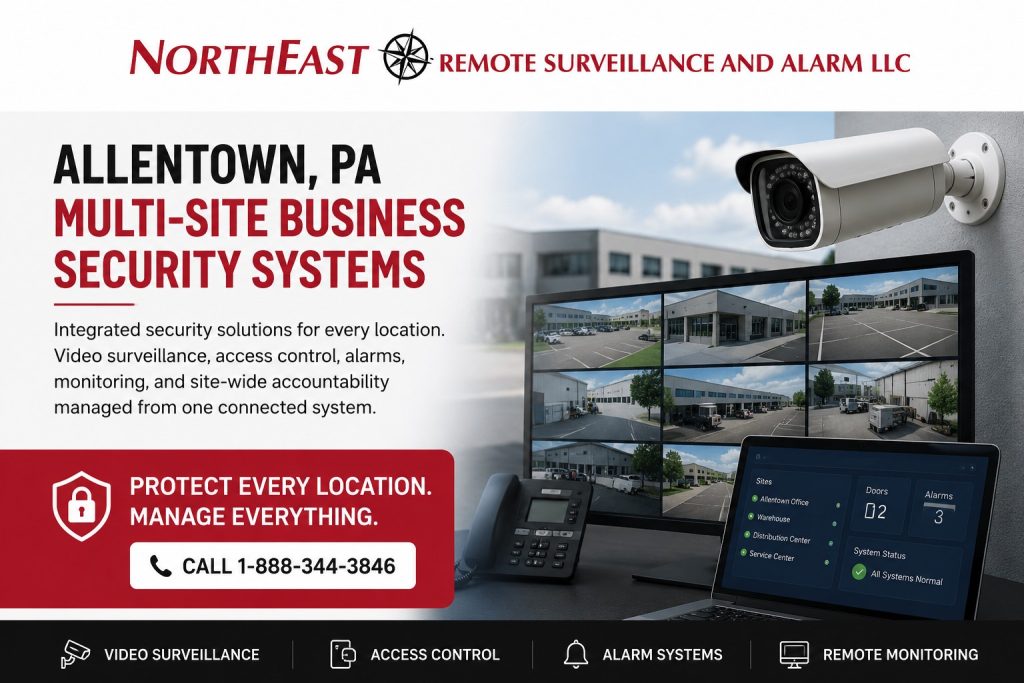
NERSA helps organizations assess cameras, access control, alarms, permissions, and support across Allentown business locations.
Define the decisions your locations should share
A portfolio may include offices, warehouses, yards, or facilities with different operating schedules. Identify corporate account owners, regional administrators, local contacts, and the people authorized to approve changes. Local managers may need control of their own site without authority to change the organization’s standard.
Use Allentown commercial security planning for the needs of one property.
The multi-site security and standardization guide covers the common framework across locations.
Standardize Allentown systems without unnecessary replacement
Compare installed equipment, support status, remote access, available drawings, and known problems before deciding what to replace. Consistent names, permission groups, monitoring contacts, and records can improve administration even when compatible local equipment remains. Record which systems can be retained, which require correction, and which depend on a future migration.
A shared naming pattern should identify the actual facility, area, and device. Door schedules and video requirements should reflect the property’s operation. Assign an owner and review date to exceptions so temporary arrangements do not become undocumented permanent differences.
Test the standard with local users
Pilot the proposed approach at a representative location. Have authorized users find the correct camera, retrieve an incident, confirm an approved door schedule, and identify the responsible alarm contact. Test the local functions required during a network interruption and confirm how restoration is verified.
Schedule remaining properties in manageable phases with agreed work windows, temporary procedures, and rollback criteria. Handover should include the site inventory, configuration and drawing records in scope, approved roles, test evidence, training, support contacts, and unresolved issues.
Separate project decisions from ongoing administration
The project establishes standards and verifies that each location meets them.
After handover, someone must maintain users, review health information, update contacts, and coordinate corrective work.
Multi-Site Security System Management covers those ongoing responsibilities.
Bring your location list, approximate camera and door counts, known platforms, recurring problems, account responsibilities, and growth plans to the assessment. Missing documentation should become a discovery task.
Build one inventory without forcing every property into one platform
For an Allentown organization with offices, warehouses and satellite locations, inventory cameras, access controllers, alarms, internet connections, subscriptions, retention requirements and primary administrators by address. Identify unsupported or unavailable components separately from equipment that still performs reliably. A common naming and ownership standard can deliver benefits even before a platform migration is justified.
Decide where central rules end and local rules begin
Corporate teams may need a common offboarding process and reporting format, while local facility managers need building-specific door schedules and emergency contacts. Document which users may view cameras, issue credentials or acknowledge alarms across properties. Test these roles with actual staff and confirm the behavior when one site becomes disconnected from the WAN or cloud service.
Phased site acceptance
- Verify tenant/admin ownership, current software support and backup access for each property.
- Prove permissions, camera evidence export and alarm notification at a pilot site.
- Test local operation and event recovery during a representative outage.
- Repeat a standard handover checklist at each migrated location.
- Track unresolved exceptions without promising that unlike equipment is automatically interoperable.
Establish a common policy without identical door rules
Businesses with several Allentown offices, warehouses or related facilities may need consistent badge issuance while allowing local site managers to control appropriate areas. Begin with a location inventory that identifies the system owner, administrators, employees, contractors, controlled openings and existing credential technologies. Decide which access levels are shared enterprise roles and which must remain site-specific. A person authorized at a downtown office should not automatically receive unreviewed access to a distribution center’s tool storage or production floor.
Manage identity changes across every location
Design the onboarding, role-change and termination process around an authoritative user source and named approver. Test how quickly removal takes effect at all sites, especially if some panels store cached permissions during a network outage. Contractor credentials need start/end dates and responsible sponsors. Avoid duplicate accounts for the same person where they undermine accountability, but maintain role separation for sites with independent tenants or legal entities as appropriate.
Document cross-site connectivity and resilience
Identify which management servers, cloud tenants, site gateways and local controllers communicate over WAN, VPN, cellular or other connections. Record the result of failures at each layer: door operation, alarm notification, access changes, event retention and remote administration. A shared dashboard should not introduce a single network dependency that stops normal safe operation across every building. Determine who maintains patches, certificates, backups and recovery credentials for the entire portfolio.
Prove reporting and administrator boundaries
Give regional personnel the minimum permissions necessary for their sites and work. Demonstrate that a local manager cannot browse another site’s private event records, create global administrators or change unrelated building doors. Use stable site, controller and door names so investigations and maintenance reports remain understandable. Document software licensing, expansion room, credential replacement plans, property ownership changes and a repeatable handover process for opening or selling a location.
Related Allentown security services
- Commercial video surveillance
- Commercial and industrial access control
- Commercial intrusion alarms
- Remote video monitoring
- Warehouse security planning
Request a multi-site security assessment
Bring a location list, known security platforms, approximate camera and door counts, administrator responsibilities, recurring problems, and expansion plans. Northeast Remote Surveillance and Alarm, LLC can discuss discovery, compatibility checks, a phased scope, and ongoing support for your organization.
Request an assessment or call 1-888-344-3846.
Compliance, Codes & Project Standards
NERSA plans commercial and industrial security work with applicable code, documentation, inspection and authority-having-jurisdiction requirements in mind. Requirements vary by system, property and jurisdiction. These resources support project planning; they do not establish legal compliance, certification or AHJ approval.
Related guidance: Regulatory compliance & inspection readiness · NERSA project standards · Documentation, testing & inspection readiness