
NERSA · Commercial & Industrial Security
Commercial security planning for Carbon County and the western Poconos, including Jim Thorpe, Lehighton, Palmerton and corridor-connected properties.

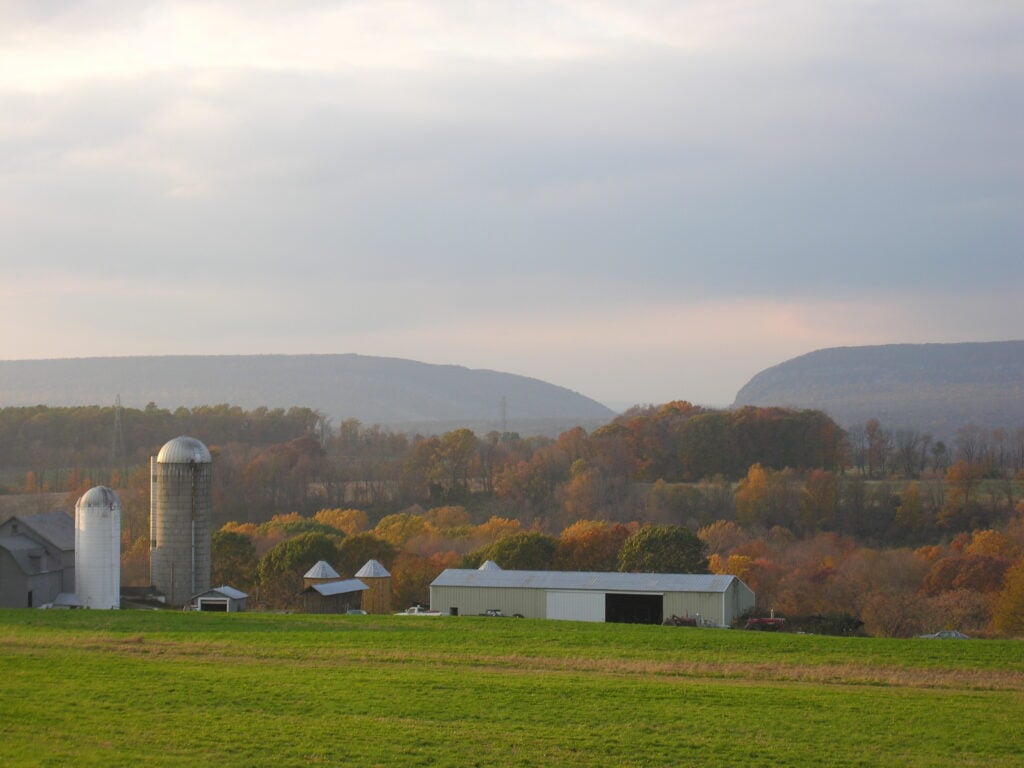
Regional scenery: Delaware Water Gap viewed from New Jersey. Image: public domain.

Plan security around the building, the approach, and the people responsible for it. This NERSA guide connects Carbon County and western Poconos commercial planning, including Jim Thorpe, Lehighton, Palmerton, and surrounding qualifying properties, with the relevant system and corridor resources.
Start with the property’s actual use
A public-facing business, a workshop, a warehouse, and a multi-building commercial site need different coverage and operating procedures. Record entrances, employees, visitors, deliveries, restricted areas, outside storage, and the hours when each part of the property is occupied. Identify which spaces and infrastructure belong to the owner or landlord.
For older or adapted buildings, investigate door condition, cable pathways, ceiling access, additions, and available equipment space. A floor plan may omit later changes. Confirm site conditions before finalizing installation assumptions or reusing existing wiring and hardware.
Connect local planning to corridor operations
Properties whose freight, service vehicles, or staff use the Northeast Extension need a plan for what happens after vehicles leave the road and reach the property. Identify arrival points, stopping locations, visitor check-in, delivery access, yard movement, and after-hours procedures.
Use the I-476 Northeast Extension and Poconos corridor guide for that operating sequence. Highway proximity alone does not establish a security design or a camera count. The assessment should use the actual entrances, visibility, lighting, and response arrangements.
Make recordings useful for the intended task
Decide which scenes need a broad overview and which need more specific incident detail. Discuss entrances, service areas, stock movement, parking, and equipment storage as separate objectives. Check representative light conditions and normal obstructions rather than accepting an empty-site demonstration.
Record who may view and export footage, how staff identify the correct device, and where recordings are stored. For multiple buildings, confirm the network and service dependencies that affect retrieval. A remote view should be tested from the authorized user’s actual workflow.
Coordinate access and alarm areas
Separate public hours from employee, cleaning, maintenance, and delivery schedules. A shared entrance may remain usable while restricted spaces are protected. Define permission groups and alarm areas before configuration, with life-safety and door-hardware coordination assigned to the responsible professionals.
Confirm the difference between a local alert, a remote notification, and a contracted monitoring response. Give events and faults a named owner. Keep contacts current when staff or tenants change, and coordinate acceptance tests with any receiving provider.
Account for detached equipment and buildings
Exterior cameras, gates, and remote buildings require documented power and communications. Identify suitable pathways, installation access, network ownership, and future maintenance access. Evaluate any proposed wireless link against actual conditions and product requirements rather than assuming that geographic proximity means a reliable connection.
Record what continues locally during a connection failure and how the responsible team learns that a function is impaired. Require a restoration check in the acceptance plan. Coordinate testing so active protection is not disrupted without an approved procedure.
Lehighton hotel surveillance upgrade
At Country Inn & Suites Lehighton, NERSA upgraded an eight-camera analog system to 4K using existing built-in coaxial cabling and added 4K IP cameras throughout the property. Read the Country Inn & Suites hybrid surveillance case study for a local example of infrastructure reuse and expanded indoor and outdoor coverage.
Prepare a complete scope and handover
- Record the address, municipality, authorized contact, and project boundary.
- Inventory existing equipment, accounts, limitations, and proposed reuse.
- Assign installation, power, network, monitoring, and approval responsibilities.
- Agree work windows and a transition plan for occupied facilities.
- Demonstrate required recordings, entry tasks, and event workflows.
- Transfer the device list, ownership records, training, and service contacts.
Coordinate regional portfolios through the Poconos commercial security guide. For sites south of the region, use Lehigh Valley commercial security planning while retaining a separate operating profile for each property.
Define the right scope for your property
Tell Northeast Remote Surveillance and Alarm, LLC about the property address, operating hours, current equipment, and the problems you need to solve. We’ll review the proposed systems, installation coordination, and service requirements for the actual location.
Request a security assessmentCall 1-888-344-3846Related Poconos planning
Assessment and modernization · Infrastructure and integration · Warehouse planning
Commercial, industrial, institutional, and other qualifying projects. Confirm project scope, scheduling, and service arrangements for the specific property.