
Lancaster commercial access control connects doors, credentials, schedules, visitor workflows, and controlled openings to the way a facility operates.

Discuss your controlled-entry requirements with NERSA
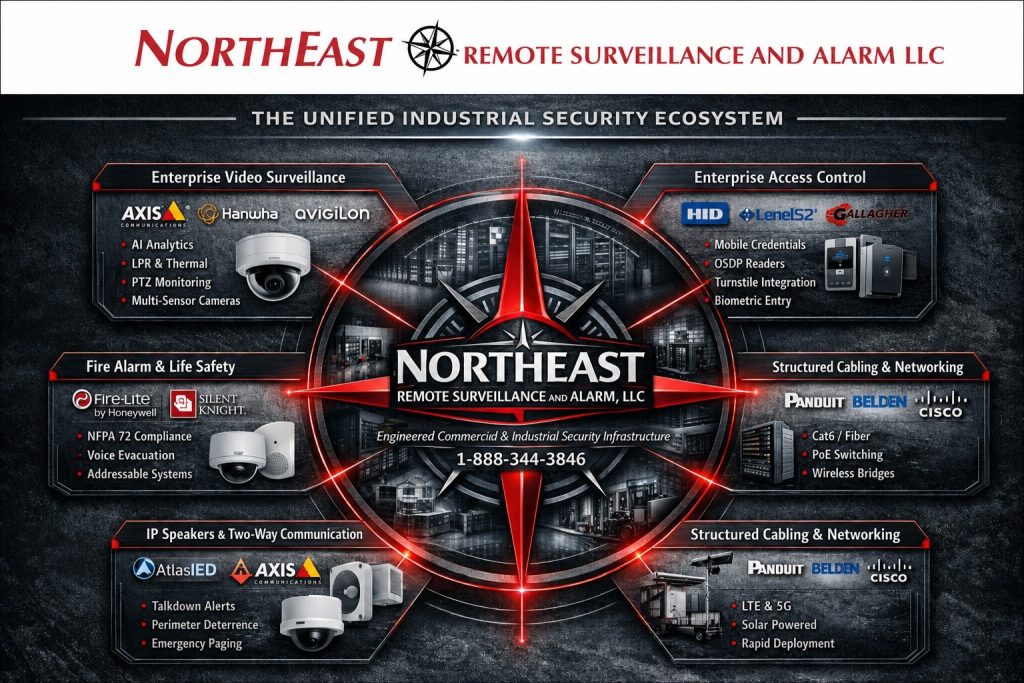
The objective is accountable entry, manageable permissions, and reliable door operation.
Explore related commercial security services in Lancaster and security planning across Central Pennsylvania.
Controlled entry
Projects may include employee doors, offices, restricted rooms, vehicle gates, deliveries, visitor entry and intercoms. Define who needs access, when access is valid, how credentials are managed and what happens when a door is forced or held open.
Plan the Complete Controlled Opening
Access control begins with the door, frame, lock or exit hardware, closer, power, cable path, reader location, request-to-exit method, door-position monitoring, and the people who use the opening. A reader does not correct a door that fails to close or latch consistently, so hardware condition should be reviewed before the electronic scope is finalized.
Credentials may include cards, fobs, mobile credentials, keypads, or another supported method. Choose the credential around administration, turnover, operating conditions, and the selected platform rather than simply using the same credential at every opening.
Employee, Visitor, Contractor, and Restricted-Area Access
Define who needs access, which openings they may use, and when permissions are valid. Employees, supervisors, contractors, cleaners, visitors, vendors, and temporary workers may require different schedules or areas. A manageable system should make it practical to remove a credential or change a role without reworking the entire building.
Warehouses and manufacturing facilities may use access control at employee entrances, dock offices, tool rooms, maintenance areas, IT rooms, and exterior gates. Offices and multi-tenant properties may need a different division between common entrances, tenant suites, staff-only rooms, and visitor entry.
Door Events, Intrusion, and Video Context
Door-position events, intrusion detection, and camera views can provide useful context when compatible systems are intentionally coordinated. A forced or held-open door can be easier to investigate when the affected opening is clearly named and the relevant camera view is known. Integration should support a defined workflow rather than create unnecessary complexity.
This page remains focused on controlled entry.
For intrusion detection and commercial alarm monitoring, use Lancaster Commercial Intrusion Alarm Systems.
Existing-System Takeovers and Expansion
For an inherited system, review controllers, readers, credentials, locks, power supplies, wiring, software access, account ownership, licensing, and available capacity before deciding what can remain. Retained equipment should be supportable and appropriate for the customer’s long-term needs.
For expansion, consider controller capacity, available power, network paths, credential strategy, door naming, and administrator roles. A system that begins with a few doors should still be understandable when additional openings or buildings are added.
Commissioning and Door-by-Door Verification
At completion, test representative credentials, schedules, door-position monitoring, request-to-exit operation, lock release, and the physical closing and latching of each controlled opening. A successful reader transaction is not enough if the door does not reliably secure afterward.
Use clear door names and user groups, confirm administrator ownership, and document retained hardware, power supplies, controller locations, and known limitations. The customer should leave the project with the access needed to add and remove users without relying on an installer-owned account.